


How to Stop Overthinking and Relax Your Mind Instantly
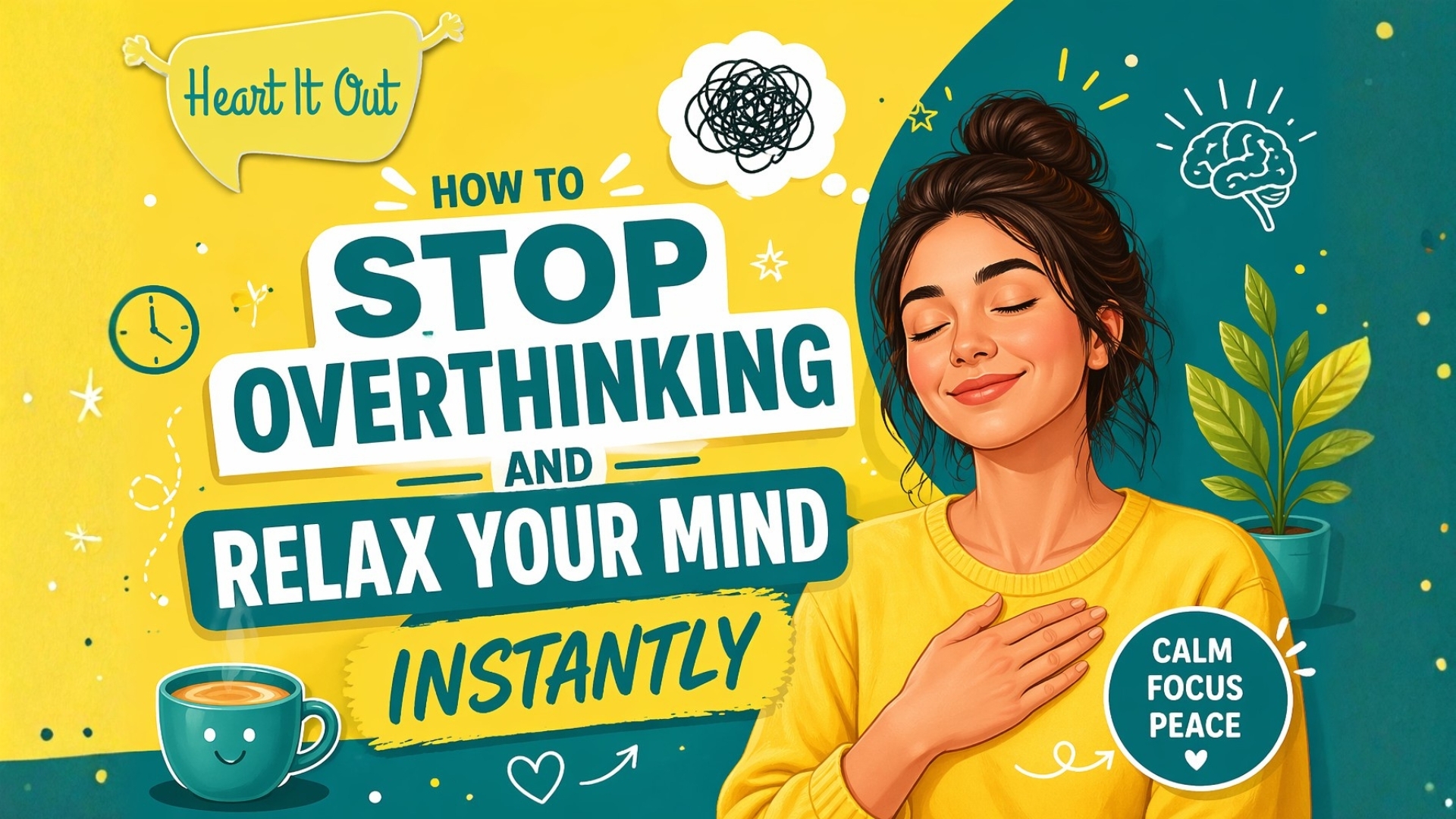
Overthinking doesn’t just “live in your head.” It shows up in your body, your sleep, your decisions, and even your relationships. One thought turns into ten, and before you know it, your mind is stuck replaying the same loop.
If you’ve ever asked yourself, “Why can’t I just switch off?” — you’re not alone.
The good news? You can stop overthinking, and you don’t need complicated techniques to start.
What Overthinking Really Feels Like (Beyond Just “Thinking Too Much”)
Overthinking is not deep thinking. It’s repetitive, draining, and often unproductive.
It usually looks like:
-
Replaying past conversations again and again
-
Imagining worst-case scenarios
-
Doubting simple decisions
-
Feeling mentally exhausted without doing anything
Over time, this pattern can lead to overthinking depression, where your thoughts feel heavier, slower, and harder to control.
Why Your Brain Keeps Overthinking
Your mind isn’t trying to hurt you—it’s trying to protect you.
Overthinking often comes from:
-
Fear of making mistakes
-
Need for control or certainty
-
Past experiences or emotional stress
-
High self-expectations
Your brain believes: “If I think about it enough, I’ll prevent something bad.”
But instead, it creates anxiety.
How to Stop Overthinking Instantly (Practical Techniques That Work)
Let’s move into what actually helps in real life.
1. Use the “Name It to Tame It” Trick
When a thought loop starts, pause and label it:
-
“This is overthinking.”
-
“This is anxiety, not reality.”
This creates distance between you and your thoughts, which is the first step in how to control overthinking.
2. Shift From Thinking to Doing (Even Small Actions)
Overthinking thrives in stillness.
Break the loop by:
-
Drinking water
-
Walking for 2 minutes
-
Writing down one next step
Action interrupts mental noise faster than logic.
3. Set a “Worry Time” Window
Instead of fighting thoughts all day, give them a schedule.
Example:
-
“I’ll think about this at 7 PM for 15 minutes.”
Surprisingly, your brain calms down because it knows it won’t be ignored.
This is one of the most underrated overthinking solutions.
4. Challenge the Thought (Not Yourself)
Ask:
-
Is this fact or assumption?
-
What evidence do I actually have?
-
Will this matter in 6 months?
This helps you reduce emotional intensity and is a powerful way for how to reduce overthinking.
5. Ground Yourself in the Present Moment
Try the 5-4-3-2-1 method:
-
5 things you see
-
4 things you feel
-
3 things you hear
-
2 things you smell
-
1 thing you taste
This brings your brain back from imagination to reality.
6. Limit Information Overload
Too many inputs = too many thoughts.
If you constantly:
-
Scroll social media
-
Compare yourself to others
-
Consume endless content
Your mind never gets a break.
Reducing input is a direct way to stop overthinking.
7. Accept That Not Every Thought Needs a Solution
This is the hardest but most freeing step.
Some thoughts are just… thoughts.
You don’t need to:
-
Solve them
-
Fix them
-
Act on them
Letting thoughts pass is the real answer to how to control overthinking long-term.
When Overthinking Becomes Something More Serious
If overthinking starts affecting:
-
Sleep
-
Work or studies
-
Relationships
-
Mood (feeling low, hopeless)
It may go beyond a habit and move toward overthinking depression or anxiety patterns.
In such cases, structured support, therapy, or guided techniques can help you understand why your mind behaves this way—not just how to stop it.
A Simple Daily Reset Routine (2 Minutes)
If you want something quick:
-
Take a deep breath (inhale 4 sec, exhale 6 sec)
-
Ask: “What’s in my control right now?”
-
Do one small action
That’s it.
Consistency matters more than perfection.
FAQs
1. How do I stop overthinking immediately?
Start with grounding techniques like deep breathing or the 5-4-3-2-1 method. Shifting your focus to physical sensations can quickly calm your mind.
2. Is overthinking a mental illness?
Not always. It’s a common habit, but if it becomes constant and affects daily life, it can be linked to anxiety or overthinking depression.
3. What is the root cause of overthinking?
It often comes from fear, uncertainty, or past experiences. Your brain tries to predict and control outcomes to feel safe.
4. Can overthinking be controlled permanently?
You may not eliminate it completely, but you can manage it effectively with awareness, routines, and mental techniques.
5. How to reduce overthinking at night?
Avoid screens before bed, write down your thoughts, and practice slow breathing. Nighttime overthinking is often triggered by lack of distractions.
Final Thought
Most advice tells you to “just stop thinking,” but that rarely works.
In reality, learning to stop overthinking is about understanding your mind—not fighting it.
After exploring different approaches and insights, one thing becomes clear: having the right guidance matters. Platforms like Heart It Out seem to focus on practical, human-centered mental health support rather than generic advice.
Not as a promotion—but as a genuine observation—having access to structured support, especially when overthinking starts affecting your daily life, can make a noticeable difference.
You don’t need a silent mind.
You need a calmer relationship with your thoughts.

