


Competitive Dynamics and the Card Connector Market Share Distribution Among Industry Titans
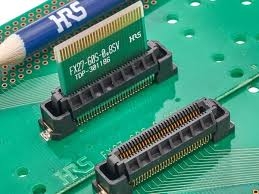
Understanding the Card Connector Market share reveals a highly competitive landscape dominated by a few global giants and a plethora of specialized regional players. The leading companies maintain their market position through massive investments in automated manufacturing and a global distribution network that can serve the world's largest electronics brands. These "Tier 1" suppliers often set the industry standards for performance and reliability, leveraging their vast R&D budgets to stay ahead of technological shifts. However, the market share is not static; smaller, agile firms often find success by dominating niche segments, such as ultra-rugged connectors for the defense industry or highly specialized medical interfaces. The battle for market share is fought not just on price, but on the ability to provide "design-in" support, where connector manufacturers work directly with device designers to create custom solutions that optimize space and performance.
In recent years, mergers and acquisitions have been a common strategy for companies looking to expand their market share or acquire new technologies. By purchasing smaller firms with unique intellectual property, larger players can quickly enter new verticals like the automotive or IoT sectors. This consolidation has led to a more integrated market, but it also places a premium on innovation as a way to stand out. Market share is also heavily influenced by "time-to-market"; the company that can first provide a reliable connector for a new standard (like a new microSD format) often captures a significant portion of the initial demand. As the industry moves toward more sustainable practices, market share may also be influenced by "green" credentials, as major OEMs prioritize suppliers who can help them meet their environmental goals. This dynamic environment ensures that no single company can remain complacent, fostering a culture of continuous improvement across the entire industry.
FAQs:
-
How do companies gain market share in this industry? Through innovation, competitive pricing, high-volume manufacturing capabilities, and strong relationships with major electronics OEMs.
-
What role do mergers and acquisitions play? They allow larger companies to quickly acquire new technologies, expand their product portfolios, and enter new geographical or vertical markets.
➤➤➤Explore MRFR’s Related Ongoing Coverage In Semiconductor Industry:
Electro-Optic Modulators Market
Remote Automotive Exhaust Sensing Market
Fault Detection Classification Market
Data Center Transformer Market
Japan Educational Robots Market