


DRS Rules Explained: When Can Teams Use Reviews?
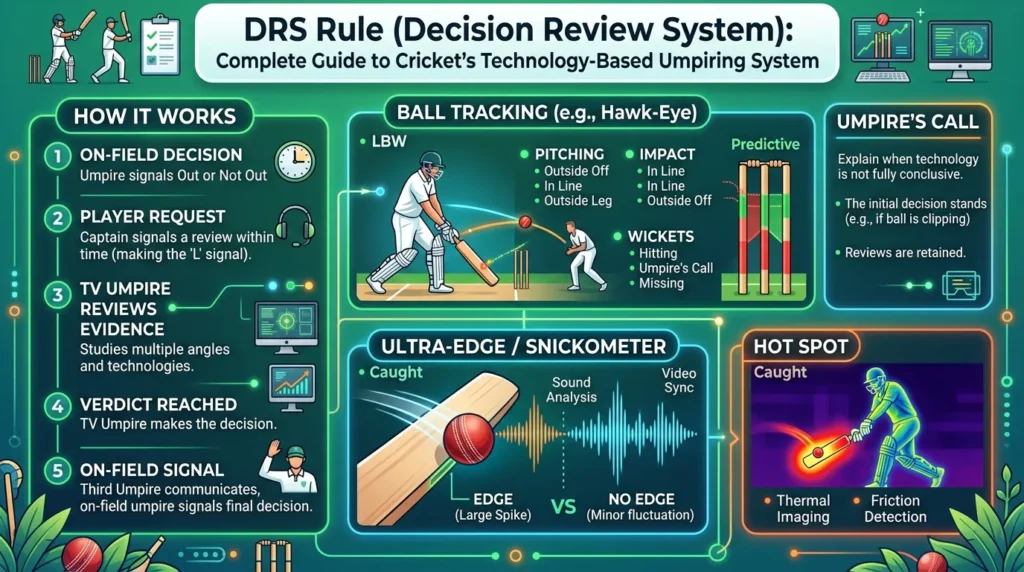
The Decision Review System (DRS) is one of the most important technological innovations in modern cricket. Introduced to improve the accuracy of umpiring decisions, DRS allows players to challenge certain on-field calls using advanced technology such as ball tracking, UltraEdge, and video replays.
While most cricket fans are familiar with the concept of DRS, many are still unsure about the exact rules governing when and how teams can use reviews. Understanding these rules can make watching cricket more enjoyable and help fans appreciate the strategic decisions made by players and captains during a match.
In this guide, we'll explain DRS rules in simple terms, including when teams can request reviews, how the process works, and what happens after a review is completed.
What is DRS in Cricket?
The Decision Review System (DRS) is a technology-assisted process that enables players to challenge specific umpire decisions during a match.
The system is designed to:
-
Reduce umpiring errors
-
Improve fairness
-
Increase decision accuracy
-
Support on-field officials with technology
DRS is commonly used in international cricket and major tournaments, including Test matches, One Day Internationals (ODIs), and T20 Internationals.
Also Read: most fours in ipl history in one season
When Can Teams Use a Review?
Teams can use DRS when they believe the on-field umpire has made an incorrect decision.
After an Out Decision
If a batter is given out and believes the decision is wrong, they can request a review.
Common examples include:
-
LBW decisions
-
Caught behind appeals
-
Bat-pad catches
After a Not-Out Decision
Fielding teams can also use DRS if they believe a batter should have been given out.
For example, a captain may review:
-
A rejected LBW appeal
-
A suspected edge behind the wicket
-
A close catch decision
The review must be requested within the allowed time limit after the umpire's decision.
Who Can Request a Review?
Only certain players can initiate a review.
Batting Team
When a batter is given out, either the dismissed batter or their batting partner can signal for a review.
Fielding Team
For fielding-side reviews, the captain usually makes the decision, often after consulting nearby teammates.
The review signal is made by creating a "T" shape with the hands, indicating a request for the third umpire to examine the decision.
How Many Reviews Does a Team Get?
One of the most important DRS rules involves the number of available reviews.
The exact number can vary depending on playing conditions and match regulations, but teams generally receive a limited number of unsuccessful reviews per innings.
Successful Reviews
If a review results in the original decision being overturned, the team keeps its review.
Unsuccessful Reviews
If the original decision remains unchanged, the review is lost.
This rule encourages teams to use reviews carefully and avoid unnecessary challenges.
Read More: ipl cricket jersey 2026
What Decisions Can Be Reviewed?
DRS can be used for several types of decisions, including:
LBW (Leg Before Wicket)
LBW reviews are the most common use of DRS and often involve ball-tracking technology.
Caught Behind
UltraEdge helps determine whether the ball touched the bat or glove before reaching the wicketkeeper or fielders.
Bat-Pad Catches
Video evidence and UltraEdge can assist in deciding whether a catch was taken legally.
Certain Dismissals
Some other dismissal-related decisions may also be reviewed depending on the circumstances.
What Happens During a Review?
Once a review is requested, the third umpire begins the review process.
The review may involve:
-
Television replays
-
Ball-tracking technology
-
UltraEdge analysis
-
Multiple camera angles
The third umpire examines all available evidence before communicating the final decision to the on-field umpire.
Understanding Umpire's Call
One of the most discussed aspects of DRS is Umpire's Call.
This occurs when the available technology does not provide enough evidence to clearly overturn the original decision.
In such situations:
-
The on-field decision stands
-
The review is considered successful for review-retention purposes in many current playing conditions
-
Technology supports but does not completely replace the umpire's judgment
Umpire's Call helps maintain a balance between human decision-making and technological assistance.
Why Teams Must Use Reviews Strategically
Because reviews are limited, teams must think carefully before challenging a decision.
Captains often consider:
-
Confidence levels among players
-
Match situation
-
Importance of the wicket
-
Available evidence
Using reviews wisely can have a significant impact on the outcome of a match.
Conclusion
The Decision Review System has become a vital part of modern cricket, helping ensure more accurate and fair outcomes. By allowing players to challenge umpire decisions using advanced technology, DRS reduces errors while maintaining the integrity of the game.
Understanding when teams can use reviews, how many reviews are available, and how the review process works helps fans better appreciate the strategy and technology involved. As cricket continues to evolve, DRS remains an essential tool that enhances fairness, transparency, and confidence in every match.
To Know More Follow CrickInsider Cricket Update

