


5 Pilates Mistakes That Slow Your Progress
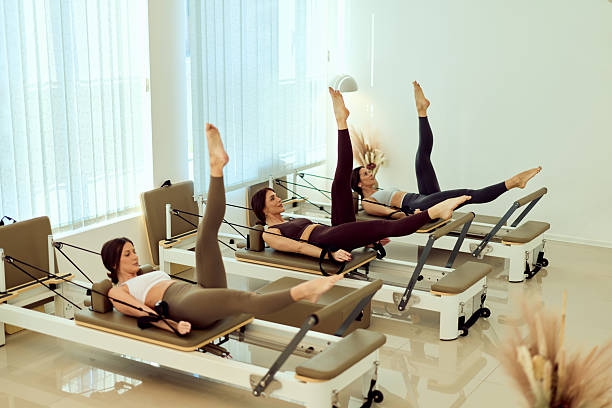
You're showing up to class. You're doing the movements. But something's off, because the results you expected just aren't there. Sound familiar? A lot of people hit this wall after a few weeks of Pilates and assume the method isn't working for them. Honestly, that's rarely the case. Most of the time, a handful of small but consistent mistakes are quietly undermining all that effort. If you're doing Pilates in Chicago and feel stuck, finding a good Pilates studio in Downtown Chicago with experienced instructors can help you catch these problems early. But first, let's talk about what those problems actually are.
Holding Your Breath Instead of Using It
This one trips up nearly every beginner. The Pilates breathing pattern isn't decoration, it's the engine that drives core engagement on every single rep. When you hold your breath through a difficult movement, you're basically cutting off the signal your body uses to stabilize your spine. The result? You compensate with your neck, your hip flexors, your shoulders. Anywhere but where the work is supposed to be happening.
The pattern to practice is inhaling to prepare and exhaling on the effort, usually the hardest part of the movement. It feels awkward at first. That's normal. But once it clicks, you'll notice your abs actually kick in instead of just sitting there doing nothing while your lower back quietly suffers.
Instructors cue this constantly for a reason. If you're filtering it out as background noise, you're leaving a lot of the benefit on the table. Breath and movement are supposed to be one thing in Pilates, not two separate things happening at the same time.
Using Momentum Instead of Muscle
This is probably the sneakiest mistake. Swinging your legs, flopping back down from a curl, or using a bouncy kickstart to get through a roll. It all looks like movement. But it's not the right kind.
Pilates is built on controlled, deliberate muscle activation. When you use momentum to get through a rep, you're bypassing the exact muscles the exercise is designed to train. You might complete twenty reps and feel almost nothing, which some people mistakenly read as "I'm good at this." You're not getting stronger or more coordinated. You're just moving efficiently in a way that doesn't build anything useful.
Slow it down. Seriously, try cutting your speed in half on any exercise that feels too easy. If you suddenly feel it in places you didn't before, that's the point. That's what the exercise is supposed to feel like. Controlled movement also lowers your injury risk quite a bit, especially in exercises that involve spinal flexion or hip loading.
Skipping the Foundations
A lot of people walk into an intermediate or advanced class because the beginner option sounds boring or too easy for them. Big mistake. Pilates builds on itself in a very specific way, and two concepts sit underneath almost everything else: neutral spine and core connection. If you don't have a solid feel for those, you'll compensate your way through every advanced exercise and build bad habits that get harder to fix over time.
Neutral spine isn't just a position, it's an awareness. You need to know what your pelvis is doing at any given moment during a movement. Most people don't, not at first. That's not a criticism, it's just true. The history and development of Pilates as a method is rooted in this kind of body awareness work, and skipping it doesn't save time, it costs it.
If you jumped into a higher-level class without doing the foundational work, it's worth going back. Even a few weeks in a beginner or fundamentals class can completely change how you feel in your regular sessions. Most people who do this say they wish they'd done it sooner.
Treating It Like an Occasional Thing
Two classes a month won't get you anywhere. That's not a judgment, it's just how neuromuscular adaptation works. Your body gets better at Pilates by repeating the movement patterns often enough that they become second nature. Sporadic sessions don't give your nervous system enough repetition to build those pathways.
Two to three sessions a week is the sweet spot most instructors point to for people who want to actually see changes. That doesn't mean every session has to be an hour-long class. Shorter at-home practice between sessions counts. Even twenty minutes of mat work a few times a week keeps the neural connections warm and your body remembering what it learned.
If you're doing Pilates in Downtown Chicago and can only get to a studio once a week, supplement with at-home work. There are plenty of solid resources for this. The consistency is what matters, not the setting. Gaps of ten or more days between sessions are where most progress quietly disappears.
Better Posture Pilates is one studio where instructors specifically talk about home practice strategies with their students, which is worth looking for in any studio you try.
Tuning Out Alignment Cues
When a movement feels easy, it's tempting to zone out and just go through the motions. But that's usually when alignment breaks down the most. Your body will always find the path of least resistance, and if you're not paying attention to the cues your instructor is giving, that path usually involves a compensatory pattern that creates problems later.
Common examples: letting your ribs flare during abdominal work, gripping with your hip flexors instead of using your glutes, or letting your shoulders creep up toward your ears on reformer exercises. None of these feel terrible in the moment. Over weeks and months, though, they add up to discomfort, imbalance, and the frustrating sense that Pilates isn't doing anything for you.
Proprioception, your sense of where your body actually is in space, takes time to develop. That's okay. But you have to stay engaged with the cues to build it. The Pilates studio in Downtown Chicago you choose matters here too, because smaller class sizes mean instructors can actually see what you're doing and correct it in real time.
Frequently Asked Questions
How often should a beginner do Pilates to see results?
Two to three times a week is a solid starting point. Once a week is better than nothing, but it's usually not enough frequency for your body to build the neuromuscular patterns that produce visible changes. Adding even short at-home sessions between classes speeds things up noticeably.
Is Pilates breathing really that important?
Yes, genuinely. The breath coordinates core activation throughout each movement. Without it, you're doing a version of the exercise that's missing a key component. Most beginners underestimate how much this one thing affects everything else. Give it a few weeks of real focus and you'll feel the difference.
Can I skip beginner classes if I'm already fit?
Being fit in other ways doesn't mean you have neutral spine awareness or core connection in the Pilates sense. Those are specific skills. Plenty of very fit people struggle in fundamentals classes because the body awareness required is genuinely different from what most other workouts train. Starting at the beginning isn't a waste of time.
What's the difference between controlled movement and just going slow?
Going slow is part of it, but controlled movement means you're using the specific muscles the exercise targets throughout the entire range of motion, not just at the hard part. You can move slowly and still use momentum at the transition points. The goal is constant, intentional muscle engagement from start to finish on every rep.
How do I know if my alignment is off if I can't see myself?
This is where a good instructor makes a real difference. In the meantime, pay close attention to where you feel the exercise working. If you feel it in your neck during ab work, or your lower back during leg exercises, something's probably off. Mirrors, when available, help too. But honest feedback from a trained instructor is the fastest way to fix alignment issues you can't feel yet.
The good news is that all five of these mistakes are fixable. None of them mean Pilates isn't for you. They just mean you're human, and you picked up some habits that need a small correction. Catch them early and you'll start noticing progress a lot sooner than you'd expect.

