


What Are the Advantages of Using Modular Pipe Fittings in Plumbing Systems?
Modern plumbing systems need to be reliable, adaptable, and easy to maintain. Whether a piping network serves a residential building, commercial property, industrial facility, or large infrastructure project, its layout may need to accommodate changes throughout its service life.
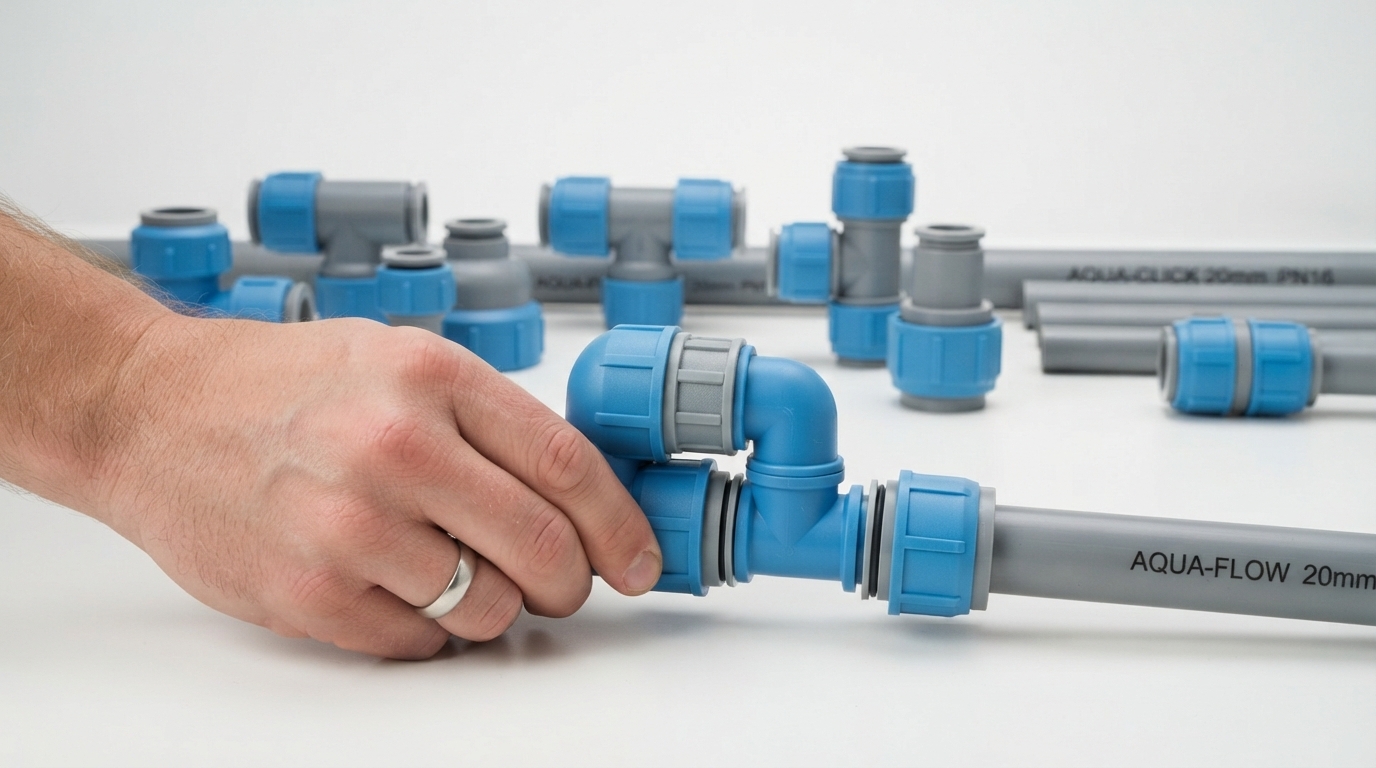
Modular pipe fittings provide a practical way to create flexible piping layouts. Instead of treating a plumbing network as one fixed arrangement, modular components allow installers to connect, redirect, branch, and adapt pipe runs using standardized fittings.
When properly specified and installed, these fittings can simplify construction, support future modifications, and make maintenance more manageable.
What Are Modular Pipe Fittings?
Modular pipe fittings are standardized components used to connect individual sections of a piping system.
Depending on the material and application, common fittings include:
- Elbows
- Tees
- Couplings
- Reducers
- Adapters
- Unions
- End caps
- Cross fittings
Each fitting performs a particular function within the system.
For example, an elbow changes the direction of a pipe, while a tee creates an additional branch. Reducers connect different pipe sizes, and couplings join separate pipe sections.
This standardized approach gives designers and installers greater flexibility when creating plumbing layouts.
1. Greater Design Flexibility
One of the biggest advantages of modular fittings is their ability to support different plumbing configurations.
Buildings rarely provide completely straight and unobstructed routes for pipes. Plumbing systems may need to navigate around:
- Structural columns
- Electrical systems
- HVAC equipment
- Walls
- Beams
- Existing utilities
A suitable combination of fittings allows installers to adapt the pipe route while maintaining the required system configuration.
This flexibility becomes particularly useful during renovations where space is limited.
2. Faster Installation
Standardized components can make installation more efficient.
Instead of fabricating every connection individually, contractors can select a fitting designed for a specific purpose.
This can reduce the amount of modification required on-site.
Faster assembly may also help contractors maintain project schedules, especially on buildings containing extensive plumbing networks.
However, installation speed should never come at the expense of correct joint preparation and testing.
3. Easier System Expansion
Building requirements often change over time.
A commercial property may add new bathrooms, equipment, kitchens, or work areas. Industrial facilities may install additional machinery requiring new piping connections.
A modular system can make these changes easier because new branches or components may be incorporated into the existing network where the design allows.
This adaptability can reduce the extent of reconstruction required during future expansions.
4. Simplified Maintenance
Plumbing maintenance becomes more difficult when technicians cannot isolate or access individual sections easily.
A well-designed modular piping layout can support easier maintenance by allowing specific components or sections to be addressed without unnecessarily disturbing the entire system.
For example, appropriate unions, valves, and removable connections can improve access to equipment that requires periodic servicing.
Good system design therefore considers maintenance from the beginning.
5. Standardized Components Improve Consistency
Using standardized fittings creates greater consistency across a plumbing installation.
Installers can follow repeatable procedures for:
- Pipe preparation
- Alignment
- Jointing
- Inspection
- Testing
Consistency can reduce installation errors and make future repairs easier because technicians can identify familiar components throughout the system.
6. Support for Complex Plumbing Layouts
Large buildings can contain highly complicated piping networks.
A single project may include systems for:
- Potable water
- Wastewater
- Drainage
- Venting
- Process fluids
Modular fittings allow designers to create branches, direction changes, and transitions needed to route these systems efficiently.
Without suitable fittings, achieving complex layouts would require considerably more custom fabrication.
7. Reduced Need for Custom Fabrication
Custom-made piping components can increase both project costs and installation time.
Modular fittings reduce the need for specialized fabrication by providing standard solutions for common plumbing requirements.
For many projects, contractors can create extensive piping networks using a relatively small group of standard fitting types.
This also simplifies procurement and inventory planning.
8. Easier Replacement of Components
Individual components within a plumbing system may eventually require replacement.
Damage, changes in system requirements, or equipment upgrades can all create a need for modifications.
Where the system has been designed for accessibility, modular construction can make it easier to replace individual sections without rebuilding large portions of the network.
This can reduce both downtime and maintenance costs.
9. Improved Project Planning
Standardized fittings can make material estimation more predictable.
Designers can determine how many:
- Elbows
- Tees
- Couplings
- Reducers
- Adapters
are required before installation begins.
Accurate planning helps reduce unnecessary purchases and ensures important components remain available when contractors need them.
10. Better Inventory Management
Contractors and maintenance teams often work across multiple projects.
Keeping a selection of standardized fittings can simplify inventory management because the same component types may serve numerous installations.
This can reduce the need to maintain large quantities of highly specialized parts.
However, fittings must always match the pipe material, size, pressure rating, and intended application.
11. Compatibility With Different Pipe Sizes
Plumbing systems do not always use one pipe diameter throughout the entire network.
Main distribution lines may require larger pipes, while individual branches use smaller diameters.
Reducers and adapters make these transitions possible.
Correct sizing remains important because inappropriate diameter changes can affect:
- Flow
- Pressure
- Noise
- System efficiency
Engineers should size pipes and fittings according to the hydraulic requirements of the system.
12. Supporting Renovation Projects
Renovations often present greater plumbing challenges than new construction.
Existing structures may have limited installation space, old pipe routes, and fixed architectural elements.
Modular fittings allow installers to adapt new piping around these constraints.
They can also make it easier to connect new systems with existing infrastructure when materials and specifications are compatible.
13. Potential Reduction in Material Waste
Accurate planning and standardized components can help reduce unnecessary material waste.
Instead of cutting and modifying pipes repeatedly to accommodate unusual connections, installers can use appropriate fittings to achieve the required layout.
Careful measurement remains essential, but modular design can make material use more predictable.
14. Supporting Future Building Changes
Buildings can remain in service for decades, while their internal requirements change repeatedly.
A flexible plumbing system can make future renovations easier.
For example, a building may later require:
- Additional fixtures
- New equipment
- Modified room layouts
- Expanded facilities
Designing piping infrastructure with future adaptability in mind can reduce the cost and disruption associated with these changes.
Choosing the Right Fittings
Not every fitting is suitable for every plumbing application.
Selection should consider:
- Pipe material
- Diameter
- Pressure
- Temperature
- Fluid type
- Jointing method
- Installation environment
Chemical compatibility may also be important in industrial or specialized systems.
Using mismatched components can create weak connections and increase the risk of leakage.
Joint Quality Remains Critical
The advantages of modular fittings depend heavily on installation quality.
Contractors should follow the correct procedures for the specific piping material and jointing method.
Poor alignment, contamination, incorrect preparation, or inadequate connection can reduce system reliability.
Every completed system should be inspected and tested according to applicable project requirements.
Quality Matters Across the Entire System
A plumbing network should be treated as a complete system rather than a collection of individual parts. Pipes, fittings, valves, and connections must work together under expected operating conditions.
When selecting products from manufacturers such as Plasco Pipes, contractors should consider whether the pipes and compatible fittings meet the technical requirements of the intended application. Consistency between components can simplify installation and contribute to dependable long-term performance.
Final Thoughts
Modular pipe fittings provide significant advantages for modern plumbing systems. They offer design flexibility, simplify complex layouts, support future expansion, reduce custom fabrication, and make maintenance more manageable.
Their standardized nature can also improve project planning and help contractors create consistent piping networks across residential, commercial, and industrial installations.
However, the benefits depend on correct specification and installation. Pipe material, fitting type, pressure rating, temperature, fluid characteristics, and jointing methods must all suit the application.
When these factors are considered carefully, modular fittings can help create plumbing systems that are efficient to install, practical to maintain, and adaptable to changing building requirements.

