


What Qualifications Should the Best Gynecomastia Surgeon in Islamabad Have?
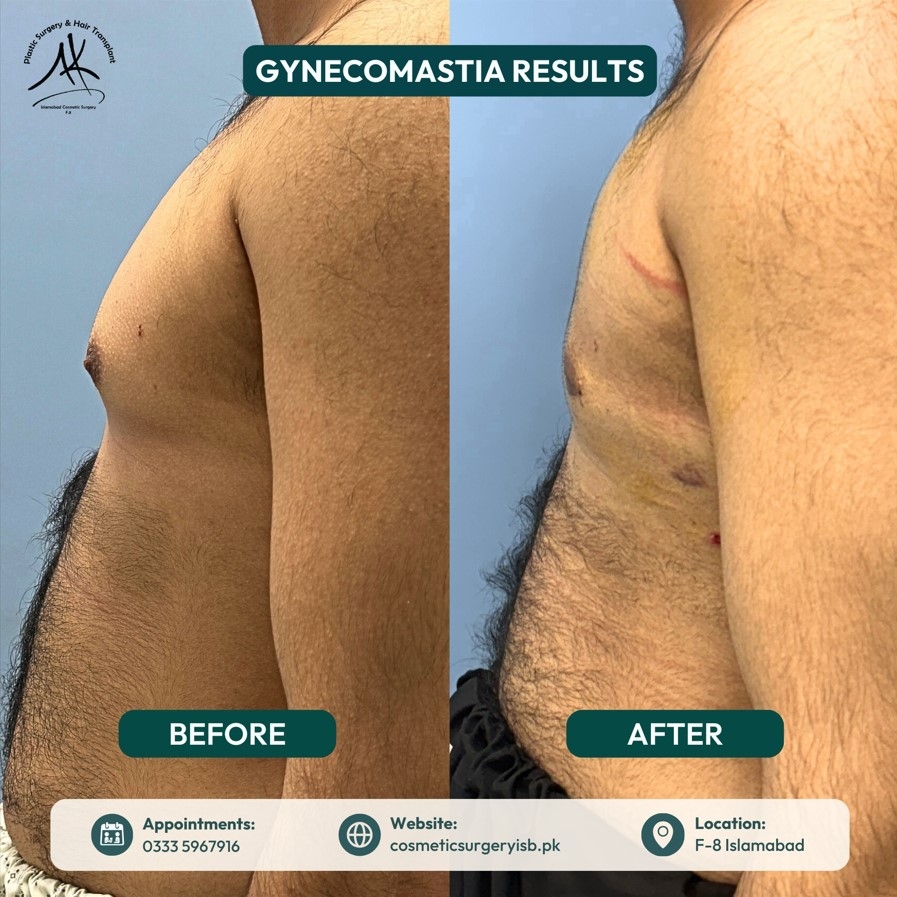
Choosing the best gynecomastia surgeon in Islamabad is an important decision because gynecomastia treatment is not only about removing chest tissue. The surgeon must also create a natural male chest shape, protect the nipples, control scars, and reduce the risk of complications.
Many patients make the mistake of selecting a surgeon only because the price is low, the clinic looks attractive, or an advertisement promises perfect results. These factors do not prove that a surgeon is properly qualified.
A suitable surgeon should have recognised medical education, specialist surgical training, valid professional registration, and experience in male chest reduction procedures. The surgeon should also work in an appropriate surgical facility and provide clear guidance before and after treatment.
At Islamabad Gynecomastia, patients should receive a complete consultation before any procedure is recommended. This article explains the important qualifications and skills you should check before choosing a surgeon.
Quick Answer
The best gynecomastia surgeon in Islamabad should be a properly registered medical professional with specialist surgical training and practical experience in male chest reduction.
The surgeon should understand liposuction, gland removal, skin reduction, nipple repositioning, chest contouring, anaesthesia safety, and complication management.
Patients should also look for honest communication, realistic treatment planning, a safe operating environment, and proper follow-up care.
Recognised Medical Education
Every surgeon must first complete recognised medical education.
This provides basic knowledge about the human body, diseases, medicines, diagnosis, and patient safety.
However, a general medical degree alone does not make someone a specialist in cosmetic or reconstructive chest surgery.
The surgeon should complete further education and supervised surgical training after medical school.
Patients should not feel uncomfortable asking about a surgeon’s education. A qualified professional should be able to explain their training clearly.
Specialist Surgical Training
Gynecomastia surgery requires detailed knowledge of skin, fat, gland tissue, muscles, blood vessels, nerves, nipples, and chest shape.
For this reason, the surgeon should have specialist training in a relevant surgical field.
Specialist training teaches the surgeon how to plan procedures, remove tissue safely, close wounds, manage scars, and respond to complications.
A short course or a few workshops are not equal to complete specialist surgical training.
Patients should ask what formal surgical qualification the doctor holds and where the training was completed.
Valid Professional Registration
The surgeon should have valid registration with the medical authority responsible for doctors in Pakistan.
Registration confirms that the person is legally recognised as a medical practitioner.
Patients should verify the surgeon’s registration rather than relying only on certificates displayed inside the clinic.
A clinic advertisement, social media page, or personal website is not official proof of medical registration.
The surgeon’s full name and registration details should match official records.
Qualification in a Relevant Specialty
Not every doctor who performs cosmetic treatments has the same training.
Gynecomastia surgery is a surgical procedure. It may involve liposuction, direct removal of gland tissue, skin excision, nipple adjustment, or a combination of methods.
The surgeon’s specialist qualification should therefore be relevant to this type of operation.
A patient should ask whether the doctor has been trained in male breast reduction and chest contouring rather than only general cosmetic treatments.
The more closely the surgeon’s training matches the procedure, the better prepared they may be to handle different chest conditions.
Experience With Gynecomastia Surgery
General surgical experience is useful, but procedure-specific experience is also important.
The best gynecomastia surgeon in Islamabad should have practical experience treating different types and grades of gynecomastia.
Some patients have a small gland under the nipple. Others have excess chest fat, loose skin, stretched areolas, or major chest sagging.
The surgeon should know how to adjust the treatment for each condition.
A method that works for mild gynecomastia may not be enough for a severe case.
Ask how often the surgeon performs gynecomastia procedures and what types of cases they regularly treat.
Understanding of Male Chest Anatomy
A male chest should not simply look smaller after surgery. It should look balanced and masculine.
The surgeon must understand the natural shape of the chest muscles, nipple position, chest border, and the transition between the chest and underarm area.
Removing too much tissue can create dents or a sunken nipple.
Removing too little may leave visible puffiness.
Uneven fat removal may also produce an irregular chest surface.
A surgeon with a strong understanding of male chest anatomy plans tissue removal carefully instead of focusing only on reducing size.
Skill in Liposuction
Liposuction is commonly used when extra fat contributes to chest enlargement.
The surgeon should understand how to remove fat evenly from the front, lower, and outer areas of the chest.
Poor liposuction technique can cause dents, waves, or uneven thickness.
Liposuction also has limits. It cannot always remove thick gland tissue behind the nipple.
A properly trained surgeon should know when liposuction alone is suitable and when another technique must be added.
Patients should be cautious if a surgeon recommends liposuction to every person without carefully examining the tissue.
Skill in Gland Excision
Firm gland tissue often needs direct surgical removal.
The surgeon usually reaches this tissue through an incision near the areola.
Gland excision must be performed carefully.
Removing too little gland may leave puffy nipples. Removing too much may create a crater or cause the nipple to stick to the chest.
The surgeon should know how much tissue to remove and how much support to leave beneath the nipple.
This balance requires experience and careful judgment.
Ability to Combine Surgical Techniques
Many patients have both excess fat and firm gland tissue.
These patients may require a combination of liposuction and gland excision.
Severe cases may also need skin removal, areola reduction, or nipple repositioning.
The best gynecomastia surgeon in Islamabad should not depend on one technique for every patient.
The surgeon should be able to combine different methods when necessary and avoid unnecessary procedures when a simpler treatment is enough.
Personalised planning is a stronger sign of surgical understanding than a standard treatment package.
Experience With Loose Skin
Loose skin may develop after major weight loss, ageing, or long-standing severe gynecomastia.
Liposuction and gland removal reduce volume, but they may not tighten badly stretched skin.
The surgeon should know when skin may tighten naturally and when surgical removal is needed.
Skin excision can create longer scars, so the surgeon must explain the trade-off honestly.
A good surgeon does not hide the possibility of visible scars simply to convince a patient to proceed.
Patients should understand the expected scar pattern before giving consent.
Experience With Nipple and Areola Correction
Severe gynecomastia can stretch the areolas or cause the nipples to sit too low.
Some patients may need areola reduction or nipple repositioning.
These procedures require careful knowledge of blood supply, sensation, skin tension, and natural nipple placement.
Poor planning may cause an unnatural shape, uneven position, or healing problems.
The surgeon should only recommend nipple or areola correction when it is truly needed.
Making unnecessary changes can create more scars and risk without providing a meaningful benefit.
Ability to Treat Uneven Chests
Many men have one-sided gynecomastia or different amounts of tissue on each side.
The surgeon should know how to examine both sides and plan different levels of treatment when necessary.
One side may require more liposuction, while the other may need more gland removal.
Perfect symmetry cannot be promised because every human body has natural differences.
However, an experienced surgeon should aim to improve balance without making the chest look overtreated.
Training in Patient Assessment
Surgical skill is not enough.
A qualified surgeon must also know how to decide whether a patient should have surgery.
The consultation should include questions about when the chest enlargement started, whether it is changing, and whether pain or other symptoms are present.
The surgeon should review medicines, supplements, hormone use, health conditions, weight changes, smoking, and previous operations.
Some patients may need medical tests before cosmetic treatment.
A surgeon who immediately recommends an operation without taking a proper history may be overlooking an important cause or health risk.
Ability to Recognise Warning Signs
Not every chest lump is ordinary gynecomastia.
A surgeon should recognise signs that may require further medical investigation.
These signs may include sudden one-sided growth, a hard separate lump, nipple discharge, bleeding, skin changes, or a nipple turning inward.
The surgeon should not treat every chest concern as a cosmetic problem.
When unusual symptoms are present, medical assessment should come before surgery.
This is an important sign of responsible care.
Knowledge of Anaesthesia Safety
Gynecomastia surgery may be performed using different forms of anaesthesia, depending on the procedure and the patient’s condition.
The surgeon should understand which option is suitable and ensure that anaesthesia is administered and monitored properly.
Before surgery, the patient’s medical history, allergies, medicines, and previous anaesthesia experiences should be reviewed.
Patients should ask who will provide the anaesthesia and how they will be monitored during the procedure.
The cheapest anaesthesia arrangement is not necessarily the safest one.
Access to a Suitable Surgical Facility
The environment where surgery is performed matters.
A proper surgical facility should have suitable equipment, infection-control measures, patient monitoring, trained staff, and systems for handling an emergency.
An attractive waiting room does not prove that an operating room is safe.
Patients should ask where the procedure will take place and what safety arrangements are available.
Complex procedures should not be performed in an unsuitable room simply to lower the cost.
Ability to Manage Complications
Every surgical procedure carries risks.
Possible complications of gynecomastia surgery may include bleeding, infection, fluid collection, wound problems, numbness, visible scars, uneven contours, and changes in nipple sensation.
The surgeon should explain these risks clearly rather than describing the procedure as completely safe.
A qualified surgeon should also know how to recognise and manage complications if they occur.
Ask what support is available after surgery and how urgent concerns are handled.
A surgeon’s responsibility does not end when the operation is completed.
Continuing Medical Education
Surgical knowledge and safety practices continue to develop.
A responsible surgeon should keep their knowledge current through professional education, training, and review of updated medical practices.
Continuing education may cover surgical methods, anaesthesia, infection prevention, patient safety, wound care, and complication management.
Patients do not need to understand every course the surgeon has completed.
However, the surgeon should show a professional commitment to maintaining and improving their skills.
Honest Communication
Communication is one of the most important qualities of a suitable surgeon.
The surgeon should explain the diagnosis and treatment plan in words the patient can understand.
The patient should know which tissue will be removed, where scars may appear, what anaesthesia may be used, and how recovery may progress.
A good surgeon answers questions without becoming irritated or dismissive.
Patients should be cautious when they feel pressured to book surgery quickly or pay a deposit before understanding the procedure.
Realistic Promises
No surgeon can guarantee perfect symmetry, invisible scars, painless recovery, or zero risk.
Promises like these are not realistic.
The best gynecomastia surgeon in Islamabad should explain both the possible benefits and the limits of surgery.
The chest may improve greatly, but small differences can remain.
Scars may fade but will not disappear completely.
Swelling may also take weeks or months to settle.
Honest expectations help patients make better decisions and reduce disappointment after treatment.
Before and After Photographs
Before and after photographs may help patients understand a surgeon’s approach and the range of results.
The photographs should show cases similar to the patient’s condition when possible.
Look at chest shape, nipple position, contour smoothness, side-to-side balance, and scar visibility.
Photographs alone do not prove qualifications or guarantee the same result for another patient.
Lighting, posture, angle, and timing can change how results appear.
They should be used as one part of the evaluation, not the only reason for choosing a surgeon.
Clear Consent Process
Before surgery, patients should receive enough information to give informed consent.
This means they understand the procedure, expected benefits, possible risks, alternative options, recovery, scars, and costs.
The patient should have time to ask questions and think about the decision.
Consent should not be treated as a form signed quickly on the day of surgery.
A careful consent process shows that the surgeon respects the patient’s right to make an informed choice.
Proper Aftercare
Aftercare is part of surgical treatment.
The surgeon should provide instructions about compression garments, wound care, medicines, bathing, sleeping, driving, work, and exercise.
Follow-up appointments should be arranged to check swelling, scars, chest shape, and healing.
Patients should know whom to contact if they develop heavy bleeding, increasing pain, fever, sudden swelling, or wound problems.
Weak aftercare can place a good surgical result at risk.
Respect for Patient Privacy
Gynecomastia can be a sensitive condition.
Patients may feel embarrassed discussing their chest or allowing photographs.
The surgeon and clinic staff should respect privacy throughout consultation, examination, photography, surgery, and follow-up.
Medical information and photographs should not be used publicly without appropriate permission.
A professional environment helps patients communicate honestly about their symptoms, medicines, and concerns.
Questions to Ask the Surgeon
Patients should ask about medical registration, specialist training, and experience with gynecomastia surgery.
They should also ask which technique is recommended and why.
Ask where the surgery will be performed, who will provide anaesthesia, and how complications are managed.
Discuss scars, recovery time, compression garments, follow-up care, and total treatment cost.
Clear answers are more valuable than marketing claims.
Warning Signs to Avoid
Be cautious when a surgeon promises perfect results or says there are no risks.
Avoid choosing a doctor who refuses to discuss qualifications or registration.
A very short consultation, pressure to pay immediately, and unclear information about the operating facility are also warning signs.
Another concern is recommending the same technique to every patient.
Gynecomastia varies widely, so treatment should be based on examination rather than one standard package.
Why Choose Islamabad Gynecomastia?
At Islamabad Gynecomastia, patients should receive detailed information before making a treatment decision.
The consultation should focus on tissue type, chest shape, skin quality, medical history, personal goals, and realistic results.
The aim should be to select the simplest suitable treatment without ignoring safety or chest balance.
Patients should also understand the surgeon’s qualifications, surgical plan, scar placement, possible risks, recovery, and aftercare before scheduling a procedure.
A patient should never be pressured into surgery without enough information.
Final Thoughts
The best gynecomastia surgeon in Islamabad should have recognised medical education, relevant specialist training, valid professional registration, and practical experience in male chest reduction.

