


How does an IVF Lab Design Company design and plan an IVF laboratory?
INTRODUCTION
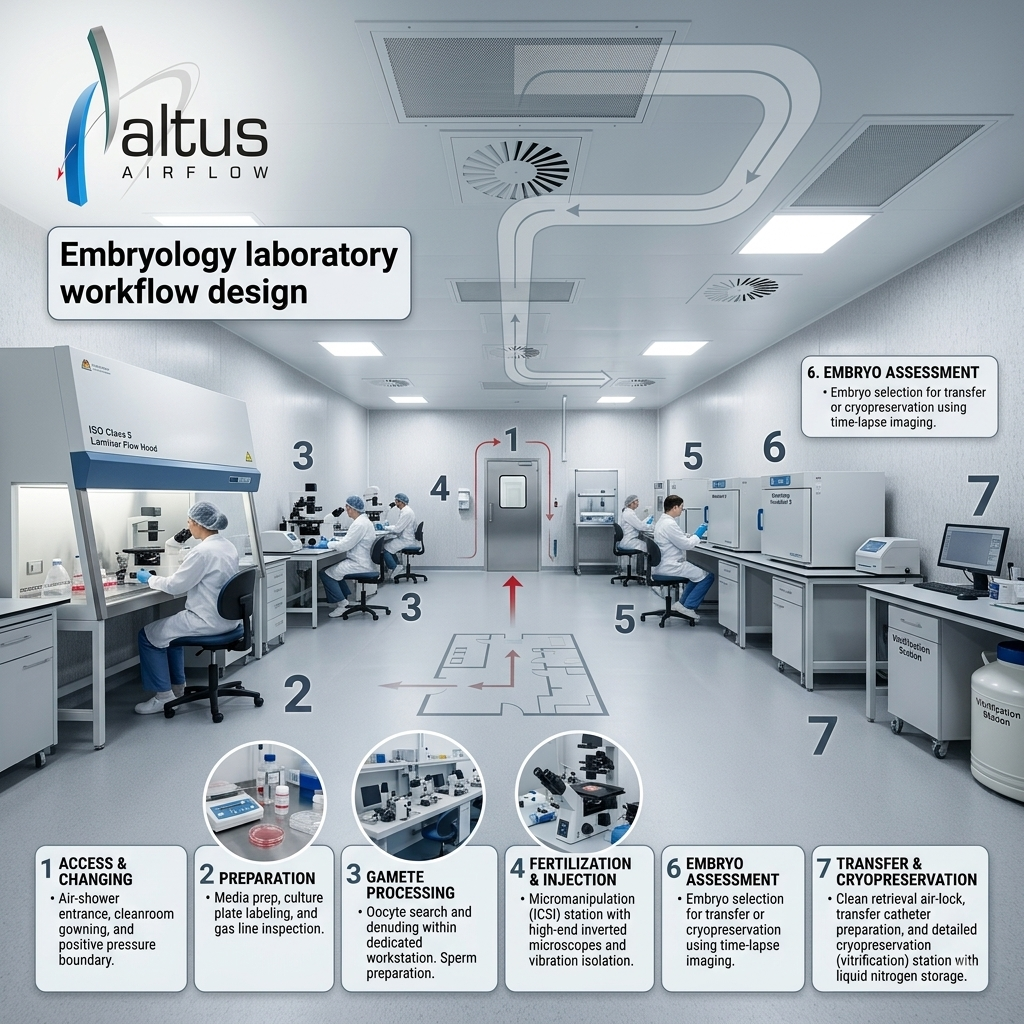
An IVF Lab Design Company designs and plans an IVF laboratory by combining clinical workflow, embryology requirements, contamination control, HVAC engineering, cleanroom principles, equipment planning, environmental monitoring, electrical infrastructure, and regulatory considerations. Unlike a conventional laboratory, an IVF laboratory must provide a carefully controlled environment because gametes, embryos, culture media, and other reproductive materials can be highly sensitive to temperature, humidity, air quality, volatile compounds, vibration, and contamination. A systematic design approach therefore begins with understanding the fertility clinic's clinical processes and continues through engineering, installation, validation, and commissioning.
Understanding the Purpose of IVF Laboratory Planning
An IVF laboratory is a specialized environment where delicate biological processes take place. The laboratory may support procedures such as:
- Oocyte handling
- Sperm preparation
- Insemination
- Intracytoplasmic sperm injection (ICSI)
- Embryo culture
- Embryo assessment
- Cryopreservation
- Thawing procedures
- Embryo transfer preparation
- Micromanipulation
- Cryostorage
Each activity can have different space, equipment, environmental, and workflow requirements.
For this reason, laboratory planning should be completed before construction begins. The objective is to create an environment where personnel can work efficiently while minimizing unnecessary exposure of reproductive materials to environmental risks.
1. Initial Requirement Assessment
The first stage involves understanding the fertility center's requirements.
The design team typically discusses:
- Number of IVF cycles expected
- Types of assisted reproductive procedures
- Number of embryologists
- Number of laboratory rooms
- Equipment requirements
- Future expansion plans
- Available floor area
- Existing building services
- Utility availability
- Budget considerations
- Applicable regulatory requirements
The laboratory should be designed around actual clinical operations rather than simply fitting equipment into an available room.
2. Site Survey and Existing Infrastructure Assessment
A site survey helps determine whether the proposed location can support the laboratory.
The assessment may include:
- Room dimensions
- Ceiling height
- Structural conditions
- HVAC capacity
- Electrical capacity
- Water and drainage
- Access routes
- Fire-safety infrastructure
- Service shafts
- Equipment movement routes
- Adjoining rooms
Existing HVAC and electrical systems should be evaluated before finalizing the design.
If the building cannot support the required environmental conditions, additional infrastructure may be necessary.
3. Workflow Planning
Workflow is one of the most important aspects of IVF laboratory planning.
The design should establish logical movement between:
- Patient areas
- Sample collection areas
- Andrology
- Embryology
- Media preparation
- Culture areas
- Cryopreservation
- Storage
- Transfer-related areas
The objective is to reduce unnecessary movement and minimize opportunities for contamination or procedural errors.
A well-planned workflow can also improve staff productivity.
4. Zoning the IVF Laboratory
IVF laboratories commonly require different functional zones.
Depending on the facility, these may include:
Embryology Laboratory
This is where oocytes and embryos are handled and cultured. It requires carefully controlled environmental conditions and appropriate equipment positioning.
Andrology Laboratory
The andrology area supports sperm processing and analysis. Its workflow should be coordinated with sample collection and embryology requirements.
ICSI or Micromanipulation Area
This area accommodates specialized equipment such as micromanipulators and inverted microscopes.
Cryopreservation Area
This area supports freezing and handling of reproductive materials and requires appropriate safety and environmental planning.
Media Preparation Area
Media preparation should be planned to minimize contamination and ensure controlled handling.
The exact zoning arrangement depends on the facility's workflow and applicable requirements.
5. Separation of Clean and Less-Controlled Areas
A well-designed IVF laboratory should establish appropriate separation between controlled laboratory areas and less-controlled spaces.
Design considerations may include:
- Personnel entry
- Gowning
- Material transfer
- Waste movement
- Sample movement
- Equipment movement
- Cleaning access
Where appropriate, controlled access can help reduce unnecessary traffic.
The design should also prevent cross-flow between incompatible activities.
6. HVAC System Planning
HVAC is one of the most important engineering systems in IVF laboratory design.
The HVAC system helps manage:
- Temperature
- Relative humidity
- Air movement
- Filtration
- Pressure relationships
- Air changes
- Air cleanliness
IVF environments can be sensitive to environmental fluctuations. Therefore, HVAC planning should be based on the specific requirements of the laboratory and the equipment installed.
The design should also consider heat loads generated by incubators, refrigerators, freezers, computers, lighting, and personnel.
7. Air Filtration and Contamination Control
Airborne particles and contaminants can affect controlled laboratory environments.
Depending on the design and applicable requirements, filtration may include high-efficiency filtration such as HEPA filters.
The system should be designed to manage:
- Particulate contamination
- Airflow distribution
- Pressure relationships
- Air exchange
- Filter performance
However, contamination control should not rely only on filtration. It should be supported by appropriate zoning, cleaning, personnel practices, material control, and environmental monitoring.
8. VOC and Chemical Contamination Considerations
IVF laboratories can be particularly sensitive to volatile organic compounds and other chemical contaminants.
Potential sources include:
- Paints
- Adhesives
- Sealants
- Cleaning chemicals
- Furniture
- Construction materials
- Some plastics
- Solvents
Therefore, material selection should consider low-emission and healthcare/laboratory-appropriate products wherever applicable.
Construction and commissioning procedures should also account for potential chemical contamination before the laboratory becomes operational.
9. Temperature and Humidity Management
Temperature stability is important for IVF laboratory operations.
The HVAC design should consider:
- Room temperature requirements
- Equipment heat generation
- Outdoor climate
- HVAC redundancy
- Monitoring
- Alarm systems
Humidity should also be controlled according to the requirements of the laboratory, equipment, and facility.
The objective is not merely to cool the room but to maintain stable and appropriate environmental conditions.
10. Equipment Planning
An IVF laboratory can contain sophisticated equipment, and each item should be considered during the design stage.
Typical equipment may include:
- CO₂ incubators
- Tri-gas incubators
- Inverted microscopes
- Micromanipulators
- ICSI workstations
- Laminar airflow workstations
- Centrifuges
- Sperm-analysis systems
- Cryopreservation equipment
- Cryogenic storage systems
- Refrigerators
- Freezers
- Water purification systems
- Air-quality monitoring equipment
Equipment dimensions, heat output, electrical loads, access requirements, service clearances, and maintenance requirements should be incorporated into the layout.
11. Incubator Placement
Incubators are particularly important in IVF laboratories because embryos may remain inside them for extended periods.
The design should consider:
- Stable room conditions
- Electrical reliability
- Backup power
- Equipment ventilation
- Gas supply
- Access for maintenance
- Location relative to laboratory workflow
Incubators should be positioned where staff can operate them without disrupting other critical laboratory activities.
12. ICSI Workstation Planning
ICSI requires precision and controlled working conditions.
The workstation may include:
- Inverted microscope
- Micromanipulator
- Anti-vibration arrangement
- Heated stage
- Specialized work surface
- Environmental controls
The layout should provide sufficient space for embryologists to work comfortably while minimizing vibration and unnecessary disturbance.
13. Cryostorage Planning
Cryostorage requires dedicated planning because cryogenic materials present both clinical and occupational considerations.
The design should consider:
- Cryogenic storage vessels
- Ventilation
- Oxygen monitoring where appropriate
- Safe access
- Emergency procedures
- Equipment positioning
- Staff movement
- Backup arrangements
The laboratory should have appropriate safety systems based on the cryogenic materials and equipment used.
14. Electrical System Design
IVF laboratories rely heavily on electrical equipment.
The electrical design may need to accommodate:
- Incubators
- Microscopes
- Freezers
- Refrigerators
- Computers
- Monitoring systems
- HVAC equipment
- Cryogenic systems
- Laboratory equipment
Critical equipment should have appropriate backup power based on its operational importance.
UPS and generator integration may be considered for selected systems.
15. Monitoring and Alarm Systems
Environmental monitoring helps laboratory personnel identify deviations quickly.
Parameters may include:
- Temperature
- Humidity
- Pressure
- CO₂ concentration
- Oxygen concentration where relevant
- Incubator conditions
- Freezer temperatures
- Air-quality indicators
Alarm systems can notify staff when predefined conditions are exceeded.
Monitoring strategies should be designed according to laboratory requirements and risk assessment.
16. Cleanroom and Surface Design
The selection of walls, ceilings, flooring, doors, and work surfaces is important.
Materials should ideally support:
- Easy cleaning
- Low particle generation
- Chemical resistance
- Moisture resistance
- Durability
- Smooth surfaces
- Sealed joints
Commonly considered finishes may include suitable modular panels and seamless or low-joint flooring systems.
Material specifications should be finalized based on the laboratory's intended use and applicable requirements.
17. Flooring Design
Flooring should support cleaning, durability, and laboratory operations.
Potential requirements include:
- Seamless or low-joint surfaces
- Chemical resistance
- Easy cleaning
- Slip resistance
- Appropriate static-control properties where required
The flooring should also be compatible with laboratory furniture and equipment.
18. Lighting Design
Lighting should provide adequate visibility without unnecessarily disturbing sensitive laboratory processes.
The design can consider:
- General illumination
- Task lighting
- Microscope work
- Glare control
- Color rendering
- Emergency lighting
Lighting fixtures should also be selected and positioned so that they do not interfere with HVAC airflow or laboratory equipment.
19. Ergonomic Laboratory Layout
Embryologists can spend long periods performing precision work.
Therefore, ergonomics should be considered carefully.
Planning may include:
- Workbench height
- Seating
- Microscope positioning
- Equipment reach
- Monitor placement
- Storage
- Staff circulation
An ergonomic laboratory can help improve working comfort and operational efficiency.
20. Material and Sample Movement
Material movement should be planned separately from general personnel traffic where appropriate.
The design should consider how:
- Samples enter the laboratory
- Materials reach workstations
- Consumables are stored
- Waste leaves the laboratory
- Cryogenic materials are transferred
Clear movement routes can reduce unnecessary traffic and support contamination-control practices.
21. Storage Planning
Adequate storage is essential for laboratory efficiency.
Storage may be required for:
- Culture media
- Consumables
- Laboratory plastics
- Personal protective equipment
- Cleaning supplies
- Documentation
- Reagents
- Cryogenic accessories
Storage should be organized so that frequently used items are accessible without disrupting critical laboratory activities.
22. Safety Planning
Safety planning should cover both laboratory operations and engineering infrastructure.
Depending on the laboratory, this may include:
- Fire safety
- Electrical safety
- Gas safety
- Cryogenic safety
- Emergency power
- Oxygen monitoring
- Access control
- Emergency exits
- Spill management
Safety procedures should be integrated into the design rather than added later.
23. Regulatory and Standards Considerations
An IVF laboratory must be planned with applicable regulations, standards, and accreditation requirements in mind.
In India, this may include requirements associated with the Assisted Reproductive Technology regulatory framework, healthcare facility requirements, electrical and fire-safety provisions, and relevant laboratory and cleanroom practices.
Depending on the facility, designers may also consider applicable ISO standards, environmental-control principles, equipment requirements, and recognized international IVF laboratory practices.
The applicable requirements should be identified according to the specific project and jurisdiction.
24. Validation and Commissioning
After installation, the laboratory should be tested before clinical operation.
Validation and commissioning may include:
- HVAC performance testing
- Airflow testing
- HEPA filter integrity testing where applicable
- Particle measurement
- Pressure verification
- Temperature testing
- Humidity verification
- Electrical testing
- Alarm testing
- Equipment qualification
- Environmental monitoring verification
Documentation provides evidence that installed systems meet their specified performance requirements.
25. Future Expansion Planning
A fertility center may expand its IVF services over time.
Therefore, designers can consider future requirements such as:
- Additional incubators
- More embryology workstations
- Additional cryostorage
- Expanded andrology services
- Additional treatment rooms
- Increased electrical capacity
- HVAC expansion
Planning for future growth during the initial design stage can reduce the disruption and cost associated with later modifications.
26. Maintenance Planning
The design should provide reasonable access for maintenance personnel.
Important considerations include:
- HVAC filter replacement
- Equipment servicing
- Electrical maintenance
- Sensor calibration
- Incubator servicing
- Cryogenic equipment maintenance
- Cleaning
- Monitoring-system maintenance
A laboratory that is difficult to maintain can experience avoidable downtime.
27. Why Professional IVF Laboratory Planning Matters
IVF laboratory design involves much more than creating attractive interiors. It requires coordination between embryology workflow, environmental engineering, equipment, utilities, safety, and regulatory requirements.
A professional design approach can help ensure:
- Logical workflow
- Controlled environmental conditions
- Reduced contamination risks
- Efficient equipment placement
- Reliable utilities
- Better staff ergonomics
- Easier maintenance
- Future adaptability
Every design decision should ultimately support safe and consistent laboratory operations.
28. Key Stages of IVF Laboratory Design
A structured project commonly follows these stages:
- Requirement assessment
- Site survey
- Workflow analysis
- Zoning
- Concept planning
- HVAC engineering
- Equipment planning
- Electrical and utility design
- Material specification
- Detailed engineering
- Installation
- Testing
- Commissioning
- Documentation
- Handover and maintenance planning
Following a structured process can reduce design conflicts and improve project coordination.
29. How to Choose the Right Design Partner
A fertility clinic should assess a provider based on:
- IVF laboratory experience
- Engineering capabilities
- HVAC expertise
- Cleanroom knowledge
- Equipment integration
- Contamination-control planning
- Regulatory awareness
- Testing and commissioning
- Documentation
- Maintenance support
- Future expansion planning
Relevant completed projects can also provide valuable evidence of practical experience.
30. Long-Term Benefits of Proper IVF Laboratory Planning
A carefully designed IVF laboratory can provide long-term operational benefits.
These may include:
- More efficient laboratory workflow
- Better environmental control
- Improved contamination management
- Effective equipment utilization
- Easier maintenance
- Better staff ergonomics
- Improved monitoring
- Greater readiness for technological upgrades
While laboratory infrastructure cannot guarantee IVF outcomes, a properly controlled and professionally engineered environment can support consistent laboratory processes and reduce avoidable environmental risks.
Conclusion
An IVF laboratory requires careful coordination of clinical workflow, embryology requirements, HVAC, filtration, zoning, equipment, electrical systems, safety, environmental monitoring, cleanroom principles, and applicable regulations. A structured design process begins with understanding the fertility clinic's needs and continues through site assessment, detailed engineering, installation, testing, validation, commissioning, and maintenance planning. Choosing an experienced IVF Lab Design Company can help fertility centers develop a laboratory environment that is efficient, controlled, maintainable, and prepared for future expansion. Altus Airflow supports specialized healthcare and controlled-environment projects with an engineering-focused approach to laboratory planning, HVAC integration, filtration, modular infrastructure, and project execution.
Frequently Asked Questions
1. What does an IVF Lab Design Company do?
An IVF Lab Design Company plans the laboratory layout, workflow, HVAC, filtration, equipment placement, electrical infrastructure, environmental monitoring, cleanroom features, utilities, safety systems, and other requirements needed for an IVF facility.
2. How does an IVF Lab Design Company plan laboratory workflow?
An IVF Lab Design Company studies the movement of patients, samples, embryologists, equipment, materials, and waste to create logical pathways that reduce unnecessary movement and support contamination-control practices.
3. Why is HVAC important in IVF laboratory design?
An IVF Lab Design Company considers HVAC essential for managing temperature, humidity, filtration, airflow, pressure relationships, and environmental stability according to the laboratory's requirements.
4. What equipment is considered during IVF laboratory planning?
An IVF Lab Design Company may plan for incubators, inverted microscopes, micromanipulators, ICSI workstations, centrifuges, cryopreservation equipment, freezers, refrigerators, laminar airflow workstations, monitoring systems, and other specialized equipment.
5. Does an IVF Lab Design Company provide contamination-control planning?
Yes. An IVF Lab Design Company can incorporate zoning, controlled airflow, filtration, appropriate materials, personnel-flow planning, cleaning considerations, and environmental monitoring to support contamination control.
Read Our Previous Blog------>Why are Modular Ophthalmic OT Setup Services important for eye hospitals and specialty clinics?

