


Why Usage-Based Billing Is Becoming the Future of SaaS Pricing
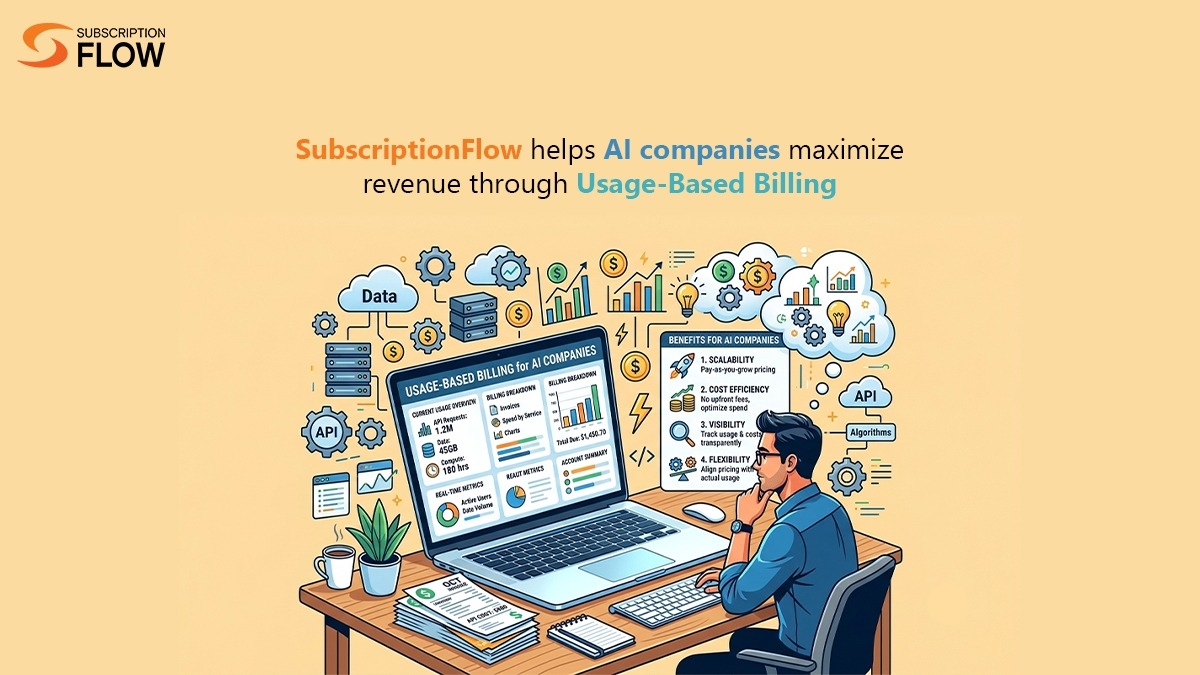
SaaS pricing is changing rapidly. Traditional seat-based and flat-rate subscription models have worked well for years, but they do not always reflect how modern software creates value. Today, many SaaS products generate value through API calls, AI inference, data processing, automation, storage, transactions, and other measurable activities. In these situations, charging customers primarily by the number of users can create a disconnect between the value they receive and the price they pay.
Usage-based billing offers a more flexible alternative. Instead of charging customers only according to seats or fixed plans, businesses can charge based on how much of their product customers actually consume. This approach creates a closer connection between customer success and revenue while giving SaaS companies new opportunities to improve acquisition, expansion, retention, and forecasting.
What Is Usage-Based Billing in SaaS?
Usage-based billing is a SaaS monetization model where customer charges are calculated according to measurable consumption. Depending on the product, the billable metric could include API requests, transactions, storage capacity, data processed, compute time, messages sent, AI tokens, credits consumed, or automated tasks completed.
The billing system collects usage events, applies predefined pricing rules, calculates the amount owed, and generates an invoice for the relevant billing period. This allows customers to pay according to their actual consumption instead of committing to a fixed amount of software capacity that they may not use.
Common Usage-Based Pricing Models
There are several ways SaaS companies can implement usage-based pricing. A pay-as-you-go model charges customers strictly according to consumption and is particularly useful for developer platforms, APIs, and product-led SaaS products. Customers can start with low usage and increase their spending as their requirements grow.
Tiered usage pricing applies different rates as customers reach specific consumption thresholds. For example, a company might charge one rate for the first 1,000 units and a lower rate for additional usage. This model can encourage customers to increase consumption while providing volume-based savings.
Volume pricing applies a single rate to all usage once a customer reaches a particular volume bracket. This structure is often attractive to larger customers because it provides predictable economies of scale as consumption increases.
Prepaid credits provide another option. Customers purchase a certain amount of credits upfront and consume those credits as they use the product. This can provide SaaS businesses with better upfront cash flow while giving customers a flexible way to manage consumption.
Many B2B SaaS companies also use hybrid pricing, combining a fixed subscription fee with usage-based charges. This approach provides a predictable revenue baseline while allowing the business to capture additional revenue as customer consumption increases.
Revenue Grows as Customers Get More Value
One of the biggest advantages of usage-based billing is the natural relationship between customer success and revenue growth. With a traditional seat-based model, a customer can significantly increase their use of a product without necessarily increasing their spending. Expansion often requires a sales conversation, a plan upgrade, or additional seats.
Usage-based billing changes this dynamic. When a customer's transaction volume, API usage, data processing, or other measurable consumption increases, their bill can automatically increase as well. Expansion therefore becomes part of normal product usage rather than a separate sales process.
This creates a powerful alignment between customer value and SaaS revenue. If customers are using more of the product because it is helping them grow, the SaaS company participates in that growth automatically.
Lowering the Barrier to Entry
Fixed subscription fees can create friction for prospects that are unsure how much value they will receive from a new product. A small business may hesitate to pay for an expensive annual plan before it has established a clear return on investment.
Usage-based pricing can reduce this barrier by allowing customers to begin with relatively low consumption. They can test the product, experience its value, and increase spending as their needs grow.
This structure is particularly effective for product-led growth strategies and developer-focused SaaS products. Customers can begin using the product without making a large upfront commitment, allowing the product itself to demonstrate its value.
Creating a Stronger Connection Between Usage and Value
Pricing should ideally reinforce the behavior a SaaS company wants from its customers. If customers receive more value when they use a product more frequently, a usage-based model can create a natural relationship between consumption and revenue.
A fixed plan can sometimes discourage customers from increasing usage because they may be worried about reaching a higher pricing tier or adding additional seats. Usage-based billing provides a more gradual pricing relationship. Customers can increase consumption according to their business needs and pay proportionally.
For SaaS products with genuine usage-driven costs, such as cloud infrastructure, storage, messaging, compute, or AI inference, this model can also create a closer relationship between revenue and the cost of delivering the service.
Expanding the SaaS Addressable Market
Serving both small startups and large enterprises can be challenging with traditional pricing structures. A plan that is affordable for a five-person company may generate too little revenue from a large enterprise, while an enterprise-level price can discourage smaller customers.
Usage-based billing provides a way to accommodate both segments. A smaller customer can consume fewer resources and pay less, while a large customer naturally generates a larger bill through higher consumption.
SaaS companies can further customize this approach with volume discounts, minimum commitments, prepaid credits, and enterprise contracts. This allows the same fundamental pricing infrastructure to support customers at different stages of growth.
Improving Customer Retention
Usage-based billing can also support retention by reducing the feeling that customers are paying for unused capacity. In a flat-fee model, a customer experiencing a temporary decline in activity may continue paying the same amount every month.
With consumption-based pricing, the customer's bill can decrease when usage decreases. This gives customers more flexibility during slower periods and can reduce the pressure to cancel the product simply because the current subscription cost feels too high.
When business activity increases again, customers can increase their consumption and spending without having to restart the purchasing process. This flexibility can contribute to stronger long-term customer relationships.
Turning Usage Data Into Revenue Intelligence
Usage data is valuable for more than calculating invoices. It can also provide SaaS companies with actionable insights into customer behavior.
For example, a customer whose usage is consistently approaching a defined threshold may be ready for an expansion conversation. Conversely, a customer whose usage is declining steadily may represent a potential churn risk.
Unusual changes in consumption can also highlight technical problems, integration issues, billing anomalies, or changes in customer behavior. By connecting usage data with customer success and revenue operations, SaaS companies can turn their billing infrastructure into an important source of business intelligence.
Supporting Hybrid Pricing Strategies
Although pure consumption pricing offers significant advantages, it can make revenue forecasting more difficult. Enterprise customers may also prefer predictable costs for budgeting and procurement purposes.
Hybrid pricing can solve this challenge by combining a recurring subscription fee with usage-based charges. A SaaS company can establish a predictable minimum revenue level while still capturing additional revenue as customers exceed their included usage.
Other approaches include minimum commitments, prepaid usage, committed consumption discounts, and credit-based pricing. These structures allow SaaS companies to balance predictable recurring revenue with consumption-driven expansion.
How to Implement Usage-Based Billing
Successful implementation begins by identifying the right usage metric. The metric should be easy for customers to understand and should have a clear relationship with the value they receive. Common examples include API calls, transactions, storage, compute time, messages, credits, and AI tokens.
The next step is implementing accurate usage metering within the product. Every billable event needs to be captured reliably and associated with the appropriate customer account.
SaaS companies then need a billing engine capable of aggregating usage, applying pricing rules, handling tiers or volume discounts, managing credits and commitments, and calculating charges accurately. Automated invoicing and payment collection should also be connected to the billing workflow.
Finally, businesses should provide customers with clear visibility into their consumption. Usage dashboards, invoice details, alerts, and spending thresholds can help customers understand what they are paying for and avoid unexpected bills.
How SubscriptionFlow Supports Usage-Based Billing
Managing consumption-based pricing manually can quickly become complicated as a SaaS company adds customers, pricing tiers, usage metrics, discounts, credits, and different billing rules.
SubscriptionFlow provides infrastructure for managing usage-based, tiered, volume-based, and hybrid subscription models. SaaS businesses can configure pricing rules, capture usage information, calculate charges, automate invoicing, and manage payment collection through a centralized subscription management platform.
This helps finance, billing, and revenue teams reduce manual processes while providing customers with more transparent and accurate billing. By automating the operational side of usage-based billing, SaaS companies can focus more on designing a pricing strategy that aligns with customer value.
Final Thoughts
Usage-based billing is becoming increasingly relevant as SaaS products move beyond simple user-based software and deliver value through transactions, automation, data, APIs, infrastructure, and AI. When implemented correctly, consumption-based pricing can lower barriers to entry, connect revenue with customer success, expand market reach, improve retention, and create valuable usage insights.
However, successful usage-based billing requires more than simply choosing a price per unit. SaaS companies need reliable metering, flexible pricing rules, accurate invoicing, payment automation, customer visibility, and strong financial controls.
For businesses ready to make usage a central part of their monetization strategy, the right billing infrastructure can make the transition significantly easier. With the right technology in place, usage-based billing can become more than a pricing model it can become a growth engine that scales alongside customers.

