


RWA Tokenization Development: A Strategic Guide to Launching a Tokenized Asset Venture
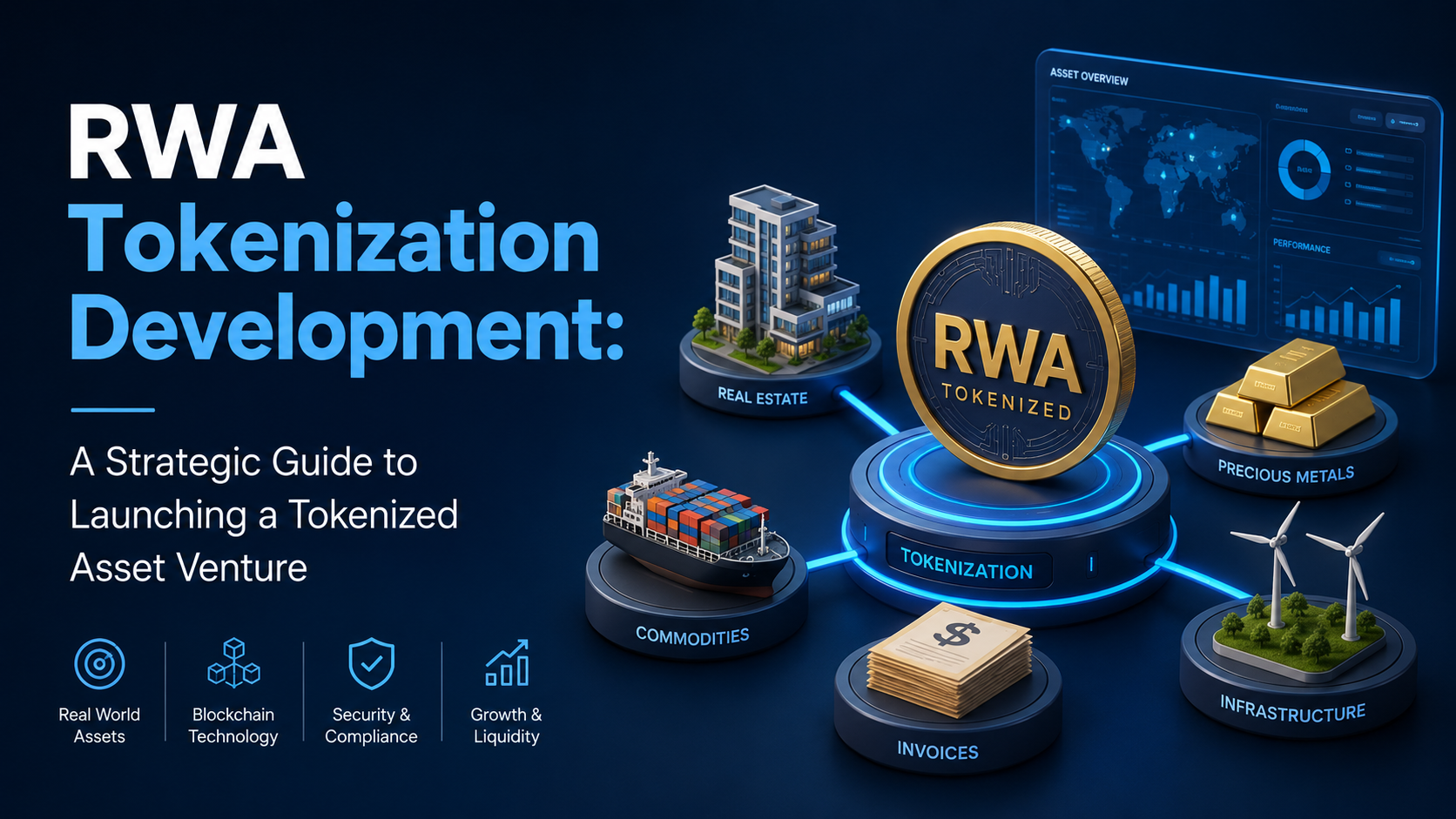
RWA tokenization is gaining attention as businesses look for practical ways to represent physical and financial assets on blockchain networks. Real estate, precious metals, artwork, private credit, commodities, infrastructure, and other asset classes can be represented through digital tokens. These tokens can record ownership rights, economic interests, or claims connected with an underlying asset, depending on the legal and business model.
Launching such a venture requires more than issuing tokens and placing them on a blockchain. The project needs a suitable asset category, legal structure, token model, blockchain network, investor process, custody arrangement, compliance framework, and marketplace. Each part affects how the venture operates and how users interact with tokenized assets.
For businesses considering RWA Tokenization, planning should begin with the asset and its legal structure rather than the technology alone. A well-planned approach can help reduce operational problems and provide a practical foundation for launching a tokenized asset platform.
1. Select the Right Asset Category
The first stage of RWA Tokenization Development is deciding which asset will be represented digitally. Different assets have different ownership structures, valuation methods, liquidity conditions, legal requirements, and investor expectations.
Real estate is frequently considered because properties have identifiable ownership records and established valuation practices. Other possibilities include gold, fine art, private equity interests, invoices, loans, agricultural commodities, carbon credits, and infrastructure projects.
Method: Assess the Asset Before Tokenization
Start by reviewing the asset's ownership status, market demand, valuation process, income potential, transfer restrictions, and documentation. Businesses should also identify who will purchase the tokens and what rights those tokens will provide.
The asset should have a practical reason for being tokenized. If token holders receive no meaningful economic or ownership benefit, the token may have limited market appeal.
2. Decide the Legal and Ownership Structure
Legal planning is one of the most important stages of a tokenized asset venture. A token does not automatically represent legal ownership simply because it exists on a blockchain. The connection between the token and the underlying asset needs to be documented.
A venture may use a special purpose vehicle, trust, partnership, fund, contractual arrangement, or another legal structure depending on the asset and jurisdiction. The structure should explain who owns the underlying asset, who issues the tokens, what rights investors receive, and how transfers are handled.
Method: Map Legal Rights to Token Rights
Prepare a detailed relationship between the physical or financial asset and the digital token. Document ownership, income distribution, redemption conditions, transfer rules, voting rights, and investor obligations.
Working with legal professionals familiar with digital assets and securities regulations can help the business identify requirements before development begins.
3. Define the Token Economics
Token economics determines how the digital asset functions within the venture. This includes the total token supply, token value, minimum investment, distribution method, income mechanism, redemption rules, and transfer conditions.
For example, a property valued at $10 million could be represented by 1 million tokens, with each token representing a defined economic interest. The exact structure depends on the legal model and the rights assigned to token holders.
Method: Create a Token Model
Prepare a token economics document covering:
-
Total token supply
-
Initial token price
-
Minimum purchase amount
-
Token holder rights
-
Income distribution
-
Redemption conditions
-
Transfer restrictions
-
Secondary trading rules
-
Token issuance schedule
The model should connect directly with the asset's financial performance and legal structure.
4. Choose the Blockchain Network
Blockchain selection affects transaction costs, transaction speed, wallet compatibility, smart contract functionality, ecosystem support, and user experience. Ethereum, Polygon, BNB Chain, Avalanche, and other networks may be considered depending on the project's requirements.
There is no universal blockchain for every RWA project. A platform dealing with high-value property assets may have different requirements from a platform handling frequent transactions involving commodity-backed tokens.
Method: Compare Networks Against Project Needs
Evaluate transaction fees, smart contract support, network activity, wallet compatibility, security history, developer resources, and integration options. Also consider whether the network supports the token standards required by the project.
The decision should be based on the venture's operating model rather than current market popularity.
5. Design the Tokenization Platform
The platform acts as the operational environment where users can review assets, complete verification, purchase tokens, manage holdings, receive distributions, and monitor transactions.
A typical RWA tokenization platform development project may include an investor portal, asset management module, token issuance system, wallet integration, KYC and AML module, payment gateway, smart contract layer, administrative dashboard, reporting tools, and secondary marketplace.
Method: Plan the Platform Modules
Divide the platform into functional sections before development:
-
User registration and identity verification
-
Asset listing and documentation
-
Token issuance
-
Wallet management
-
Investment processing
-
Payment integration
-
Portfolio management
-
Distribution management
-
Trading or transfer functionality
-
Administrative controls
This approach gives the development team a defined product structure and reduces unnecessary functionality during the initial launch.
6. Develop and Audit Smart Contracts
Smart contracts manage important token operations. Depending on the model, they can handle issuance, ownership records, transfers, restrictions, distributions, redemptions, and other transaction rules.
RWA Token development should therefore include contract planning, development, testing, and independent security review. A coding error can affect token balances, transactions, or investor funds, making contract quality particularly important.
Method: Use a Structured Contract Testing Process
The development process should include unit testing, integration testing, testnet deployment, transaction simulations, access-control testing, and an external smart contract audit.
Administrative functions should also use suitable permission systems. Sensitive functions such as minting, pausing transfers, or changing contract parameters should not be available to unauthorized accounts.
7. Add KYC, AML, and Investor Verification
Tokenized assets can involve regulated financial activity. Depending on the jurisdiction and asset type, the platform may need identity verification, sanctions screening, investor classification, transaction monitoring, and other compliance measures.
A KYC and AML process can be connected to the platform so that users complete verification before accessing investment or trading functions.
Method: Create Investor Onboarding Rules
Define which users can participate, what documents are required, which countries are supported, and what investment limits apply. The platform can then route users through the relevant verification stages before granting access to token purchases.
This approach also creates a record of investor activity that can support reporting and compliance processes.
8. Establish Asset Custody and Verification
Tokenization does not remove the need to verify the underlying asset. Investors need information about the asset represented by the token, including ownership records, valuation documents, insurance information, financial statements, or other relevant evidence.
A property-backed token, for example, may require title documents, valuation reports, property management records, and financial information.
Method: Create an Asset Verification Workflow
Before an asset is listed, collect the relevant documentation and conduct ownership and valuation checks. Assign responsibility for updating asset information when its value, legal status, or financial performance changes.
A reliable verification process helps maintain a consistent relationship between the token and its underlying asset.
9. Select Payment and Wallet Infrastructure
Investors may need to purchase tokens using fiat currency, stablecoins, or other supported digital assets. The platform therefore needs suitable payment processing and wallet functionality.
Wallets may be custodial or non-custodial. A custodial model gives the platform greater control over account management, while a non-custodial approach gives users control of their private keys.
Method: Match Infrastructure With User Requirements
Choose payment and wallet systems based on the target market, supported currencies, regulatory requirements, transaction volume, and user experience. The platform should also provide transaction records, balance information, and portfolio details.
10. Plan the Secondary Market
Liquidity is an important consideration for tokenized assets. Investors may want to sell or transfer their tokens after purchasing them. However, secondary trading can be subject to legal restrictions.
A platform may provide an internal marketplace, integrate with an external trading venue, or initially restrict transfers until specific conditions are met.
Method: Define Trading Rules Before Launch
Determine who can trade, when trading is permitted, what verification is required, whether holding periods apply, and how transaction records are maintained.
The trading model should match the legal status of the token and the rights attached to it.
11. Work With the Right Development Partner
Many businesses choose an RWA Tokenization Company when they do not want to manage blockchain architecture, smart contracts, platform development, security testing, and integrations internally.
When evaluating an RWA tokenization development company, businesses should review previous blockchain projects, technical capabilities, smart contract expertise, security practices, integration experience, and post-launch support.
An experienced provider may offer RWA tokenization development services covering token creation, smart contract development, platform development, wallet integration, compliance modules, marketplace functionality, and deployment.
Method: Evaluate the Provider Before Signing
Ask potential providers about:
-
Previous tokenization projects
-
Blockchain networks supported
-
Smart contract audit process
-
Security testing methods
-
Platform architecture
-
Compliance integrations
-
Post-launch maintenance
-
Upgrade procedures
-
Development timeline
-
Pricing structure
Businesses should compare providers based on technical fit and project requirements rather than selecting a vendor solely on development cost.
12. Prepare a Launch and Growth Plan
Launching a tokenized asset venture requires coordination between technology, legal operations, asset management, investor acquisition, and customer support. A platform should first be tested with a controlled group before a wider launch.
Real World Asset Tokenization Services may cover different stages, from asset assessment and token design to platform development and post-launch support. Businesses should decide which activities will remain internal and which will be handled by external partners.
Method: Use a Phased Launch
A practical launch sequence can include:
Phase 1: Asset and market research
Phase 2: Legal and token structure
Phase 3: Platform design
Phase 4: Smart contract development
Phase 5: Compliance and payment integration
Phase 6: Security testing
Phase 7: Pilot launch
Phase 8: Public launch and marketplace expansion
This sequence allows the business to identify operational issues before handling a larger investor base.
13. Monitor the Venture After Launch
RWA tokenization development does not end when the first tokens are issued. Asset information, investor records, smart contracts, compliance requirements, market activity, and platform performance require ongoing attention.
The business should monitor token transactions, asset valuations, investor activity, distributions, support requests, security alerts, and regulatory developments.
Method: Create a Continuous Operations Framework
Assign teams or service providers to technology maintenance, asset administration, compliance, investor support, security monitoring, and financial reporting. Regular reviews can help identify areas that require updates as the venture develops.
Conclusion
Launching a tokenized asset venture requires coordination between asset selection, legal planning, token economics, blockchain infrastructure, smart contracts, compliance, custody, payments, investor management, and marketplace operations. Businesses that approach the project as a complete financial and technology venture can make better decisions about their platform and operating model. Real World Asset Tokenization can support different asset categories, but each category requires its own legal, financial, and technical considerations. Choosing suitable Real World Asset Tokenization Services can also reduce the workload involved in platform creation and ongoing operations. Businesses can work with an experienced RWA Tokenization Company to handle the technical stages while keeping asset strategy and business objectives in focus. Blockchain App Factory provides RWA tokenization development services for businesses seeking to create tokenized asset platforms, covering areas such as token development, smart contracts, platform development, wallet integration, marketplace functionality, and related blockchain requirements.
FAQs
1. What is RWA Tokenization?
RWA Tokenization refers to representing ownership or economic rights connected with real-world assets through blockchain-based digital tokens. The assets may include real estate, commodities, artwork, private credit, or other eligible assets.
2. What assets can be tokenized?
Potential assets include real estate, gold, artwork, private equity, debt instruments, commodities, infrastructure projects, invoices, and other assets that can be legally represented through a digital token.
3. How long does RWA Token Development take?
The timeline depends on the asset type, legal structure, platform features, blockchain network, compliance requirements, smart contract complexity, and integrations. A basic platform generally requires less development time than a full marketplace with multiple asset categories.
4. Why is legal planning important for tokenization?
Legal planning defines the relationship between the token and the underlying asset. It can determine ownership rights, income rights, transfer conditions, investor eligibility, and other obligations.
5. What does an RWA tokenization development company provide?
An RWA tokenization development company may provide smart contract development, token creation, platform development, wallet integration, payment integration, compliance modules, marketplace functions, testing, deployment, and maintenance.
6. What is the role of smart contracts in RWA Tokenization?
Smart contracts can manage token issuance, transfers, ownership records, distribution rules, redemption conditions, and other predefined operations connected with the token.
7. Can tokenized assets be traded after issuance?
They can be traded when the legal structure and platform rules permit secondary transactions. Some assets may have transfer restrictions, holding periods, or investor eligibility requirements.
8. What should businesses consider before launching?
Businesses should assess the asset, legal structure, target investors, token economics, blockchain network, compliance requirements, custody model, payment methods, platform features, security procedures, and secondary-market strategy before launch.

