


What to Look for in a Reliable Clothing Line Manufacturer
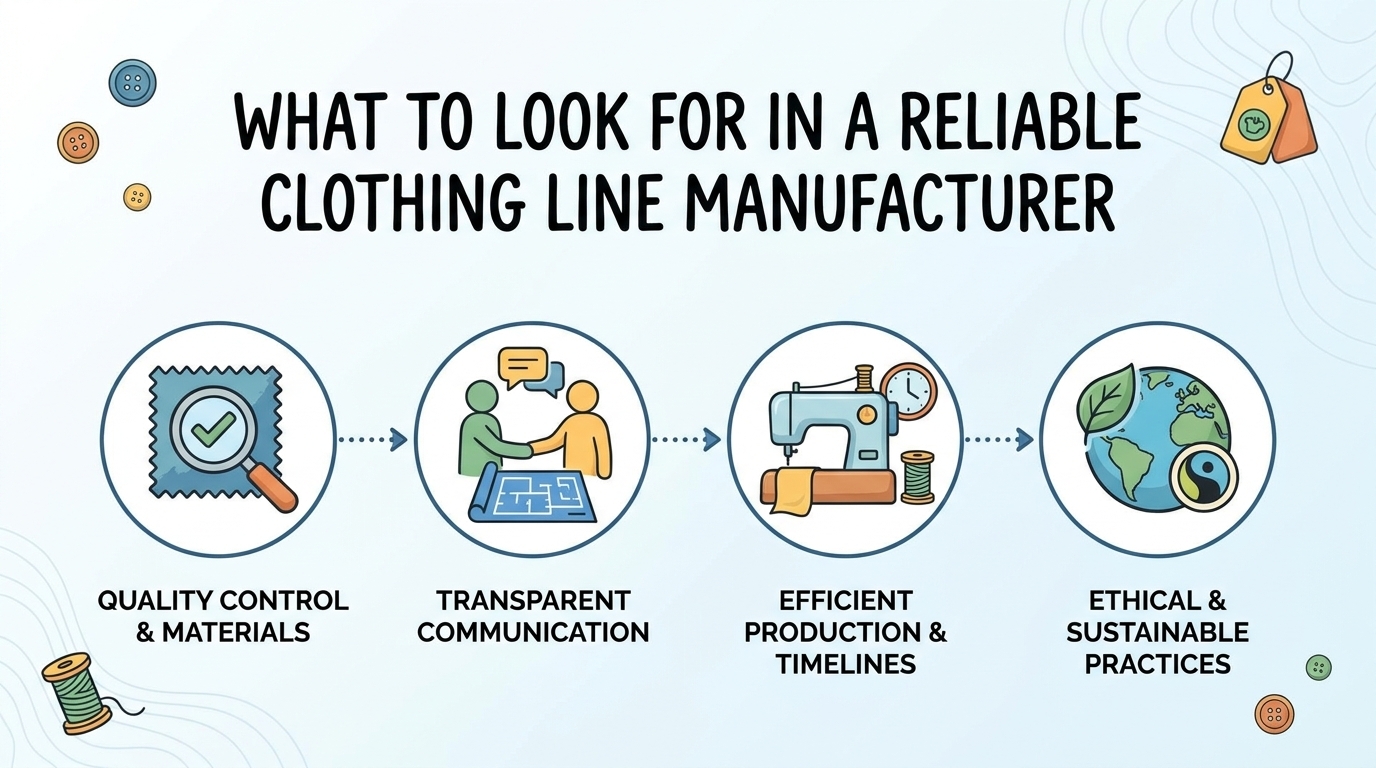
A successful clothing brand is built on more than creative designs, compelling marketing, and an attractive storefront. Behind every dependable apparel collection is a manufacturing operation capable of turning product concepts into consistent, commercially viable products. When that relationship works well, brands can focus on design, customer acquisition, merchandising, and growth. When it fails, production delays, inconsistent quality, unexpected costs, and inventory problems can quickly damage both profitability and customer trust.
Choosing a clothing manufacturer is therefore one of the most consequential decisions a fashion business can make. The right supplier should do more than accept an order and produce garments. A reliable manufacturing partner should understand technical specifications, maintain consistent quality, communicate clearly, meet realistic production schedules, and have the operational capacity to support the brand as demand changes.
This is particularly important for growing brands. An emerging label may begin with relatively small production runs, while an established company may require larger quantities across several styles and seasonal collections. The ideal manufacturing relationship should accommodate that evolution without forcing the brand to compromise its product standards.
Start With Manufacturing Experience That Matches Your Product
One of the first things to investigate is whether a manufacturer's experience actually aligns with the products you intend to sell. Apparel manufacturing is not a single standardized process. A factory experienced in basic T-shirts may have very different capabilities from one specializing in structured outerwear, technical garments, fashion accessories, or detailed lifestyle products.
Ask potential suppliers what types of products they regularly manufacture and request examples of comparable work. Pay attention to construction complexity, fabric types, finishing methods, and the level of customization shown in their previous projects.
Experience matters because manufacturing problems are often identified before production begins. An experienced production team may recognize that a particular fabric needs a different seam construction, that a garment requires additional reinforcement, or that a proposed trim could create problems during assembly. This type of practical knowledge can prevent expensive revisions after bulk production has already started.
A capable manufacturer should also understand the commercial realities of apparel. Production involves much more than sewing panels together. Fabric procurement, pattern development, cutting efficiency, stitching, finishing, pressing, labeling, inspection, packaging, and logistics all influence the final product and its cost.
For brands expanding beyond garments, broader manufacturing experience can be equally valuable. Accessories can complement apparel collections and create additional opportunities for cross-selling. For example, lifestyle brands may add travel and everyday-carry products that reflect the same design language as their clothing.
Products such as bulk cross body bags can provide a practical extension to an apparel range because they combine branding opportunities with everyday utility. When assessing a supplier for this type of product, examine whether its capabilities extend to elements such as reinforced straps, durable hardware, compartments, closures, and different textile constructions.
The broader principle is simple: choose a manufacturer based on demonstrated capability rather than a generic promise to “make anything.” The closer the supplier's existing expertise is to your intended product category, the fewer avoidable development problems you are likely to encounter.
Evaluate Quality Control Before You Discuss Large Orders
Quality should be evaluated before production volume becomes the main topic of conversation. A low price or attractive production minimum means little if a significant percentage of the finished inventory contains defects.
Professional manufacturing requires a structured quality-control process. This can include inspection of incoming materials, monitoring during production, final product inspection, measurement verification, and checks of packaging and labeling. Brands should ask prospective suppliers how these processes work rather than assuming that quality control happens automatically.
It is also important to define what “acceptable quality” means for your specific product. A minor loose thread may be tolerable in one type of garment but unacceptable in a premium tailored product. Similarly, color variation, embroidery placement, seam alignment, print quality, or zipper performance can have different commercial consequences depending on the brand's positioning.
Clear specifications make quality much easier to manage. A technical package should establish the approved measurements, materials, colors, construction methods, labels, trims, and other relevant requirements. Once the manufacturer and brand agree on these details, the specifications become a reference point for evaluating production.
Pre-production samples are another essential control mechanism. A brand should inspect and approve a physical sample before authorizing bulk manufacturing. This provides an opportunity to identify problems with fit, proportions, construction, materials, and finishing while changes are still relatively manageable.
Wear testing can provide additional insight. Have testers move naturally in the garment, sit, bend, walk, and perform activities relevant to its intended use. For everyday products, repeated handling can reveal weaknesses that are not apparent during a brief visual inspection.
Look for Clear Communication and Professional Project Management
Even an excellent factory can become difficult to work with if communication is inconsistent. Apparel development involves numerous decisions, and misunderstandings can occur when information is incomplete or updates are irregular.
A reliable manufacturing partner should provide clear points of contact and a practical process for discussing technical questions, approvals, revisions, materials, production status, and shipping. The brand should know who is responsible for each stage and when decisions need to be finalized.
Communication becomes particularly important when problems occur. No manufacturing process is completely immune to unexpected issues. A fabric shipment may be delayed, a component may become unavailable, or a sample may reveal a construction problem. A reliable supplier should communicate the issue early and provide realistic options rather than allowing a delay to become visible only after the promised delivery date has passed.
Brands should also avoid relying entirely on informal conversations. Important specifications and approvals should be documented. Written records reduce ambiguity and make it easier for both parties to confirm exactly what was agreed upon.
Useful documentation can include:
- Approved technical specifications and measurement charts.
- Confirmed fabric and trim selections.
- Color references and approved samples.
- Packaging and labeling requirements.
- Production quantities by style, size, and color.
- Agreed production milestones and delivery expectations.
- Quality-control requirements and defect tolerances.
Good communication is not merely a convenience. It is an operational safeguard that helps prevent small misunderstandings from becoming large production problems.
Examine Material Sourcing and Consistency
The quality of finished apparel is heavily influenced by the quality and consistency of the materials used to make it. Brands should therefore understand how prospective manufacturers source fabrics, trims, closures, labels, and other components.
Fabric selection should consider more than appearance. Depending on the product, relevant characteristics can include fiber composition, fabric weight, GSM, shrinkage, colorfastness, abrasion resistance, pilling behavior, drape, breathability, and wash performance.
Consistency becomes even more important when a product is reordered. A customer purchasing the same style six months after the original launch should reasonably expect it to look and feel substantially the same. Significant differences between production runs can create quality complaints and weaken confidence in the brand.
Ask whether materials can be sourced consistently and how the manufacturer handles substitutions. If a particular fabric becomes unavailable, the brand should have an opportunity to review and approve an alternative rather than discovering the change after receiving finished inventory.
Material planning also affects production timelines. Some specialty fabrics, custom dyes, branded hardware, and unusual trims may require longer procurement periods. These requirements should be identified early so that they do not unexpectedly push back the manufacturing schedule.
Assess the Manufacturer's Ability to Handle Customization
For many modern fashion businesses, manufacturing is not about purchasing generic products and attaching a logo. Brands often require meaningful customization to differentiate themselves in crowded markets.
Customization may involve unique silhouettes, custom labels, specialized pockets, embroidery, screen printing, woven patches, custom packaging, distinctive hardware, or proprietary combinations of fabrics and trims. The more customized the product, the more important manufacturing expertise becomes.
A good factory should be able to interpret a technical package accurately while also raising practical concerns when a design could be improved for manufacturability. This does not mean the supplier should override the creative direction. Rather, the manufacturer should provide technical insight that helps translate the creative concept into a repeatable production process.
Pattern development is another critical consideration. Poorly developed patterns can result in inconsistent sizing, awkward proportions, excess material, or inefficient cutting. A manufacturer with strong pattern-making capabilities can help establish a more dependable foundation before bulk production begins.
Ask prospective partners how design files are handled, how revisions are documented, and what happens when a sample does not meet expectations. Understanding the revision process upfront can prevent frustration later in the relationship.
Consider Accessories as Part of the Manufacturing Strategy
A clothing manufacturer can become even more valuable when it has capabilities that support a broader brand ecosystem. Fashion companies increasingly combine apparel with complementary accessories because these products can increase average order value while giving customers more ways to engage with the brand.
Tote bags are a particularly versatile example. They can serve practical everyday purposes while also functioning as recognizable extensions of a brand's visual identity. Unlike fitted apparel, totes generally do not require complex size grading, making them comparatively straightforward for brands that want to test an additional product category.
However, quality expectations still matter. A commercially successful tote should be designed around its intended use. Heavy loads require appropriate fabric weight, reinforced handles, strong attachment points, and suitable stitching. Interior pockets, closures, lining, and hardware can add functionality and differentiate a premium product from a basic promotional bag.
Brands exploring this category can consider bulk tote bags as a complementary product opportunity. The manufacturer should be able to discuss material choices, construction techniques, branding applications, and finishing details rather than treating every tote as a generic item.
Accessories can also support seasonal merchandising. A clothing brand might launch a coordinated tote alongside a spring collection, use a branded bag as part of a holiday campaign, or create a limited-edition accessory around a particular design theme. These products can help a brand refresh its assortment without developing an entirely new apparel category.
Compare Production Capacity With Your Growth Plans
A manufacturer should be capable of meeting your current needs without becoming a bottleneck as the business grows. This does not necessarily mean choosing the largest factory available. In many cases, a smaller or more specialized production operation may provide better attention to detail and communication.
The key is alignment. A startup may require modest quantities and frequent product testing, while a rapidly expanding brand may eventually need significantly greater capacity. Ask how the manufacturer handles increasing order volumes and whether production schedules can accommodate seasonal demand.
Capacity should also be considered in terms of flexibility. Fashion demand can change quickly. A product may unexpectedly become a bestseller after a social media campaign, while another style may sell more slowly than projected. A manufacturer that can support reasonable reorders can help brands respond to actual demand rather than relying entirely on long-range forecasts.
At the same time, brands should not assume that every manufacturer can provide unlimited surge capacity. Production slots, labor availability, material procurement, and seasonal demand can all affect lead times. Honest discussions about capacity are more useful than unrealistic promises.
| Manufacturer Factor | What to Investigate | Benefit to the Brand |
|---|---|---|
| Production Capacity | Current output, seasonal availability, and reorder capability | Supports growth without creating unnecessary supply disruptions. |
| Quality Assurance | Sampling, inspections, measurement checks, and defect procedures | Helps maintain consistent product standards across production runs. |
| Material Sourcing | Fabric availability, trim sourcing, substitutions, and consistency | Reduces material-related delays and unexpected quality variations. |
| Customization | Patterns, labels, printing, embroidery, hardware, and packaging | Allows products to reflect the brand's unique identity. |
| Communication | Points of contact, reporting, approvals, and issue resolution | Makes complex production projects easier to coordinate. |
| Lead Times | Sampling, sourcing, manufacturing, finishing, and shipping schedules | Improves launch planning and reduces the risk of missed delivery windows. |
Investigate Lead Times and Production Scheduling
Production lead time should be treated as a complete process rather than a single number. A factory may quote a certain number of days for sewing and assembly, but that figure may not include material procurement, sample approval, pattern adjustments, finishing, quality inspection, packaging, or shipping.
Ask manufacturers to explain the stages involved in a typical order. This creates a more realistic understanding of how long it will take to move from an approved design to finished inventory.
A practical production workflow can include the following stages:
- Technical review: The manufacturer examines the specifications and identifies potential production issues.
- Material confirmation: Fabrics, trims, labels, and other components are sourced or approved.
- Sampling: A physical prototype is produced for fit, construction, and appearance review.
- Sample revisions: Required adjustments are incorporated and the revised sample is approved.
- Pre-production preparation: Patterns, materials, production instructions, and quality standards are finalized.
- Bulk manufacturing: Cutting, sewing, finishing, and assembly take place according to the approved specifications.
- Quality inspection: Finished goods are inspected before packaging and shipment.
- Delivery: Inventory is packaged and dispatched according to the agreed logistics plan.
Building realistic buffers into the schedule is sensible. If a collection is tied to a specific retail launch, seasonal campaign, trade event, or marketing initiative, production should be completed early enough to allow for potential issues in transportation or fulfillment.
Review Ethical and Environmental Standards
Manufacturing quality is not limited to the physical product. Consumers, retailers, and business partners increasingly pay attention to how products are made. Brands should understand the labor, safety, and environmental practices associated with their manufacturing supply chain.
When evaluating a factory, ask about workplace safety, labor standards, material certifications where relevant, waste management, and environmental practices. The appropriate requirements will vary depending on the brand, market, and product category, but transparency is important.
Ethical manufacturing can also be commercially significant. Customers increasingly expect brands to stand behind claims about responsible production. If a company promotes sustainability or ethical sourcing, it should be able to substantiate those claims rather than relying on vague marketing language.
Responsible production should therefore be considered alongside quality, cost, and delivery. A manufacturer that supports transparent sourcing and appropriate labor standards can help protect both the brand's reputation and its long-term commercial relationships.
Evaluate Packaging, Labeling, and Finishing
The manufacturing process does not end when the garment is sewn. Finishing and presentation can have a meaningful impact on how customers perceive the product.
Brands should specify main labels, size labels, care instructions, hangtags, barcodes, packaging, folding requirements, and any protective materials required for shipment. These details should be confirmed before bulk production rather than added at the last minute.
Packaging should also match the product's positioning. A premium apparel line may require more refined presentation, while a minimalist direct-to-consumer brand may prioritize simple, efficient packaging. Either way, packaging should protect the product during transportation and support the intended customer experience.
Finishing quality should be inspected carefully. Loose threads, uneven hems, poorly attached labels, damaged hardware, incorrect folding, and inconsistent packaging can create a poor impression even when the core garment is well constructed.
Consider Technical Expertise for Functional Accessories
When a clothing brand expands into functional accessories, the manufacturer needs to understand the additional engineering requirements involved. A laptop bag, for example, must protect a device while remaining comfortable and attractive enough for daily use.
Computer bags can require padded compartments, protective linings, reinforced handles, strong strap attachments, secure closures, and appropriate internal organization. The dimensions also need to correspond accurately with the devices the product is intended to accommodate.
Brands entering this category can explore bulk laptop bags while evaluating whether a prospective supplier can maintain the required balance of durability, protection, functionality, and visual appeal.
Testing should involve realistic use. Place an appropriate laptop or weighted equivalent inside the bag, carry it using different handles and straps, operate the closures repeatedly, and inspect stress points after use. A product intended for professional customers should withstand the routine handling associated with commuting, travel, and daily work.
This same principle applies to any functional accessory. Manufacturing specifications should reflect the actual demands placed on the product rather than relying solely on aesthetic considerations.
Understand Pricing Beyond the Unit Cost
Price is obviously important, but the quoted manufacturing cost should not be viewed in isolation. The cheapest factory is not necessarily the least expensive manufacturing solution once defects, delays, revisions, shipping problems, and inconsistent quality are considered.
Brands should understand what is included in the quoted price. Depending on the supplier, sampling, pattern development, materials, trims, labels, packaging, finishing, and other services may be priced separately.
It is useful to calculate the complete landed cost of the product. This can include manufacturing, packaging, freight, duties where applicable, inspection costs, warehousing, and fulfillment. Comparing suppliers on this broader basis provides a much more realistic picture of profitability.
Brands should also examine payment terms and production milestones. Cash flow can become difficult when a large percentage of the order must be paid before the business has generated revenue from the inventory. Clear payment schedules help the brand plan its working capital requirements.
Build a Repeatable Supplier Evaluation Process
Rather than choosing a manufacturer based on the first attractive quotation, brands should create a repeatable evaluation process. This makes supplier comparisons more objective and helps prevent important details from being overlooked.
A useful approach is to score potential partners across several categories, including relevant experience, product quality, communication, MOQ, pricing, customization, lead time, material sourcing, capacity, and compliance.
The brand can then request samples from shortlisted manufacturers and compare the physical products against the same requirements. A supplier that communicates well but cannot achieve the required construction quality may not be the right choice. Conversely, a factory with excellent technical capabilities but unreliable communication could create operational difficulties.
The best partner is generally the one that offers the strongest overall fit rather than the highest score in a single category.
Frequently Asked Questions (FAQs)
What is the most important quality to look for in a clothing manufacturer?
Consistent quality is one of the most important factors, but it should be considered alongside communication, relevant experience, production capacity, lead times, and technical capabilities. A reliable manufacturer should be able to meet clearly defined specifications consistently across production runs.
Should a brand choose the manufacturer with the lowest price?
Not necessarily. A lower unit price can become expensive if it results in defects, delays, poor materials, or excessive revisions. Brands should compare total production economics, including quality, lead time, materials, shipping, and potential rework costs.
Why is a pre-production sample important?
A pre-production sample provides an opportunity to verify fit, construction, materials, colors, trims, and finishing before bulk inventory is produced. It can identify problems early enough for the manufacturer and brand to make corrections.
How can a brand determine whether a manufacturer can scale?
Ask about current production capacity, seasonal scheduling, repeat orders, labor resources, material sourcing, and the manufacturer's experience handling increased volumes. The goal is to understand whether the supplier can support the brand's likely growth without compromising quality or delivery.
Can one manufacturing partner produce both clothing and accessories?
Some manufacturers have capabilities across apparel and complementary accessory categories, while others specialize in specific product types. Brands should evaluate the supplier based on demonstrated experience with each intended category rather than assuming that apparel expertise automatically translates to every accessory.
Choose a Manufacturing Partner Built for Long-Term Growth
Selecting a reliable clothing manufacturer is ultimately an exercise in risk management and long-term partnership building. The strongest supplier is not simply the one that offers an attractive quotation or accepts an appealing production quantity. It is the partner that can consistently translate your specifications into quality products while communicating clearly, managing production responsibly, and adapting as your business develops.
Before committing to a supplier, investigate its experience, quality-control procedures, sampling process, material capabilities, customization options, production capacity, lead times, and ethical standards. Test the relationship with a carefully managed production project before assuming that a promising conversation will automatically translate into dependable long-term performance.
As your brand grows, the value of an experienced manufacturing relationship becomes even greater. A capable supplier can help refine products, maintain consistency, support repeat orders, and introduce complementary categories without forcing the brand to rebuild its supply chain every time its assortment expands.
Working with established clothing line manufacturers can give growing brands a stronger foundation for managing apparel and related product development. The objective should always be the same: establish a production partnership that protects product quality, supports commercial growth, and gives customers confidence in every item carrying your brand name.
Take the time to evaluate manufacturers systematically, approve products carefully, document expectations clearly, and build production processes around measurable standards. A reliable manufacturing partner is more than a supplier—it can become one of the most valuable operational assets behind a successful clothing brand.

