


How Does Real Estate CRM Software Help Agents Manage Leads and Clients?
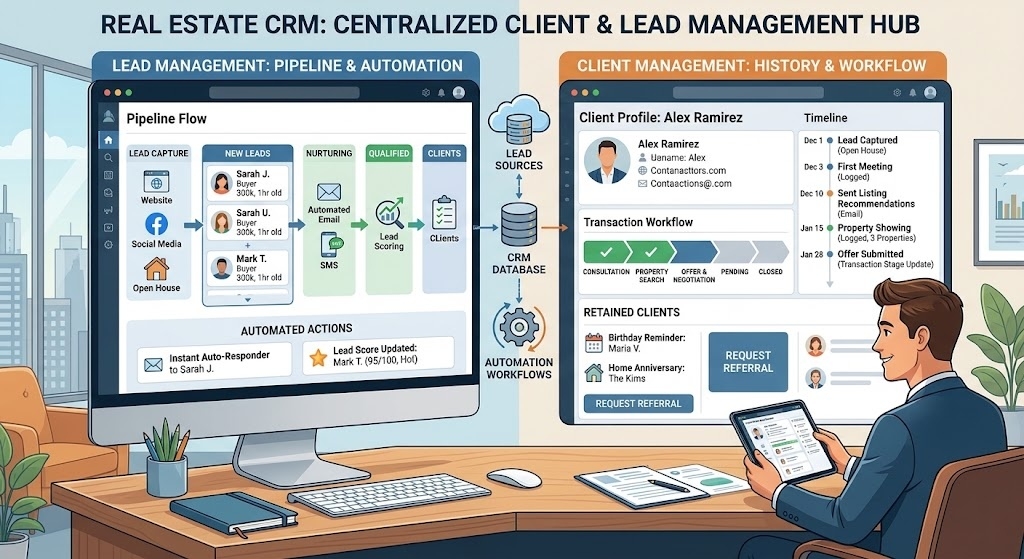
The real estate industry runs on relationships. Every closed deal is the result of dozens, sometimes hundreds, of small interactions — a first inquiry on a listing, a follow-up call, a property showing, a negotiation, and finally a signed contract. For agents juggling multiple buyers, sellers, and prospects at once, keeping track of all these moving parts manually is nearly impossible. This is where Real Estate CRM Software becomes indispensable.
A Real Estate CRM is more than a digital contact book. It is a centralized system designed specifically to help agents and brokerages capture leads, nurture relationships, track transactions, and ultimately close more deals with less administrative effort. In this article, we will explore in detail how real estate CRM software helps agents manage leads and clients, and why it has become a non-negotiable tool in the modern property business.
Understanding the Core Purpose of a Real Estate CRM
At its heart, a real estate CRM is built to organize information and automate the repetitive tasks that eat into an agent's day. Instead of relying on spreadsheets, sticky notes, or scattered email threads, agents get a single dashboard where every lead, client, property, and communication history lives in one place.
This centralization matters because real estate transactions are rarely linear. A single client may spend months browsing listings before making a decision, and during that time an agent must maintain consistent, personalized contact without letting the lead go cold. A CRM ensures nothing falls through the cracks, giving agents visibility into where every prospect stands in their buying or selling journey.
Capturing Leads From Multiple Channels
One of the first and most valuable functions of a real estate CRM is lead capture. Today's buyers and sellers come from a wide variety of sources — property portals, social media ads, company websites, referrals, open houses, and even walk-ins. Without a system to consolidate these sources, leads can easily be lost or duplicated.
A good CRM integrates directly with websites, listing portals, and advertising platforms so that whenever someone fills out a contact form or inquires about a property, their information is automatically pulled into the system. This eliminates manual data entry and ensures that a lead generated at midnight from a Facebook ad is captured just as reliably as one from a daytime phone call. Agents no longer need to check multiple inboxes or platforms; everything funnels into a single, organized pipeline.
Organizing and Segmenting Client Information
Once leads are captured, the next challenge is organization. Real estate CRMs allow agents to segment contacts based on criteria such as budget, preferred location, property type, buying timeline, or whether they are a buyer, seller, tenant, or investor. This segmentation is critical because a first-time homebuyer looking for a starter apartment has very different needs than an investor searching for commercial property.
By tagging and categorizing clients, agents can quickly filter their database to find exactly who they need to reach for a specific opportunity. For example, when a new listing becomes available, an agent can instantly pull up every buyer whose criteria match that property and notify them, rather than manually recalling who might be interested.
Automating Follow-Ups and Communication
Consistent follow-up is often what separates a successful agent from one who loses deals to competitors. Studies in the real estate industry consistently show that a large percentage of leads are lost simply because no one followed up in time. CRM software solves this problem through automation.
Agents can set up automated email sequences, SMS reminders, and drip campaigns that nurture leads over weeks or months without requiring manual effort for every single touchpoint. A new lead might automatically receive a welcome email, followed by property recommendations a few days later, and a check-in message a week after that. Meanwhile, the CRM logs every interaction — calls, emails, meetings, and notes — so that whenever an agent picks up a conversation, they have full context of the client's history.
This automation does not replace the personal touch that real estate demands; instead, it ensures that no lead is neglected while agents focus their personal attention on high-priority conversations and in-person meetings.
Tracking the Sales Pipeline and Deal Stages
Real estate transactions move through distinct stages: initial inquiry, qualification, property viewing, offer negotiation, contract signing, and closing. A CRM provides a visual pipeline, often in the form of a Kanban-style board, that shows exactly where each client stands in this process.
This pipeline view gives agents and brokers a bird's-eye view of their entire business. They can quickly identify which deals are close to closing, which ones are stalled, and which leads need more nurturing. For team leaders and brokerage owners, this transparency is invaluable for forecasting revenue, allocating resources, and coaching agents whose deals may be losing momentum.
Managing Property Listings and Client Matching
Beyond contact management, many real estate CRMs integrate property listing management directly into the platform. Agents can attach specific properties to client profiles, track which listings a client has viewed, and receive automatic alerts when a new property matches a client's saved preferences.
This matching capability significantly speeds up the process of connecting buyers with the right homes. Instead of manually cross-referencing listings against every client's wish list, the CRM does this work automatically, notifying agents when a strong match appears. This not only saves time but also improves the client experience, as buyers receive timely, relevant recommendations rather than generic mass listings.
Enhancing Communication Through Multi-Channel Integration
Modern real estate CRMs typically integrate email, phone, SMS, and even WhatsApp or social media messaging into a single interface. This means agents do not need to switch between multiple apps to communicate with clients. Every message, regardless of the channel used, is logged in the client's profile, creating a complete communication history.
This integration is particularly useful when multiple team members interact with the same client. A new agent stepping in to assist can review the full conversation history and immediately understand the context, rather than asking the client to repeat information they have already shared.
Providing Data-Driven Insights and Reporting
Real estate CRMs also serve as powerful analytics tools. They track key performance indicators such as lead conversion rates, average response times, deal closure rates, and the effectiveness of different marketing channels. This data helps agents and brokerages understand what is working and what needs improvement.
For instance, if data shows that leads from a particular property portal convert at a much higher rate than those from social media ads, an agency can adjust its marketing budget accordingly. Similarly, tracking individual agent performance helps brokers identify coaching opportunities and recognize top performers.
Supporting Post-Sale Relationship Management
A client relationship does not end once a transaction closes. Successful agents rely heavily on referrals and repeat business, and a CRM helps maintain these long-term relationships. Automated birthday messages, home anniversary reminders, market update newsletters, and periodic check-ins keep an agent's name top of mind long after the deal is done.
This ongoing engagement often leads to referrals, repeat transactions when clients decide to sell or buy again, and stronger word-of-mouth reputation in the local market — all of which are difficult to achieve without a system tracking these touchpoints over time.
Improving Team Collaboration and Accountability
For brokerages with multiple agents, CRM software introduces accountability and collaboration. Leads can be assigned or routed automatically based on rules such as territory, property type, or agent workload. Managers can monitor response times and follow-up consistency across the team, ensuring that no lead is left unattended regardless of which agent is responsible.
This shared visibility also prevents the common problem of two agents unknowingly contacting the same lead, which can create confusion and damage the brokerage's professional image.
Conclusion
Real estate CRM software has transformed from a nice-to-have convenience into an essential business tool. By centralizing lead capture, automating follow-ups, organizing client data, tracking deal pipelines, and providing actionable insights, a CRM allows agents to manage far more relationships than would be possible manually — without sacrificing the personal touch that real estate clients expect.
In an industry where responsiveness and organization directly translate into closed deals and referrals, investing in the right CRM platform is one of the most impactful decisions an agent or brokerage can make. As competition in the property market continues to grow, those who leverage CRM technology effectively will consistently outperform those relying on outdated, manual methods of managing leads and clients.

