


Improving Machine Reliability With Advanced CNC Control Systems
If you run a production shop, nothing kills momentum faster than unexpected machine downtime. A spindle halts mid-cut, an axis misaligns, or a controller freezes in the middle of a high-priority job. Beyond the immediate frustration, unreliability costs real money in ruined stock, broken tooling, delayed shipments, and lost client trust.
Many shop owners assume that physical wear and tear is the sole culprit behind poor machine performance. In reality, the control system acts as the brain of your equipment. When that brain uses outdated hardware or lagging software, even a brand-new mechanical frame will underperform.
Upgrading to an advanced control system changes the equation entirely. By processing data faster, managing motor control with micro-second accuracy, and providing real-time diagnostic feedback, modern controllers turn unpredictable machines into reliable workhorses.
Here is an in-depth look at how modern CNC control systems improve reliability, reduce downtime, and protect your bottom line.
The Hidden Link Between Control Systems and Machine Reliability
When a CNC machine fails, mechanical components often take the blame. Bearings wear out, ball screws bind, and belts slip. However, many mechanical failures originate from poor control signal execution.
Legacy controllers often suffer from lag in command processing. When a control system sends jerky, delayed, or poorly interpolated signals to servo or stepper motors, it creates violent vibrations and sudden mechanical stress. Over time, these micro-shocks degrade physical components.
[ G-Code Command ]
       │
       ▼
[ Advanced CNC Control System ]──► Highspeed interpolation &smooth acceleration curves
       │
       ▼
[ Precise Motor Signals ]    ──► Reduced vibration & mechanical wear
       │
       ▼
[ Smooth Toolpath Execution ]    ──► Longer tool life & higher machine uptime
Eliminating Signal Latency and Path Deviation
Modern controllers process hundreds of blocks of G-code in advance. Look-ahead capability allows the system to recalculate acceleration and deceleration curves smoothly before the tool reaches a sharp corner or complex contour.
Smooth motion planning prevents the machine frame from fighting against its own momentum. By smoothing out motion, the control system reduces strain on ball screws, linear guides, and drive motors, directly extending machine lifespan.
Key Features in Modern CNC Control Systems That Boost Uptime
To maintain consistent production schedules, your control interface must do more than just execute code. It needs to actively safeguard the machine and optimize motion in real time.
1. High-Speed Look-Ahead and Dynamic Velocity Motion
Older systems process code block by block, leading to stuttered movement on detailed paths. Advanced controllers evaluate toolpaths well in advance, calculating optimal feed rates dynamically. This prevents sudden stops and starts, keeping heat levels low across electronic drives and drive shafts.
2. Real-Time Thermal and Mechanical Compensation
Temperature shifts in the shop floor cause metal components to expand and contract. Advanced control units accept sensor feedback to compensate for thermal growth on the fly. This automatic adjustment keeps parts within tight tolerances without requiring constant operator intervention.
3. Integrated Diagnostic Monitoring
Rather than waiting for a complete component failure, modern control software monitors current draw, motor temperature, and position error margins. If a drive draws unusual amperage, the system flags the issue early so your team can schedule maintenance during planned downtime.
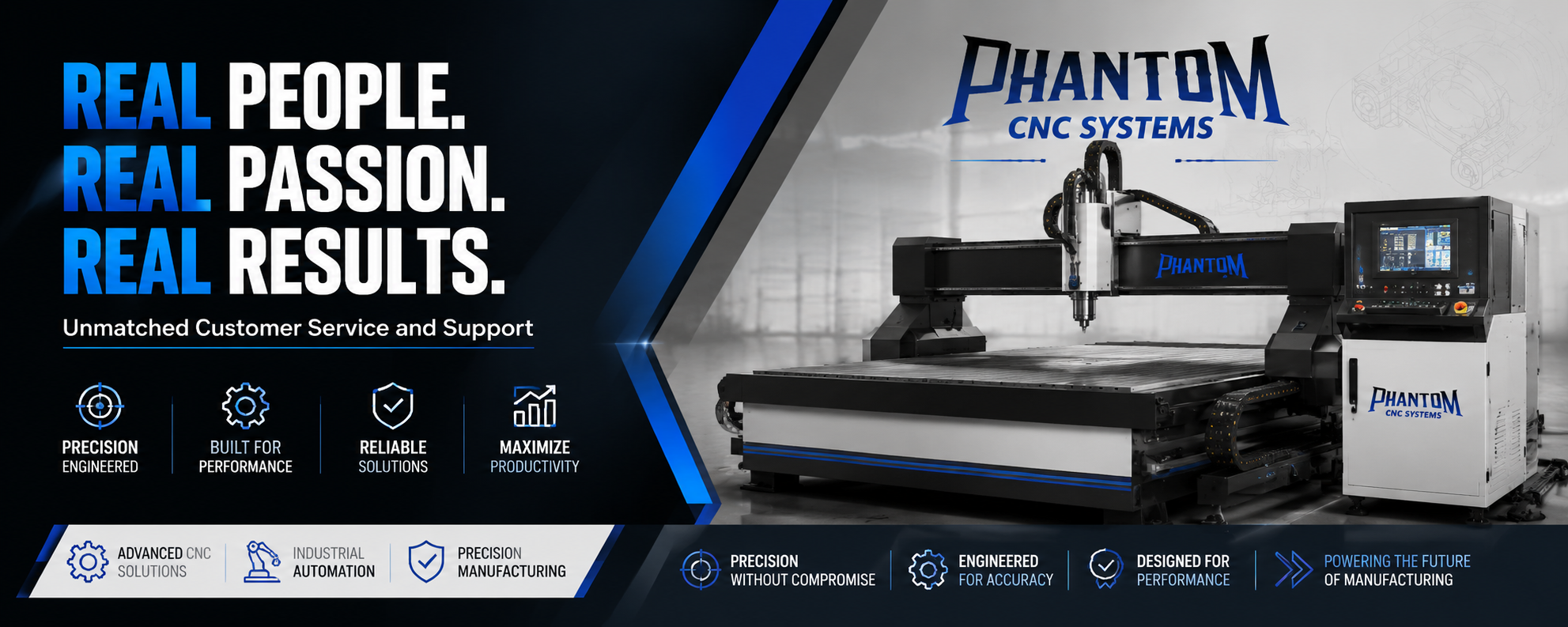
If you are looking to retrofit existing machinery or integrate industrial-grade machinery built for long-term precision, exploring options from Phantom CNC Systems can help you match high-performance motion hardware with robust control architectures.
Step-by-Step: How Better Control Systems Prevent Tool Breakdown and Scrap Parts
A main driver of machine unreliability is tool breakage, which usually causes cascading damage to workpieces and workholding fixtures. Advanced controllers mitigate these risks through smart protection routines.
+-----------------------------------------------------------------------+
|                       SMART CONTROL PROTECTION                        |
+------------------------------------+----------------------------------+
| Adaptive Feed Rate Control         | Auto-adjusts speed during load   |
+------------------------------------+----------------------------------+
| Closed-Loop Servo Feedback         | Detects lost steps immediately   |
+------------------------------------+----------------------------------+
| Smart Collision Avoidance          | Halts motion prior to impact     |
+------------------------------------+----------------------------------+
Step 1: Monitoring Spindle Load Continuously
Adaptive control features monitor the torque load on the spindle. If the cutting tool hits a hard spot in the material or begins to dull, the controller lowers the feed rate automatically to prevent tool failure.
Step 2: Maintaining Closed-Loop Feedback
Basic open-loop setups do not confirm whether a motor actually reached its commanded position. Modern closed-loop servo architectures compare encoder feedback against commanded coordinates thousands of times per second. If the machine drifts off path, the controller corrects position immediately or brings the job to a safe stop before material is ruined.
Step 3: Preventing Hard Collisions
Accidental rapid moves into clamps or fixtures can destroy spindles and ruin machine alignment. Modern controllers run real-time 3D spatial simulation in the background, pausing movement if a collision path is detected.
Comparing Legacy Controllers vs. Advanced CNC Control Systems
To see why upgrading makes financial sense, consider how legacy systems compare directly to modern control platforms:
| Feature | Older / Basic Control Systems | Advanced CNC Control Systems |
| Motion Planning | Low look-ahead; abrupt speed changes | High-speed look-ahead; fluid acceleration curves |
| System Feedback | Open-loop; high risk of lost steps | Closed-loop; real-time encoder verification |
| Fault Diagnostics | Basic alarm codes after a breakdown occurs | Predictive alerts and real-time load monitoring |
| User Interface | Complex menu trees; steep learning curve | Intuitive visual interfaces; fast setup times |
| Maintenance Impact | Higher wear on mechanical drive parts | Reduced mechanical stress; longer component life |
Actionable Tips to Maximize CNC Machine Reliability
Upgrading your control system is a major step, but routine operational practices keep your machine operating at peak performance.
-
Keep Control Cabinets Clean and Cool: Dust and heat are the primary enemies of control electronics. Check cabinet filters monthly and ensure cooling fans run efficiently.
-
Maintain Clean Power Inputs: Voltage spikes can corrupt memory or damage drive cards. Use line conditioners or isolated circuits for sensitive CNC electronics.
-
Update System Firmware Regularly: Manufacturers regularly release firmware updates that refine motion algorithms, patch minor bugs, and add feature enhancements.
-
Backup Configuration Settings: Always store a digital backup of your machine parameters and motor tuning files off-site so recovery is quick if a drive reset occurs.
-
Train Operators on Diagnostics: Make sure your staff knows how to read drive status LEDs and error logs. Catching a minor tracking error early prevents costly repairs later.
Frequently Asked Questions
Can an advanced CNC control system be retrofitted onto an older machine?
Yes. Many shop owners retrofit modern control systems onto older, mechanically solid machine frames. Retrofitting restores precision, adds modern safety features, and gives older iron a reliable new life without the cost of a full machine replacement.
How does a control system reduce mechanical wear on my machine?
Advanced controllers use smooth acceleration algorithms and high-speed look-ahead capabilities. By eliminating abrupt directional changes and sudden stops, the system reduces physical impact on ball screws, bearings, and structural frames.
What is the difference between open-loop and closed-loop control systems?
An open-loop system sends movement signals to motors without verifying if the movement actually happened. A closed-loop system uses optical or magnetic encoders to continuously send position data back to the controller, ensuring precise accuracy and preventing lost steps.
Why is look-ahead processing important for CNC reliability?
Look-ahead processing allows the controller to read ahead in the G-code file and adjust speeds smoothly before direction changes. This prevents hard braking maneuvers, reduces machine vibration, stabilizes cut quality, and protects tooling.
Boost Production Consistency with Modern Control Solutions
Machine reliability is rarely just about mechanical strength. It depends heavily on how effectively your control system manages motion, monitors hardware health, and executes commands.
By upgrading to a modern control system, you eliminate motion stutter, protect tooling from sudden stress, and gain valuable diagnostic insight before minor issues turn into major breakdowns.
Whether you are retrofitting existing equipment or evaluating new industrial machinery, prioritizing advanced control capabilities is one of the most effective ways to lower operational costs, improve cut accuracy, and keep your production lines running smoothly.

