


MOT Check Guide: What Your Car Needs Before Testing
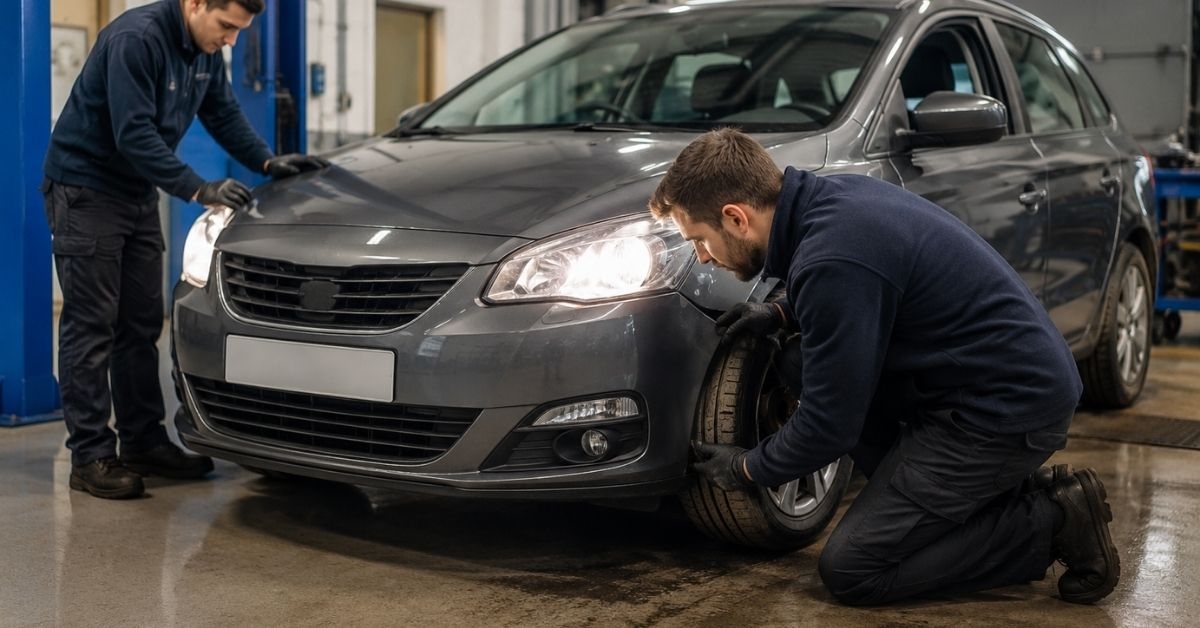
An MOT test can be stressful when you are unsure whether your car is likely to pass. While an MOT is not a substitute for routine servicing, a few simple checks beforehand can help you spot problems that may lead to a failure.
If you have noticed unusual noises, warning lights or changes in how your car drives, arranging a professional car inspection before the test can also help identify issues early. Here is what to check before taking your vehicle for its MOT.
Check Your Tyres
Tyres are one of the easiest parts of a car to inspect yourself and are important for both safety and MOT compliance.
Check that:
-
The tread is not below the legal minimum.
-
There are no cuts, cracks, bulges or other visible damage.
-
The tyres are correctly inflated.
-
The same axle does not have incompatible tyre types.
Do not only inspect the tyre that is easiest to see. Turn the steering wheel where necessary and check the inner edges as well, as uneven wear can be difficult to spot.
Test All Lights
A failed bulb is a simple problem that can become an unnecessary MOT failure.
Before the test, check your:
-
Headlights
-
Sidelights
-
Brake lights
-
Indicators
-
Rear fog light
-
Hazard warning lights
-
Number plate lights
Ask someone to operate the controls while you walk around the vehicle, particularly when checking the brake lights and reversing lights.
Also look at the condition of the lamp lenses. Cracked, damaged or badly obscured lights may affect the result.
Inspect the Brakes
You cannot properly assess the condition of a braking system without specialist equipment, but there are warning signs you should not ignore.
Pay attention to:
-
Squealing or grinding when braking
-
A brake pedal that feels unusually soft
-
The car pulling to one side
-
Excessive vibration when braking
-
A brake warning light on the dashboard
If you notice any of these symptoms, do not wait until the MOT to find out what is wrong. Brake problems can affect road safety regardless of whether an MOT is due.
Check Windscreen, Wipers and Washers
Your view of the road is an important part of the MOT.
Look for chips or cracks in the windscreen, especially in the area directly in front of the driver. Damage in the driver's line of sight can be particularly important.
Then check that:
-
Windscreen wipers clear the glass properly.
-
The rubber blades are not badly worn or damaged.
-
Screenwash sprays correctly.
-
The washer reservoir is filled.
A small amount of preparation here can prevent a straightforward issue from becoming a problem on test day.
Make Sure the Number Plates Are Clear
Number plates must be clean, secure and readable. Check that the characters have not become damaged or obscured and that the plate itself is securely attached.
It is worth giving both plates a quick clean before the MOT, particularly if the car has recently been driven through muddy or dirty conditions.
Look for Dashboard Warning Lights
Do not ignore warning lights simply because the car appears to be driving normally.
Depending on the warning, a light may indicate a problem with systems such as:
-
Braking
-
Airbags
-
Engine management
-
Steering
-
ABS
-
Electronic stability control
Some warning lights may be relevant to MOT testing, while others could indicate a mechanical or electrical problem that needs attention regardless of the test.
If a warning light remains illuminated after the engine starts, check the vehicle handbook or have the underlying fault diagnosed.
Check Seat Belts and Doors
Test every seat belt to make sure it fastens securely and releases correctly. Look for damaged webbing, loose fittings or belts that do not retract properly.
It is also worth checking that the doors, bonnet and boot latch securely. Problems with basic safety-related components can cause issues during an MOT.
Keep the Car Clean and Accessible
An MOT is easier when the tester can properly access the vehicle and its components.
Remove unnecessary items from the boot and passenger compartment, particularly anything that could obstruct access to required areas. Make sure the registration plate is visible and the vehicle is reasonably clean.
You should also check that the fuel cap is fitted correctly and that the vehicle has enough fuel for the test.
What an MOT Does Not Check
It is important to understand what an MOT actually means.
A pass does not mean that your car is mechanically perfect or that it does not need servicing. An MOT assesses whether the vehicle meets the required safety and environmental standards at the time of testing.
Routine servicing remains important for components such as engine oil, filters, fluids, belts and other maintenance items that may not be covered in the same way by the MOT.
Likewise, a car can pass its MOT and develop a fault shortly afterwards.
Common Reasons Cars Fail an MOT
Many MOT problems are relatively straightforward. Common areas of concern include:
-
Worn or damaged tyres
-
Faulty lights
-
Poor windscreen visibility
-
Worn wiper blades
-
Brake defects
-
Suspension problems
-
Registration plate issues
-
Emissions-related faults
-
Defective seat belts
Checking the basics before your appointment will not guarantee a pass, but it can help you identify obvious problems before the test.
Final Checks Before the Test
A few minutes spent inspecting your car can make a difference. Check the tyres, lights, brakes, windscreen, wipers, number plates, seat belts and dashboard warning lights. If something does not look or feel right, have it investigated rather than hoping it will pass unnoticed.
Most importantly, treat the MOT as one part of responsible vehicle ownership. Regular maintenance, prompt repairs and sensible pre-test checks all help keep your car safe and roadworthy throughout the year, not just on MOT day.

