


How to Build a Reliable IPTV Setup for Streaming in Sweden
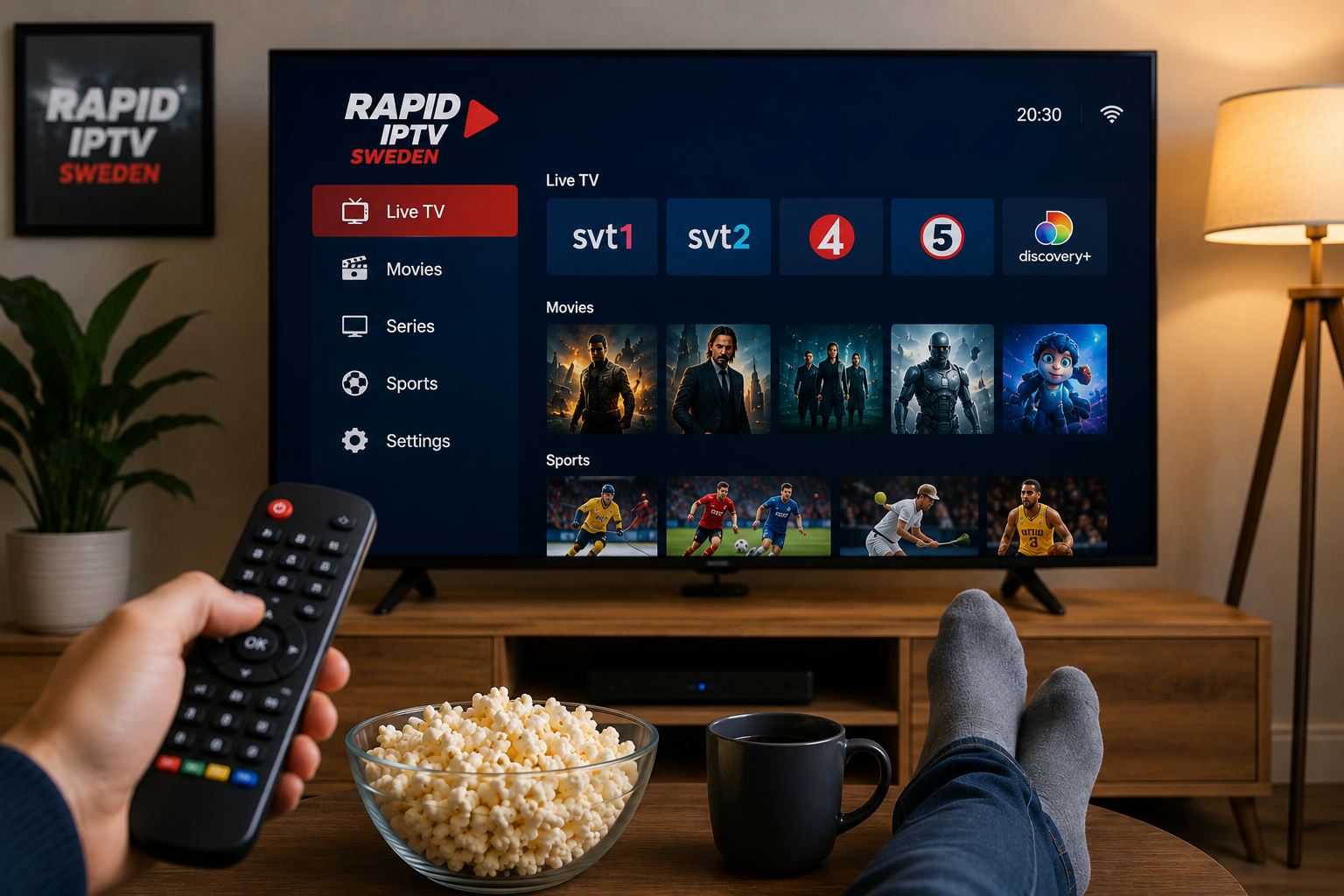
Television viewing has changed considerably as more households use internet-connected devices for live TV, movies, series, sports, and other entertainment. IPTV is part of this shift, allowing television streams to be delivered through an internet connection rather than relying only on traditional terrestrial, cable, or satellite broadcasting.
For viewers in Sweden, a good IPTV experience depends on more than choosing a subscription. Internet stability, Wi-Fi coverage, device compatibility, IPTV applications, Electronic Program Guide settings, and video quality can all influence everyday streaming.
Understanding these factors before setting up IPTV can make installation easier and help prevent many common playback problems.
What Is IPTV?
IPTV stands for Internet Protocol Television. It is a method of delivering television and video content using internet protocol networks.
A typical IPTV setup requires:
- A broadband internet connection
- A compatible streaming device
- An IPTV player or application
- Login or playlist information
- A television, computer, tablet, or smartphone
The IPTV application receives the stream and organizes available content into an interface that may include live television, movies, series, sports, favorites, and program information.
Start With a Reliable Internet Connection
Streaming video continuously requires a stable network connection.
Internet speed is important, but maximum download speed does not tell the entire story. A connection that frequently becomes unstable can create buffering even when a speed test occasionally shows strong performance.
Test Your Connection During Viewing Hours
Internet performance may change during the day, particularly when several household devices are active.
Try testing your connection:
- In the morning
- During the afternoon
- During peak evening hours
- While other household devices are online
- Near your IPTV streaming device
Testing under realistic conditions gives you a better understanding of how your network performs when you actually watch television.
Ethernet vs Wi-Fi for IPTV
Both Ethernet and Wi-Fi can work well for IPTV, but each option has advantages.
Ethernet
Ethernet connects your television or streaming device directly to the router.
A wired connection can be useful because it is less affected by:
- Walls
- Distance
- Wireless interference
- Competing Wi-Fi networks
Ethernet is particularly practical for Smart TVs and streaming boxes that remain in a fixed location.
Wi-Fi
Wi-Fi provides more flexibility and is often easier to use in homes where installing cables is inconvenient.
For better wireless performance:
- Position the router in an open location
- Avoid placing it inside cabinets
- Reduce the number of walls between the router and television
- Keep the router's software updated
- Limit unnecessary background downloads
- Check signal strength near the streaming device
If IPTV works normally over Ethernet but has problems over Wi-Fi, the wireless connection may require attention.
Choose the Right IPTV Device
There is no single device that is best for every household.
The right option depends on the television you own, available applications, desired features, and how you prefer to watch.
Smart TV
A Smart TV can provide a straightforward setup because a compatible IPTV application can run directly on the television.
However, application availability differs between platforms.
Samsung, LG, Android TV, Google TV, and other systems have different app stores. Always check the applications available for your specific television model.
Android TV and Google TV
Android-based devices offer access to a variety of streaming and IPTV applications.
This can be useful for viewers who want flexibility when selecting a player or changing applications later.
Streaming Boxes
A dedicated streaming box can add modern streaming capabilities to an older television.
It may also be easier to replace a streaming box than an entire Smart TV when software or hardware becomes outdated.
Smartphones and Tablets
Mobile devices allow users to watch compatible streams away from their main television.
They are also useful for troubleshooting. If a stream works on a phone but not on the Smart TV, the problem may be related to the television application or network connection.
Computers
Windows and Mac computers support various media players and IPTV applications.
A computer can be useful for testing login details, playlists, and network performance before configuring the main television.
Understand the Difference Between a Service and a Player
An IPTV service and an IPTV player are not the same thing.
The service provides access information and available streams. The player is the application that organizes and displays them.
Depending on the service, users may receive:
- Username and password
- Server information
- Playlist URL
- M3U or M3U8 information
- Other compatible login details
When researching Sweden-focused options, Rapid IPTV Sweden provides information about IPTV subscription plans, its content offering, guides, FAQs, payments, and viewing on televisions, computers, mobile phones, and tablets.
What Is an M3U Playlist?
M3U is a playlist format commonly used for digital media.
In an IPTV environment, an M3U playlist can contain references to streaming sources that a compatible player reads and organizes.
The playlist itself is not necessarily the application or the video content. It provides information that helps the player locate available streams.
Before selecting an IPTV application, check whether it supports the format supplied by your service.
Why an EPG Is Useful
EPG stands for Electronic Program Guide.
An EPG can organize scheduled television programming and make live channels easier to navigate.
Depending on the available data, the guide may display:
- Program titles
- Current shows
- Upcoming programs
- Start times
- End times
For users accustomed to conventional television guides, EPG functionality can make the transition to IPTV more familiar.
Check the Timezone if Your EPG Is Incorrect
An incorrect timezone can cause program listings to appear earlier or later than expected.
If your EPG seems out of sync, check:
- Device date and time
- Timezone
- Regional settings
- IPTV application settings
For viewers in Sweden, the device should be configured for the appropriate Swedish local time.
What Causes IPTV Buffering?
Buffering is one of the most common streaming issues, but it can have several causes.
Identifying the source of the problem is easier when you troubleshoot one factor at a time.
Weak Wi-Fi
The broadband connection entering your home may be fast while the television still receives a weak wireless signal.
Walls, furniture, distance, and neighboring wireless networks can affect Wi-Fi performance.
Testing the same device with Ethernet can help determine whether wireless coverage is responsible.
Heavy Network Activity
Other devices can compete for available bandwidth.
Common examples include:
- Cloud backups
- Large downloads
- Software updates
- Video calls
- Multiple simultaneous video streams
- Game downloads
Pause these activities temporarily and test IPTV again.
Device Performance
Older Smart TVs and streaming devices may have limited memory or processing resources.
Restarting the device and closing unused applications can sometimes improve performance.
Outdated Applications
Older versions of IPTV players may have compatibility or stability problems.
Check the appropriate official app store or developer source for updates.
Problems With Individual Streams
If one stream experiences problems while many others work normally, your entire home network may not be responsible.
Always test multiple streams before changing router settings or replacing equipment.
Choose an Appropriate Video Quality
Higher video resolution generally requires more bandwidth.
Available formats may include:
- Standard definition
- HD
- Full HD
- Higher-resolution formats where supported
Choosing the highest resolution is not automatically the best option.
A stable Full HD stream can provide a more enjoyable experience than higher-resolution video that repeatedly pauses to buffer.
Consider:
- Internet stability
- Wi-Fi strength
- Device performance
- Screen resolution
- Other household internet activity
The goal should be consistent playback rather than resolution alone.
Keep Your IPTV Equipment Updated
Software updates can improve security, compatibility, and performance.
Regularly check for updates to:
- IPTV applications
- Smart TV software
- Streaming devices
- Smartphones and tablets
- Computer operating systems
- Router firmware
Applications should preferably be obtained from trusted app stores or official sources.
Downloading modified software from unknown websites can introduce unnecessary privacy and security risks.
Protect Your Home Network
An IPTV device is still an internet-connected device, so normal cybersecurity practices remain important.
Use:
- A strong Wi-Fi password
- Secure router settings
- Updated device software
- Unique account passwords
- Trusted applications
- Secure websites for account and payment information
Avoid publicly sharing usernames, passwords, playlist URLs, or other account credentials.
What Should You Compare Before Choosing an IPTV Service?
Price is important, but it should not be the only comparison factor.
Device Compatibility
Check whether the service supports the television, streaming box, computer, or mobile device you plan to use.
Installation Guidance
Clear instructions can save considerable time, especially for first-time IPTV users.
Look for guides that explain setup for your specific device or application.
Content Information
Review current information about available entertainment categories rather than assuming that specific channels or programs are included.
Content availability can change over time.
EPG Support
If you frequently watch scheduled live television, check what program guide options are available.
Subscription Terms
Review the subscription duration, payment terms, cancellation information, and other applicable conditions before purchasing.
Customer Support
Technical assistance can be valuable if you encounter login, playlist, application, or device configuration problems.
Check what support options are available before subscribing.
A Practical IPTV Setup Checklist
Before beginning your installation, work through a simple checklist.
1. Choose Your Primary Device
Decide whether you will mainly use a Smart TV, streaming box, computer, smartphone, or tablet.
2. Check Application Compatibility
Confirm that a suitable IPTV player is available for your device.
3. Test Your Internet Connection
Measure connection performance near the device you intend to use.
4. Install the Player
Obtain the application from a trusted source and install any available updates.
5. Enter Your Details Carefully
Check usernames, passwords, server information, and playlist URLs for typing mistakes.
6. Test Several Streams
Try multiple categories to determine whether playback is working consistently.
7. Configure the EPG
If guide data is available, verify that it displays the correct local time.
8. Compare Wi-Fi and Ethernet
If buffering occurs, try a wired connection where practical.
How to Troubleshoot IPTV Step by Step
When a problem occurs, avoid changing several settings simultaneously.
Use a structured approach.
Step 1: Restart the IPTV Player
Close the application completely and open it again.
Step 2: Try Different Content
Test several streams to see whether the issue is widespread.
Step 3: Restart the Streaming Device
Restart the television, streaming box, computer, or mobile device.
Step 4: Check Other Internet Services
Open websites or another streaming application to see whether the internet connection is functioning normally.
Step 5: Reduce Network Usage
Pause unnecessary downloads and other bandwidth-intensive activities.
Step 6: Test Ethernet
If you normally use Wi-Fi, temporarily connect the streaming device directly to the router when possible.
Step 7: Check for Updates
Update the IPTV player and device software.
Step 8: Verify Account Information
Make sure login details and URLs have been entered correctly.
Step 9: Contact Support
If the problem continues, provide information about your device, IPTV player, network connection, and the symptoms you are experiencing.
Specific information can make technical troubleshooting more efficient.
Build the Setup Around Your Viewing Habits
A complicated IPTV setup is not necessarily better.
Someone who watches primarily on a Smart TV may need nothing more than a compatible application and a stable network connection.
Another household may prefer a separate streaming device because it provides greater flexibility.
Mobile users may value cross-device compatibility, while frequent live TV viewers may prioritize a clear EPG.
Identifying your own viewing habits first can help you choose equipment and applications more effectively.
Final Thoughts
A reliable IPTV setup depends on several components working together. The internet connection, router, streaming device, IPTV player, EPG configuration, and video quality settings can all affect the experience.
For users in Sweden, it is worth checking device compatibility, installation guidance, current content information, subscription terms, network performance, and available support before choosing a service.
Taking time to configure the setup correctly can simplify everyday viewing and make common IPTV problems much easier to troubleshoot.

