


How Can jinglitools Air Compressor Support Changing Workshop Demands?
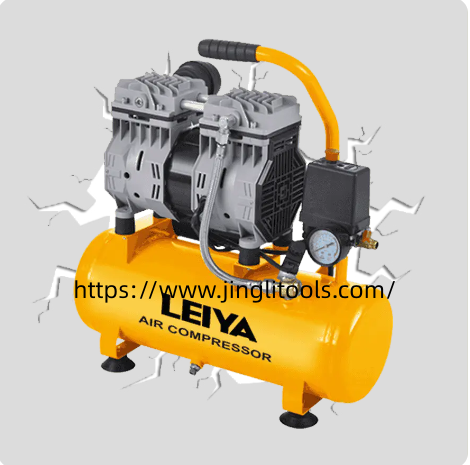
Air Compressor selection should begin with the way a workshop actually operates. Different businesses may need compressed gas for pneumatic tools, cleaning, spraying, maintenance, assembly, or equipment servicing. These applications can involve different pressure levels, storage requirements, operating cycles, and installation conditions. Before purchasing, buyers should examine their daily workload, connected equipment, electrical supply, available floor space, noise expectations, and maintenance plans. Looking at these factors together can provide a clearer basis for comparing suitable configurations.
Identify the Daily Workload
The expected workload is an important starting point. Some workshops use pneumatic equipment for short periods, while others have repeated tasks throughout the working day.
Buyers should identify which tools will receive the compressed gas supply and record their normal operating pressure and consumption. If several tools may be used simultaneously, combined demand should be considered as well.
The operating schedule is also worth reviewing. Frequent starting and stopping can create different requirements from continuous operation. Providing this information to a manufacturer can make product discussions more specific and useful.
Match Storage Volume With Actual Usage
Storage volume should be considered according to the application's working pattern. A tank provides stored compressed gas that can help handle short periods when demand increases.
However, tank size should not be considered alone. Buyers should compare storage volume with delivery capability, pressure requirements, and expected usage frequency.
For a workshop handling intermittent maintenance tasks, one configuration may be sufficient, while a production area with repeated pneumatic operations may require another arrangement. Reviewing actual usage patterns can help purchasers avoid relying on tank size as the only selection criterion.
Review Pressure Requirements
Every connected pneumatic device may have a recommended operating pressure. Buyers should collect this information before contacting a manufacturer.
It is useful to distinguish between required working pressure and the maximum pressure listed in product specifications. Selecting equipment according to a maximum figure alone may not provide enough information about whether it suits the intended application.
Purchasers should also consider whether different tools operate at different pressure levels. If several devices share one supply system, the complete application should be reviewed before a final configuration is selected.
Consider Electrical Compatibility
Electrical requirements deserve attention before equipment arrives at the workshop. Buyers should confirm voltage, frequency, rated input, plug type, and local electrical conditions.
International purchasers should communicate their destination market with the manufacturer because electrical standards may vary between regions. Confirming these details before production and shipment can help avoid compatibility issues during installation.
Businesses planning several units should also consider the electrical load within the workshop. The available supply should be checked against the planned equipment arrangement rather than evaluated after installation.
Measure the Available Workspace
Equipment dimensions can influence how comfortably a workshop operates. Before ordering, buyers should measure the intended installation area and leave adequate room for inspection, servicing, ventilation, and operator movement.
The position of electrical connections and pneumatic outlets should also be considered. A unit placed too close to walls or other machinery may make future maintenance more difficult.
Portable applications can create another set of requirements. If technicians need to move equipment between workstations, buyers may pay greater attention to dimensions, wheels, handles, and overall handling characteristics.
Compare Noise Specifications
Noise can influence equipment placement and workplace comfort. If the unit will operate close to technicians for extended periods, purchasers may want to compare published sound levels between different configurations.
The surrounding environment should also be considered. A compact service center may have different expectations from a large industrial workshop.
jinglitools offers oil-free and silent-type configurations with published specifications that allow buyers to compare capacity, pressure, delivery performance, dimensions, and noise characteristics according to their application.
Examine Maintenance Requirements
Routine maintenance should be considered before purchase rather than after installation. Buyers can ask about filter inspection, cleaning procedures, replacement components, service intervals, and technical documentation.
Oil-free construction can reduce the need for certain lubrication-related tasks, but regular inspection remains necessary. Filters and other service components should be maintained according to the manufacturer's instructions.
For companies purchasing several units, replacement component planning may also be useful. Keeping information about commonly required parts can make future maintenance organization easier.
Discuss Order Details With the Manufacturer
Industrial buyers may have requirements beyond the standard product specification. Distributors may need particular packaging or labeling, while workshops may require specific configurations for different applications.
Before placing an order, purchasers can provide information about workload, connected pneumatic tools, pressure requirements, electrical standards, installation space, and expected quantities. This gives the manufacturer a practical basis for discussing suitable options.
For customers considering products from jinglitools, detailed product information and available equipment can be reviewed at https://www.jinglitools.com/ Buyers can compare configurations according to their workshop requirements and communicate directly with jinglitools about application conditions, technical specifications, order quantities, and other purchasing details. A careful review of workload, storage capacity, pressure, electrical compatibility, workspace, noise, and maintenance can help businesses build a more practical equipment purchasing plan.

