


Why Does qianxunele Smart Kettle Thermostat Coupler Design Matter?
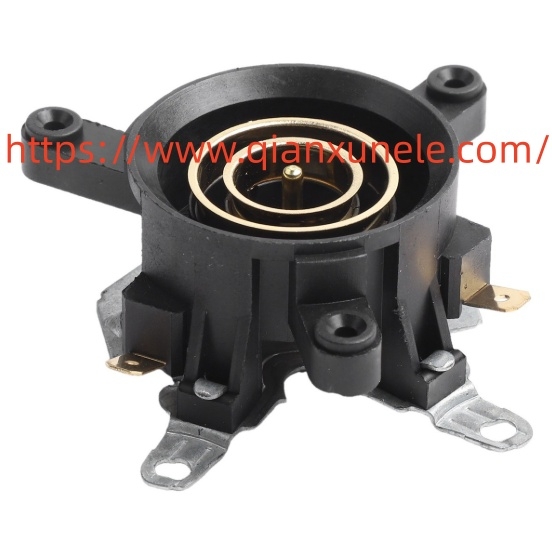
Smart Kettle Thermostat Coupler selection is an important step for manufacturers developing appliances with automatic heating and temperature management functions. Instead of focusing only on the purchase price, buyers can review electrical compatibility, mechanical structure, temperature requirements, contact arrangement, protection functions, and production conditions. qianxunele offers different configurations that can be considered according to the structure and requirements of the finished appliance.
Define the Appliance Requirements First
Before comparing individual models, buyers should understand the requirements of the appliance itself. The engineering team can identify the required voltage, current, frequency, connection points, installation space, operating temperature, and protection method.
This step helps purchasing teams avoid choosing a component simply because its appearance seems suitable. A product designed for one appliance structure may require different terminals or dimensions when used in another design.
Creating a basic specification sheet at the beginning can also make communication with suppliers easier. Engineering, purchasing, and production teams can use the same information when evaluating samples and discussing technical details.
Check the Electrical Connection
The electrical connection should be reviewed carefully because the component needs to work together with the heating circuit and control system.
Buyers can check rated voltage, rated current, frequency, contact resistance, insulation resistance, and withstand voltage. The qianxunele product range includes configurations rated at 250V, with 10A or 13A current options and 50Hz or 60Hz frequency options. Some listed models specify contact resistance of no more than 50mΩ and insulation resistance of at least 100MΩ under the stated test conditions.
These specifications should be compared with the actual circuit rather than treated as universal values. The finished appliance, intended market, and electrical design should determine which configuration is appropriate.
Consider the Mechanical Arrangement
A connection component must also fit the physical structure of the appliance. Buyers should check the position of the terminals, contact points, mounting areas, housing dimensions, and available space around the installation location.
For production engineers, the way a component connects with the appliance base can influence the assembly process. If positioning is difficult, workers may need additional adjustment during installation, which can affect production consistency.
Using a physical sample together with engineering drawings can provide a clearer evaluation. Buyers can check whether the parts align properly and whether the connection can be completed without unnecessary force.
Review Temperature Conditions
Heating appliances experience repeated temperature changes, so the operating environment should be considered before purchasing.
Buyers can compare the expected working temperature with the specifications of the selected model. The product information for several qianxunele configurations lists an operating temperature of 70±5°C, a protection temperature of 130±5°C, and a maximum ambient temperature of 125°C.
The surrounding structure also matters. Heat from the heating element, steam, housing materials, and installation position can affect the environment around the component. Manufacturers should therefore evaluate the complete assembly rather than looking at temperature data in isolation.
Examine Automatic Functions
Appliances with multiple operating settings may require more than a simple power connection. Depending on the product design, the connection system may need to coordinate temperature-related controls, water detection, automatic power interruption, or other electrical functions.
The multifunction configuration available from qianxunele is designed for appliance applications that involve automatic water-related and temperature-control functions. The product information also describes dry-burning protection and automatic shutoff functions.
Buyers should identify the functions required by their own appliance before selecting a model. This can help the engineering team determine how many contacts and which connection arrangements are needed.
Pay Attention to Protection Requirements
Protection functions should be reviewed together with normal operating performance. Manufacturers can examine dry-burning protection, reset behavior, insulation characteristics, and withstand voltage according to their product requirements.
Several listed configurations specify self-reset dry-burning protection and AC2500V withstand voltage for one minute. Certifications shown for relevant models include CQC, TUV, CE, CB, and CCC.
Certification requirements can vary between countries, markets, and finished products. Buyers should therefore confirm the required documents before finalizing a production model.
Test Samples in the Actual Appliance
Sample testing is one of the most useful steps before mass production. Instead of testing the component separately, engineering teams can install it in the intended appliance and evaluate the complete connection.
The test can include installation accuracy, contact engagement, electrical continuity, temperature response, switching behavior, and repeated connection. Engineers can also observe whether the assembly process is convenient for production workers.
If the sample reveals a dimensional or functional issue, the buyer can discuss adjustments before larger quantities are produced. This creates a practical communication stage between product development and manufacturing.
Evaluate the Supplier Relationship
For manufacturers, supplier selection involves more than checking a specification table. Technical communication, sample support, customization capability, quality inspection, production organization, and delivery coordination can all influence a long-term purchasing relationship.
qianxunele states that its production operation includes R&D, testing, quality control, material control, and manufacturing support. The company also indicates that it can provide customized products for certain applications.
This type of support can be useful when an appliance manufacturer is developing several models with different connection requirements. Clear communication can help both sides confirm drawings, samples, testing requirements, and production details.
Build a Buyer Checklist
Before placing an order, purchasing teams can prepare a checklist covering electrical ratings, physical dimensions, connection structure, temperature conditions, automatic functions, protection requirements, certifications, sample results, and supplier capabilities.
A structured comparison can make the decision easier for engineering and purchasing teams. It also helps manufacturers focus on the complete application rather than relying on one specification or one purchasing factor.For manufacturers looking for component options for automatic heating appliances, qianxunele provides product information through its https://www.qianxunele.com/ where buyers can review available configurations and contact the manufacturer regarding project-specific requirements.

