


Lock Replacement: 7 Situations When Repair Is No Longer the Best Option
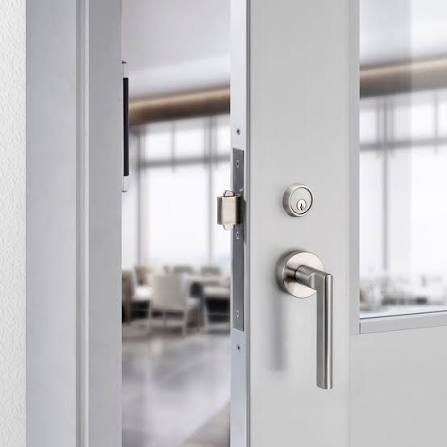
Lock replacement is not always necessary when a door lock develops a problem. In many cases, a small fault can be repaired. However, there are situations where keeping an old or damaged lock may create repeated problems.
Knowing when replacement makes more sense can help property owners avoid unnecessary repairs and improve the reliability of their doors.
1. The Lock Keeps Failing
One repair may solve a problem, but repeated failures are a different matter.
If the same lock keeps becoming stiff, jamming, or refusing to engage properly, the internal mechanism may be reaching the end of its useful life.
Continuing to repair the same components can become inconvenient and costly.
In this situation, replacing the lock may provide a more practical long-term solution.
2. The Lock Has Serious Physical Damage
A lock that has been badly damaged may not be worth repairing.
Check for:
- Cracked components
- A damaged cylinder
- Bent hardware
- Broken internal parts
- Loose mounting points
- Visible damage around the locking area
Minor damage may be repairable, but significant physical damage can affect how securely the door locks.
If you are unsure, a professional lock repair service in Dubai can assess the mechanism before you decide to replace it.
3. You Have Lost Control of the Keys
Keys can easily be copied without the property owner's knowledge.
If important keys have been lost or given to people who no longer need access, changing the lock or cylinder can restore control.
This can be particularly useful after changes involving tenants, employees, contractors, or other people who previously had authorized access.
Instead of relying on old keys being returned, updating the locking arrangement can provide a cleaner solution.
4. The Lock Is Outdated for Your Needs
Older locks are not automatically unsafe, but they may no longer suit how a property is used.
For example, you may have renovated the property, changed who uses the space, or decided that a particular entrance needs a different locking arrangement.
The important question is whether the existing system still meets your requirements.
If it does not, replacement can be part of a wider door-security improvement.
5. Replacement Parts Are Difficult to Find
Some older locks use components that are no longer readily available.
A repair may therefore require considerable time to locate a compatible part.
If the lock has already developed several faults and replacement components are becoming difficult to source, installing a compatible new system may be more practical.
This can also make future maintenance easier.
6. The Lock No Longer Works Smoothly
A lock does not have to be completely broken before you consider replacing it.
Increasing resistance can be an early warning sign.
For example, you may notice that the key needs to be moved several times before it turns or that the handle feels unusually stiff.
First determine whether the problem comes from the door alignment or surrounding hardware.
If the locking mechanism itself is worn, replacement may be appropriate.
7. The Door Has Been Upgraded
Changing other door hardware can sometimes create a reason to reconsider the existing lock.
A new handle, door profile, or locking arrangement may not work correctly with older hardware.
This is especially important with aluminium doors, where available space and hardware dimensions can vary.
When changing the locking system, check the door profile and measurements rather than choosing a replacement based only on appearance.
Repair or Replace?
A simple way to approach the decision is to consider the condition of the complete locking system.
Repair may be suitable when:
- The lock is generally in good condition
- The fault is limited
- Replacement parts are available
- The mechanism still operates reliably
Replacement may be better when:
- Problems keep returning
- The lock has significant damage
- Parts are difficult to source
- Access requirements have changed
- The mechanism has extensive wear
The cheapest immediate option is not always the cheapest over time.
Check the Door Before Installing a New Lock
A new lock will not solve every door problem.
Before replacement, inspect the hinges, frame, strike plate, and door alignment.
If the door is sagging or the latch does not line up with the strike, the underlying problem should be addressed first.
Otherwise, the new lock may experience the same unnecessary pressure as the old one.
Choose a Compatible Replacement
Lock replacement should always take the existing door into account.
Check:
- Lock dimensions
- Backset
- Cylinder size
- Door thickness
- Handle arrangement
- Locking points
- Door material
For aluminium doors, compatibility is particularly important. A suitable replacement aluminium door lock should match the existing profile and locking arrangement.
Avoid making unnecessary modifications simply to force an incompatible lock into place.
Test the New Lock Properly
After installation, test the door several times.
Open and close it normally. Then check the key, handle, latch, and locking points.
The door should close without excessive force, and the key should turn smoothly.
If the new lock feels difficult to operate immediately after installation, investigate the alignment instead of assuming that the mechanism needs more force.
Final Thoughts
Lock replacement can be a sensible choice when an old lock has repeated faults, serious damage, outdated components, or access problems that cannot be resolved through a simple repair.
Before replacing it, check the complete door and identify the actual cause of the problem.
Choosing compatible hardware and testing it properly after installation can help the new locking system operate reliably and reduce future problems.

