


Sealing Performance in Floating Ball Valve Systems
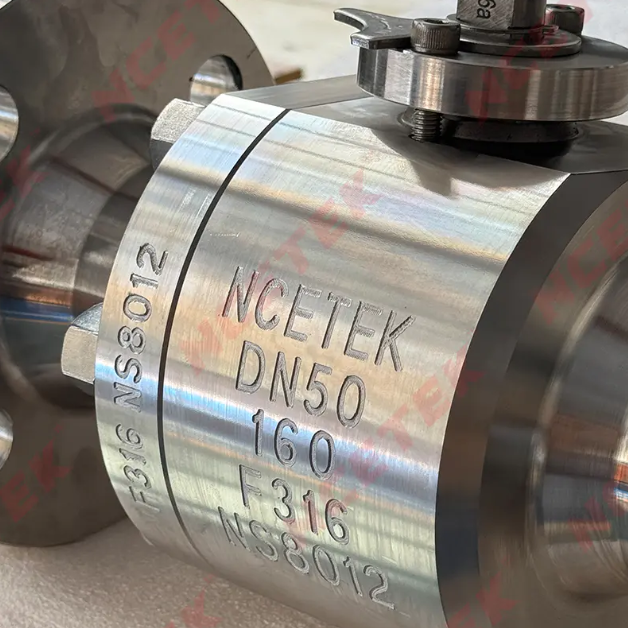
Industrial pipelines require valve components that can provide controlled isolation while maintaining suitable mechanical and sealing characteristics throughout their service life. A Cast Steel Floating Ball Valve combines a cast steel body with a floating ball structure, creating a practical configuration for various pipeline and process applications. Its performance depends on the interaction between material selection, casting quality, machining accuracy, ball and seat design, stem components, and final inspection.
Casting is an important manufacturing process for valve bodies because it allows manufacturers to produce complex internal and external geometries. Cast steel can provide the structural characteristics required for many industrial applications while offering flexibility in body configuration. The selected steel grade should correspond with the pressure, temperature, corrosion exposure, and process medium involved in the intended service environment.
Casting quality directly affects subsequent manufacturing stages. The production process requires control of mold preparation, molten metal handling, solidification, and finishing. After casting, the body may require inspection for dimensional accuracy and surface conditions. Depending on project requirements, non-destructive inspection methods may also be considered for identifying potential discontinuities before further machining and assembly.
Precision machining is essential because the cast body is only the initial component. Connection surfaces, internal passages, stem openings, and other critical areas must be machined to appropriate dimensions. Accurate machining helps establish the correct relationship between the ball, seats, stem, and body. Consistency is particularly important around sealing surfaces, where dimensional deviations can affect assembly and operating behavior.
The floating ball structure works through pressure-assisted contact between the ball and downstream seat when the valve is closed. Unlike a trunnion-mounted configuration, the ball is not fixed by a lower support mechanism. This structural arrangement can provide a relatively straightforward flow-control mechanism, but the seat and ball must be appropriately matched to the expected pressure and temperature conditions.
Seat materials should be selected according to the application rather than treated as a universal component choice. Soft sealing materials may be suitable for certain temperature and fluid conditions, while other services may require alternative materials or specialized sealing structures. Chemical compatibility, temperature cycling, pressure conditions, and operating frequency are among the factors that can influence seat selection.
The stem provides the mechanical connection between the operating mechanism and the ball. Its dimensional accuracy, surface condition, and sealing arrangement are important for consistent operation. Stem seals must also be compatible with the expected temperature and process medium. For automated installations, the valve operating mechanism should be coordinated with the actuator so that the available torque corresponds appropriately with the valve's operating requirements.
Connection design is another important consideration. Flanged, threaded, or welded configurations may be selected depending on pipeline construction and maintenance requirements. Installation teams should evaluate connection compatibility, available space, pipeline alignment, and accessibility before installation. Proper alignment can help avoid unnecessary mechanical loading on the valve body and connected piping.
Quality control should continue throughout the production process. Material verification, casting inspection, dimensional checks, machining inspection, assembly control, pressure testing, and operational testing can each provide information about the condition of the finished valve. Maintaining records from these stages can also improve traceability and support future maintenance activities.
Environmental conditions should be considered when determining surface protection and maintenance requirements. Outdoor pipelines may expose valve bodies to moisture, temperature changes, and corrosive environments. Appropriate coatings or other protective treatments can be selected according to the body material and service conditions. Inspection schedules should also reflect the importance of the valve within the pipeline system.
When selecting a Cast Steel Floating Ball Valve, engineering and procurement teams should evaluate body material, casting quality, floating ball structure, seat materials, connection type, operating mechanism, inspection procedures, and installation conditions together. This approach provides a more complete basis for matching valve construction with actual service requirements. Industrial ball valve solutions and related products can be reviewed through https://www.ncevalve.com/product/ when assessing options for different pipeline and process applications.

