


What Determines Laser Cleaning Machine Price for Different Industrial Applications
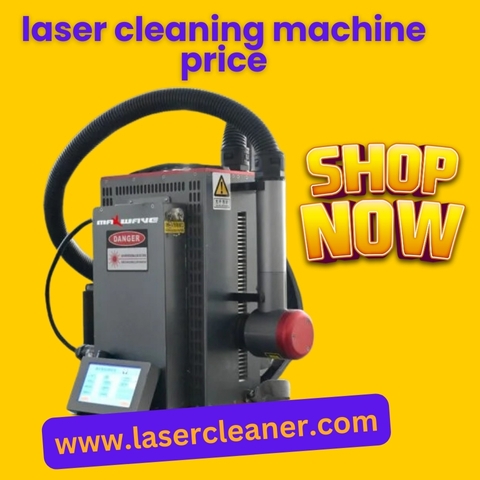
When businesses explore modern surface treatment equipment, one of the first questions they ask is about the laser cleaning machine price. The cost can vary considerably because laser cleaning systems are available in different power levels, laser technologies, configurations, and automation options. A compact handheld machine designed for light surface treatment is naturally priced differently from a high-power industrial system designed for continuous production.
Understanding the factors behind pricing makes it easier for workshops, manufacturers, maintenance teams, and cleaning service providers to identify a machine that matches their working requirements.
Understanding Laser Cleaning Machine Price
There is no universal price for every laser cleaning machine. Current market guides show that equipment can range from several thousand dollars for entry-level handheld systems to tens of thousands of dollars or considerably more for specialized industrial and automated installations. The final quotation depends on the exact configuration, application, power, laser source, cooling arrangement, and supporting equipment.
For this reason, buyers should avoid comparing machines only by their advertised price. Two systems with similar power ratings can have substantially different prices because their internal components, laser sources, optical systems, cooling equipment, safety configuration, and service packages may differ.
The right approach is to first understand the application and then compare machines that are designed for the same type of work.
How Laser Power Influences the Price
Laser power is one of the most visible factors affecting the price of a cleaning machine. Lower-power systems are generally used for smaller components, light contamination, precision cleaning, and applications where controlled energy delivery is important.
Higher-power machines are commonly selected for larger metal surfaces, heavier rust, paint, oxide layers, and demanding industrial cleaning operations. Current market guides commonly place handheld systems across a broad range of power levels, including low-power pulsed machines and high-power continuous-wave systems.
However, higher wattage does not automatically mean that a machine is appropriate for every application. A manufacturer working with delicate molds may require a different configuration from a company cleaning large steel structures.
This is why power should always be considered together with the material, contaminant, cleaning area, required speed, and working frequency.
Pulsed and Continuous-Wave Laser Systems
Laser technology also has a major influence on laser cleaning machine price.
Pulsed laser cleaning systems deliver laser energy in short pulses. They are often selected for applications requiring controlled material removal and precise treatment. Industries working with molds, tooling, automotive components, precision parts, and other heat-sensitive surfaces may consider pulsed systems when process control is particularly important.
Continuous-wave, commonly called CW, systems provide a continuous laser output and are widely used for applications such as rust, paint, oxidation, and coating removal from robust metal surfaces. High-power CW systems are often considered for larger cleaning areas where productivity is a major consideration.
Because pulsed and CW systems use different laser technologies and serve different applications, comparing their prices simply by wattage can produce misleading results.
Portable Handheld Machines and Industrial Systems
Machine configuration is another important factor when evaluating cost.
A portable handheld laser cleaner can be useful for workshops, maintenance teams, fabrication facilities, and mobile cleaning services. Operators can move the cleaning head across different parts and surfaces without installing a large production system.
Industrial fixed systems can be designed for repeated production work, dedicated cleaning stations, or integration into manufacturing processes. Automated systems can include robotic equipment, safety enclosures, extraction systems, specialized workstations, and other components. These additional elements can substantially increase the overall investment.
For a business that cleans different components every day, portability can be particularly useful. For a manufacturer with repetitive production requirements, a dedicated or automated setup may be more appropriate.
Cooling System and Machine Configuration
Cooling requirements can also influence the final price. Some lower-power machines use air-cooling arrangements, while higher-power systems may require more substantial cooling equipment.
As laser power increases, thermal management becomes increasingly important for maintaining stable operation during extended working periods. Water-cooled configurations and industrial chillers can add to the initial equipment cost, but they are part of the overall system specification rather than optional decorative additions.
When comparing quotations, buyers should check whether the quoted price includes the required cooling system or whether it needs to be purchased separately.
Laser Source and Optical Components
The laser source is one of the most important components inside a laser cleaning machine. Different manufacturers and source technologies can produce significant differences in equipment pricing.
Two machines advertised as the same power can have different internal components and different levels of process control. Buyers should request detailed information about the laser source, scanning system, cooling arrangement, warranty, and available replacement parts before comparing quotations.
Additional Equipment and Installation Costs
The advertised laser cleaning machine price may not always represent the complete cost of putting the equipment into operation.
Depending on the application, buyers may also need fume extraction, filtration equipment, protective equipment, electrical preparation, safety controls, spare parts, transportation, installation, and operator training.
Laser cleaning can produce airborne particles and fumes when contaminants such as paint, coatings, oil residues, or rust are removed. Proper extraction and workplace safety arrangements should therefore be considered as part of the overall purchasing plan.
Automated systems can require additional integration work, including mechanical installation, programming, guarding, and production-line connections. These requirements can significantly change the final quotation.
Comparing Prices for Different Applications
A useful way to evaluate pricing is to categorize the intended application.
For light-duty cleaning and precision work, buyers may investigate lower-power systems. These machines can be suitable for smaller components, molds, tooling, and controlled surface treatment.
For general workshop use, medium-power systems may provide a practical configuration for cleaning rust, paint, oxidation, and other contaminants from metal components.
For production environments involving repetitive cleaning, automated systems can be configured around a specific manufacturing process. Market sources show that automated laser cleaning installations can reach substantially higher price levels than handheld equipment because of robotics, guarding, extraction, integration, and other industrial requirements.
What Should Buyers Ask Before Purchasing?
Before requesting a quotation, it is useful to prepare specific information about the intended application. Buyers should know the material being cleaned, the type of contamination, approximate surface area, required cleaning speed, operating hours, and whether the equipment will be used occasionally or continuously.
It is also worth asking suppliers about the laser source brand, warranty coverage, technical support, spare parts availability, cooling requirements, safety equipment, and delivery terms.
A supplier that understands the application can recommend a configuration based on actual cleaning requirements instead of simply offering the highest available wattage.
Looking Beyond the Initial Price
The purchase price is only one part of equipment ownership. Businesses should also consider maintenance, electricity consumption, replacement components, downtime, operator requirements, and expected working life.
A low initial quotation may not provide the same configuration or support package as a higher quotation. Likewise, a more expensive system may include equipment and services that another supplier lists separately.
Final Thoughts
The laser cleaning machine price depends on much more than laser wattage. Power, laser technology, laser source, cooling system, optical components, machine configuration, automation, safety equipment, and after-sales support can all influence the final cost.

