


Supported Ball Mechanisms in Industrial Flow Control
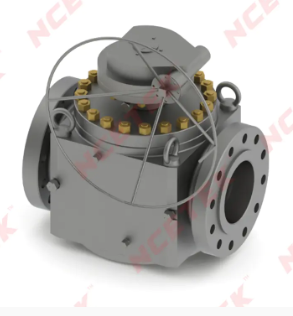
Large industrial pipelines often require valve structures that can manage significant mechanical loads while providing controlled flow isolation. A Cast Steel Trunnion Mounted Ball Valve uses a supported ball arrangement in which the ball is mechanically supported rather than relying entirely on line pressure to maintain its position. This structural principle can help manage operating forces in larger or higher-pressure applications, while the cast steel body provides a practical foundation for the complete valve assembly.
The body casting process allows manufacturers to create complex internal passages and external connection structures suitable for industrial pipeline equipment. However, casting is only one stage of production. Critical areas such as the ball chamber, seat pockets, stem opening, and connection surfaces require precision machining after casting. Dimensional inspection is necessary to confirm that the machined components correspond correctly with the design requirements and assembly tolerances.
The trunnion arrangement is a central feature of this valve configuration. The ball is supported at designated points, reducing the amount of mechanical load transferred directly to the seats. This can influence operating torque and the way the sealing system responds to line pressure. The exact internal configuration depends on the valve design, pressure conditions, size, and intended application, so engineering decisions should be based on the complete operating environment.
Seat design remains essential even when the ball is mechanically supported. Seats must maintain controlled contact with the ball and provide the required isolation characteristics. Depending on the process medium and temperature range, different seat materials and structural arrangements may be considered. Material compatibility is particularly important in chemical and petrochemical service, where the process medium can affect sealing components over time.
Stem construction is another important area of engineering. The stem transfers movement from the actuator or manual operating mechanism to the ball. Accurate machining of the stem and associated interfaces helps maintain predictable movement and appropriate torque transmission. Anti-static provisions, stem sealing, and suitable mechanical retention can also be incorporated where required by the application and relevant design standards.
Manufacturing inspection should cover both individual components and the completed valve. Casting inspection can help identify potential body defects, while dimensional checks verify critical machining results. During assembly, technicians need to confirm correct positioning of the trunnion supports, ball, seats, stem, and sealing components. Final pressure and leakage tests provide additional verification of body integrity and closure performance under controlled test conditions.
Trunnion-mounted configurations can be applied across various industrial sectors. Oil and gas transmission systems, petrochemical facilities, power generation plants, gas processing installations, and large process pipelines may require valves with supported ball structures. The selection process should account for pressure, temperature, fluid characteristics, pipeline size, actuation requirements, installation orientation, and expected operating frequency.
Maintenance planning should begin before installation. Large pipeline valves may require specialized lifting arrangements and sufficient access around the operating mechanism. Actuator maintenance, stem inspection, sealing checks, and periodic functional testing should be incorporated into the overall equipment management program. Clear documentation of valve configuration and materials can also simplify future servicing.
The relationship between the valve and the surrounding pipeline is equally important. Connection dimensions, actuator space, support structures, thermal conditions, and installation accessibility can all affect field performance. Correct alignment during installation helps prevent unnecessary loads on the valve body and connected piping, while appropriate operating procedures can reduce avoidable stress on internal components.
For demanding industrial projects, Cast Steel Trunnion Mounted Ball Valve selection should consider body construction, supported ball mechanics, sealing technology, manufacturing accuracy, testing, and installation requirements as one complete system. Coordinating these factors from casting through final inspection can support consistent equipment production for different pipeline applications. More industrial ball valve configurations can be reviewed at https://www.ncevalve.com/product/ when assessing equipment for specialized flow control systems.

