


How to Verify the Authenticity of Your Crane Components
Heavy equipment work leaves little room for delay. A broken crane stalls a project, frustrates clients, and drains revenue. When something fails, the pressure to get moving again is intense. That urgency is exactly what counterfeiters count on.
Counterfeit components now fill the market in alarming volume. They arrive in convincing boxes with convincing logos. The wrong Manitowoc parts on a 300-ton machine can fail without warning. Knowing what to check keeps a bad component off your crane.
Why Counterfeits Proliferated
Supply chain disruption opened the door. Lead times stretched badly over several years. Under pressure, buyers turned to unfamiliar suppliers just to get equipment working again. Counterfeiters noticed the desperation and moved quickly.
Today's forgeries are difficult to spot at a glance. Manufacturers of fakes study genuine components and mimic them closely. Because crane parts command real prices, counterfeiters put effort into every visible detail. Knowing exactly what to inspect is what protects you.
What Counterfeits Actually Cost
The stakes vary widely by component. A fake filter may simply clog sooner than expected. A counterfeit hoist brake, however, can release a suspended load. A false swing bearing can send the upper structure into uncontrolled motion.
Financial damage follows close behind the safety risk. Inferior materials wear quickly and often destroy neighboring components. Installation of a non-genuine item typically voids the original warranty. A gearbox ruined by a bad bearing becomes your expense entirely.
Insurance exposure deserves equal attention. After an accident, investigators will test the failed components closely. Proof that a counterfeit caused the failure can void your coverage. Property damage, injuries, and legal costs then land on you.
Small savings at purchase rarely survive that arithmetic. What looks like a modest discount can become a seven-figure liability. Verification costs far less than the alternative. Treat every incoming component as worth checking.
Step 1 — Purchase Through Authorized Channels
The simplest defense is buying direct. Authorized dealers maintain a direct relationship with the factory. They do not source through third-party brokers. Their stock arrives straight from the manufacturer.
Secondary suppliers are not automatically disqualifying. Ask for written proof of their authorization status before ordering crane parts. Verify that documentation independently rather than accepting verbal assurances. A quick call to the manufacturer settles most questions.
Step 2 — Inspect the Packaging
Counterfeiters cut corners where it is least visible. Genuine packaging uses heavy stock and precise brand colors. Look closely at the printing quality on every panel. Blurry text, typos, and faded logos are common giveaways.
Security features matter even more than print quality. Holographic stickers, specific barcodes, and tamper-evident seals appear on high-value Manitowoc parts boxes. If the box looks like it came from an office printer, refuse it. Packaging is often the first place a careless forgery reveals itself.
Step 3 — Examine the Part Itself
Once the component is out of the box, use your senses. Compare metal, rubber, and plastic against a known genuine item. Counterfeiters substitute cheaper materials to protect their margins. A forgery often weighs noticeably less than the real thing.
Machining quality tells you a great deal. Genuine edges are clean and threads are crisp. Fakes frequently show burrs and uneven surfaces. Run a thumb along an edge that should be smooth; if it catches, question the item.
Casting numbers deserve a close look as well. Genuine units carry part numbers stamped directly into the metal. Blank spaces or digits that do not match the label are warning signs. Anything failing that comparison should be set aside immediately.
Among crane parts, hydraulic hoses deserve extra attention. Original crimps are uniform and fittings sit snugly. Fakes show uneven crimping and loose connections. Check every hose before it goes anywhere near a hydraulic circuit.
Step 4 — Check the Documentation
Genuine components arrive with genuine paperwork. Critical items should include a certificate of authenticity or material test reports. Every major component carries a serial number, so record it. Then enter that number in the manufacturer's online portal.
The portal confirms what that number should describe. If the system lists a hoist motor while you hold a hydraulic valve, you have a problem. Manitowoc parts come with verifiable documentation at every step. Walk away when a supplier claims the paperwork was simply forgotten.
Step 5 — Treat Suspicious Pricing as a Warning
Everyone appreciates a good price. Heavy machinery components cost what they cost for solid reasons. Engineering, materials, and testing all add to the figure. When a quote undercuts the dealer by forty percent, ask why.
That gap is not a discount; it is a warning sign. Counterfeiters rely on low prices to move inventory quickly. They know you are under pressure to finish the job. Paying more for verified components protects far more than the invoice suggests.
Step 6 — Use Digital Verification Tools
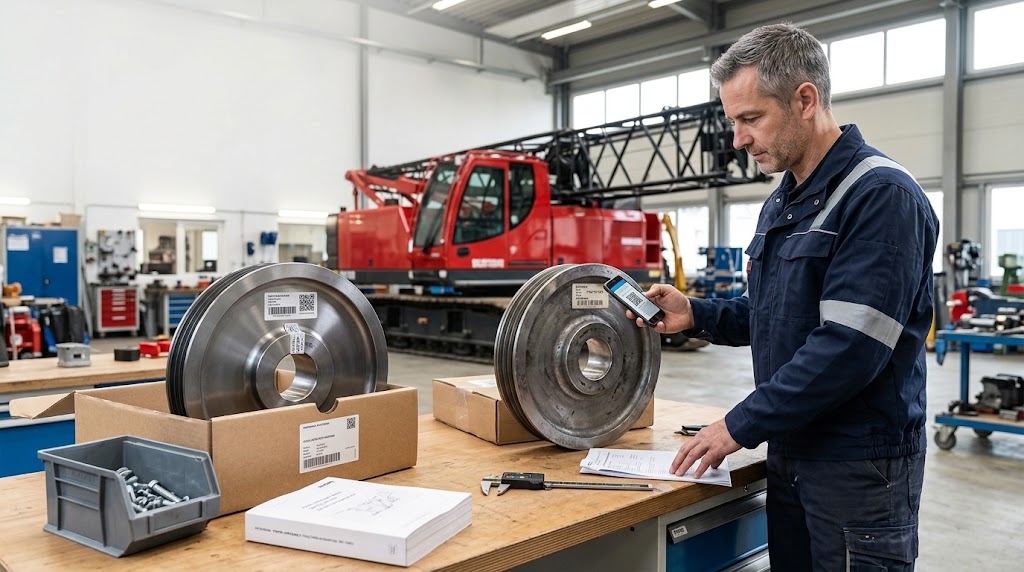
Manufacturers have invested heavily in digital tracking. Many newer components carry QR codes or RFID tags. Download the official tracking application for your equipment line. Scan the component and review the returned data carefully.
The record should show the manufacture date, shipping destination, and warranty status. A blank page or a strange web address is a bad sign. Digital tools give you a second opinion beyond your own eyes. Use them whenever a component offers a scannable tag.
Step 7 — Trust Your Technicians
Experienced mechanics know their machines intimately. If a senior technician says a component feels wrong, pay attention. They handle these items daily and know the expected weight, texture, and sound. Build a culture where questioning a part's origin is welcomed.
Delaying a repair by a day to verify a component is a reasonable trade. The alternative is a failure that injures someone. Encourage that habit at every level of the shop. Verification is a team responsibility, not a paperwork chore.
Know the Common Targets
Understanding what gets faked helps you focus your effort. It is not always the large, expensive assemblies that get copied. High-volume, quick-turn items attract the most attention. Filters lead the list.
A counterfeit filter looks identical from the outside. Inside, it lacks the proper filtration media. Contaminants pass straight into the hydraulic system. That debris destroys pumps and valves over time.
Seals and O-rings are faked constantly as well. Manitowoc parts in these small sizes still require the same scrutiny. A cheap seal fails under pressure and leaks oil. Do not skip verification simply because the item is small.
Keep Your Guard Up
Counterfeit components remain a serious threat to safety and budget. Cutting corners on critical equipment is a gamble you cannot afford. Buy through authorized channels. Check packaging, inspect metal, and verify numbers.
Verified crane parts bring confidence along with the repair. You know the component will perform under load. You know your crew is working with equipment that has been checked. That assurance is worth the extra effort every single time.
Do the homework before anything gets installed. Confirm the source, examine the details, and record what you find. Careful habits keep projects on schedule and people unharmed. Nothing on a job site matters more than that.

