


How GST Accounting Software Helps Bring Clarity to Business Finances
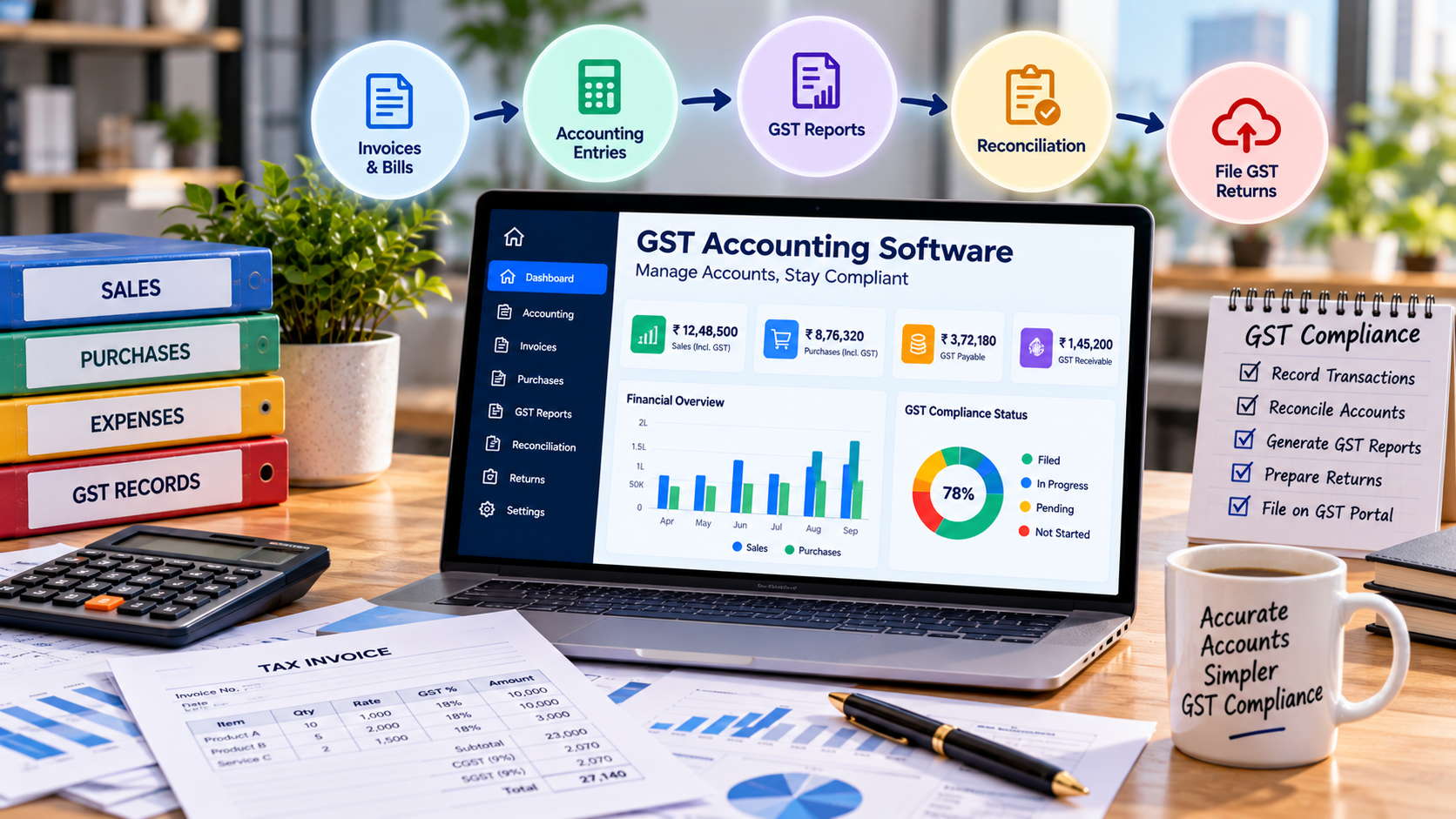
A business transaction rarely ends when an invoice is issued or a payment is received. The details eventually become part of accounting records, influence tax calculations, and contribute to the information required for GST compliance. When these records are maintained inconsistently, finance teams can spend considerable time tracing figures and resolving differences.
Using GST accounting software can help businesses organise accounting information and manage GST-related activities within a more structured process. The real value lies in how effectively the software fits into everyday financial operations, from recording transactions to reviewing figures before filing.
The Connection Between Accounting Entries and GST Records
Accounting and GST compliance are closely related, but they serve different purposes. Accounting records help a business understand its financial position, while GST-related processes involve identifying and reporting relevant transaction information in accordance with applicable requirements.
Consider a business that records sales, purchases, expenses, and payments throughout the month. These entries provide the foundation for financial reporting. However, when the time comes to prepare GST returns, the finance team may need to examine specific transaction details, verify tax information, and investigate differences between records.
If accounting entries are incomplete or difficult to trace, this review can become unnecessarily complicated.
A structured accounting workflow helps maintain consistency between the original transaction and the records used during compliance activities. It also gives employees a clearer starting point when they need to investigate an unusual figure or correct an entry.
Why Month-End Closing Can Become Complicated
Month-end closing brings together many activities that happen throughout the accounting period. Teams review transactions, reconcile accounts, check outstanding entries, and prepare reports that help explain the business's financial activity.
GST-related checks can form part of this process. When information is spread across separate files and applications, employees may have to repeat work before they can complete their review.
Several issues commonly contribute to this difficulty.
Inconsistent transaction information
Different employees may enter similar transactions using different descriptions, formats, or categories. These inconsistencies can make records harder to compare and analyse.
Missing supporting documents
An accounting entry may be present even when its supporting invoice or document is difficult to locate. Without the necessary information, reviewing the transaction can take longer.
Repeated data entry
When information must be transferred between accounting, billing, and compliance tools, employees may need to enter or verify the same details more than once.
Unresolved differences
A mismatch between accounting records and other relevant information requires investigation. If the source of the difference is unclear, the finance team may need to examine multiple records before identifying the cause.
GST accounting software should be evaluated in terms of how it helps businesses manage these practical challenges, rather than simply how many functions appear on its feature list.
What to Evaluate in GST Accounting Software
The right system depends on the organisation's size, transaction volume, accounting practices, and existing technology. The following areas can help businesses assess whether a solution is suitable for their operations.
1. Recording and organising transactions
A reliable accounting process begins with properly maintained records. Businesses should assess how the software handles routine entries and whether users can organise transactions in a consistent way.
The ability to locate an entry, review its details, and connect it with relevant supporting information can be particularly useful during internal checks.
2. Reviewing GST-related information
Finance teams need to examine the information relevant to their GST reporting responsibilities. Software should fit into a review process that allows employees to identify questionable entries and investigate differences.
Businesses should confirm which checks the system supports and which activities still require manual verification.
3. Reconciling financial records
Reconciliation helps establish whether related records agree and highlights differences that need attention. Depending on the business's workflow, this may involve comparing accounting entries with invoices, payment records, or other relevant information.
A useful system should make the review process manageable and help employees understand which items remain unresolved. Automated matching, where available, should still be supported by appropriate checks.
4. Maintaining accessible records
Historical information is important when responding to questions about previous transactions, reviewing financial performance, or preparing for an audit.
Businesses should consider how records are searched, retrieved, exported, and retained. They should also understand the available options for correcting entries and documenting changes.
5. Supporting financial reporting
Accounting data becomes more useful when it can be converted into reports that answer practical business questions. Depending on the system, reports may help teams review transaction activity, account balances, or GST-related figures.
Before choosing software, identify the reports the business actually needs and check whether they can be prepared without extensive manual adjustments.
Bringing Accounting and Filing Into One Workflow
A business may maintain accurate accounting records yet still face extra work when preparing GST returns. This can happen when the accounting system and the filing process operate independently.
Employees may need to export data, prepare separate working files, verify transferred information, and resolve differences before completing the filing process. Each additional handoff creates another point where information may need to be checked.
For businesses using enterprise resource planning systems, the relationship between accounting records and compliance tools deserves particular attention. Exploring ERP-integrated GST filing software can help businesses understand how relevant information may be connected across their financial workflow.
The extent of integration matters. Businesses should establish which data can be transferred, how the systems handle incomplete or incorrect information, and whether employees can trace reported figures back to the original records.
Integration can reduce repetitive work, but it does not eliminate the need for sound accounting practices. Accurate source data, appropriate configuration, and human review remain important.
Questions to Ask Before Making a Decision
A software demonstration can show what a system is designed to do. Testing it against everyday accounting tasks can reveal whether it will work effectively in practice.
Before selecting a solution, consider these questions.
-
Does it match the current accounting process? Check whether the system accommodates the business's transaction types and established workflows.
-
Can employees trace entries? Test how easily users can move from a report or account entry to the relevant transaction details.
-
How are errors corrected? Understand how the software handles amendments and preserves an appropriate record of changes.
-
Can it connect with existing applications? Confirm compatibility with the accounting, billing, or ERP systems already in use.
-
What review tools are available? Identify the checks, reports, and reconciliation functions that support the finance team.
-
How is access managed? Review user permissions and the controls available for sensitive financial information.
-
What will it cost over time? Consider licensing, implementation, training, support, and any additional services required.
A practical trial using representative transactions can help answer these questions. It also allows the employees who will use the system to identify potential difficulties before the business commits to a new process.
Avoiding Common Implementation Problems
Even suitable software can create difficulties if the transition is poorly planned. Moving to a new accounting system requires attention to existing records, employee responsibilities, and the way information is entered.
Businesses should review the quality of their existing data before migration. Duplicate entries, inconsistent descriptions, and incomplete records can carry over into the new system if they are not addressed.
Training is equally important. Employees should understand the correct process for recording transactions, reviewing information, and handling corrections. Clear responsibilities help ensure that unresolved issues are identified rather than overlooked.
It is also useful to establish a review routine. Regular checks can help teams identify discrepancies during the accounting period instead of discovering a large number of issues at month-end.
Making Accounting Information More Useful
GST accounting software should do more than provide a place to record financial transactions. It should support a process in which information can be organised, reviewed, and used confidently across accounting and compliance activities.
For one business, the priority may be reducing manual entry. For another, it may be improving reconciliation, retrieving historical records, or connecting accounting information with its filing workflow. The appropriate choice depends on where the existing process creates the most difficulty.
By identifying these needs before selecting software, businesses can make a more informed decision. Accurate records, consistent accounting practices, and a clearly defined review process remain essential, while suitable technology can help bring these activities together.
The result is a financial workflow in which transactions are easier to trace, accounting information is easier to review, and GST-related work can be managed as part of the broader accounting process.

