


Laser Cleaning Machine: Modern Surface Cleaning for Industrial Applications
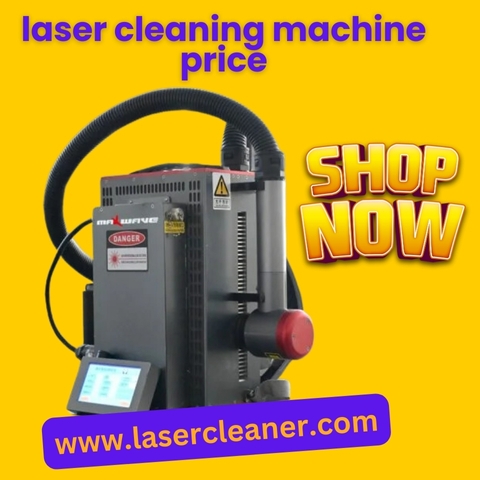
When businesses begin looking for modern surface-cleaning equipment, one of the first questions is about the laser cleaning machine price. Laser cleaning has become an important technology for removing rust, paint, oxides, grease, coatings, and other unwanted materials from metal surfaces. However, there is no single price that applies to every machine. The cost depends on the laser technology, power, configuration, cooling system, cleaning head, automation, and intended application.
In 2026, advertised prices range from several thousand dollars for basic handheld systems to much higher amounts for powerful pulsed machines and automated industrial installations. Some market references place entry-level handheld systems around a few thousand dollars, while advanced automated solutions can reach well into six figures.
Why Laser Cleaning Machines Have Different Prices
Two machines may both be described as laser cleaners but have completely different specifications. A compact machine designed for occasional rust removal is not comparable with an industrial system intended for continuous production.
The first factor is the laser source. Different laser technologies are designed for different cleaning requirements. Continuous-wave, or CW, systems provide continuous laser energy and are commonly selected for larger areas, heavy rust, paint, and industrial surface preparation. Pulsed systems deliver energy in short pulses and are often selected when greater control over heat input is important.
Because these technologies require different components and engineering, their prices can be significantly different even when their advertised power ratings appear similar.
How Laser Power Influences the Price
Laser power is another major factor when evaluating a laser cleaning machine price. Machines are available in various power levels, ranging from lower-power systems for precision work to high-power machines designed for demanding industrial cleaning.
For example, market references commonly place 100W-class systems in the lower price range, while 200W–500W pulsed machines can cost considerably more. High-power CW machines in the 1,000W–3,000W range are commonly used for larger and heavier cleaning applications.
Higher wattage can provide faster material removal, but choosing the highest available power is not automatically the right purchasing decision. The material, contamination, working area, required cleaning speed, and acceptable heat input should all be considered before selecting a machine.
Pulsed and Continuous-Wave Machines
Understanding the difference between pulsed and CW technology is essential when comparing prices.
A pulsed laser cleaner releases laser energy in short bursts. This approach can provide precise cleaning with controlled heat input, making pulsed systems suitable for applications involving sensitive components, molds, detailed parts, and precision surface preparation.
CW laser cleaners operate with continuous energy and are frequently selected for large-area cleaning tasks. They can be suitable for removing heavy rust, paint, coatings, and contamination from robust metal surfaces.
For this reason, a 200W pulsed machine can cost more than a much higher-wattage CW machine. Comparing machines only by wattage can therefore give a misleading impression of their relative value.
Portable Laser Cleaning Machine Price
Portable handheld laser cleaners are popular among workshops, maintenance teams, fabricators, and service providers because they can be moved between different work areas.
Entry-level and mid-range handheld systems are generally less expensive than automated industrial installations. Current market references show handheld CW systems can begin at a few thousand dollars, while more sophisticated professional systems can reach significantly higher prices depending on power and configuration.
Portable machines are commonly used for rust removal, paint stripping, weld preparation, oxide removal, and cleaning industrial components. Their relatively compact design makes them practical for businesses that need equipment that can work on different parts and locations.
What Else Affects Laser Cleaning Machine Price?
Laser power is important, but it is not the only factor. Buyers should examine the complete machine specification before comparing quotations.
Laser Source
The manufacturer and quality of the laser source can influence the price. A reliable source with appropriate specifications can affect operating stability and long-term service requirements.
Cooling System
Cooling becomes increasingly important as machine power increases. Depending on the design, a machine may use air cooling or water cooling. High-power systems may require more substantial cooling equipment, which adds to the overall system cost.
Cleaning Head
The laser cleaning head controls how the beam interacts with the working surface. Scan width, optical components, construction quality, and compatibility with the selected laser source can all affect the final quotation.
Configuration
A simple handheld machine and a fixed industrial workstation have different requirements. Additional accessories, fiber cable length, control systems, spare parts, and customized configurations can all change the final price.
Automation
Automation can significantly increase the investment. A manually operated handheld cleaner is relatively straightforward, while an automated system may include robotic integration, safety enclosures, extraction equipment, positioning systems, and production-line controls. Automated solutions can therefore cost tens or hundreds of thousands of dollars depending on their design.
Understanding the Total Purchase Cost
When comparing the laser cleaning machine price, buyers should look beyond the machine's advertised base price.
Shipping, installation, training, replacement components, electrical requirements, cooling equipment, safety equipment, and technical support may all affect the final investment. A low initial quotation may not include everything required to operate the machine properly.
Warranty terms should also be examined carefully. Buyers should ask what is covered, how technical problems are handled, whether replacement components are available, and whether remote or local support is provided.
For international buyers, certification and voltage requirements may also influence the quotation. These details should be confirmed before placing an order.
Choosing a Machine According to the Application
The most practical way to compare laser cleaning equipment is to begin with the cleaning job rather than the advertised price.
A workshop cleaning small metal components may require a compact pulsed machine. A fabrication company removing heavy rust from steel structures may be more interested in a higher-power CW system. A manufacturer processing hundreds or thousands of similar parts may require an automated system.
For mold cleaning, precision component preparation, restoration, and applications where heat control is important, pulsed technology may be considered. For large steel surfaces, heavy corrosion, paint removal, and high-throughput preparation, higher-power CW equipment may be more appropriate.
Comparing Supplier Quotations
Before purchasing, it is useful to request quotations from several suppliers using the same specifications. Each quotation should clearly state laser type, power, laser source, cooling method, cleaning head, working width, electrical requirements, warranty, accessories, and delivery terms.
For example, comparing a 1500W CW machine with another 1500W CW machine provides a more meaningful comparison than comparing a 1500W CW model with a 300W pulsed model simply because both are described as laser cleaners.
A detailed quotation also makes it easier to understand why two machines with apparently similar specifications have different prices.
Is a Higher Price Always Necessary?
Not every business needs an expensive industrial system. The correct investment depends on workload and application.
A company handling occasional cleaning work may have little reason to purchase a highly automated production system. On the other hand, a manufacturer operating a cleaning process throughout the working day may need equipment designed for sustained production.
The objective should be to select a machine that matches the required cleaning speed, material, contamination type, working environment, and expected workload.
Final Thoughts
The laser cleaning machine price can vary widely because laser cleaning equipment is available in many different configurations. Power, pulsed or CW technology, laser source, cooling, cleaning head, portability, automation, accessories, and technical support all contribute to the final cost.

