


Top Insulation Companies in Pakistan: Complete Guide to Energy-Efficient Insulation
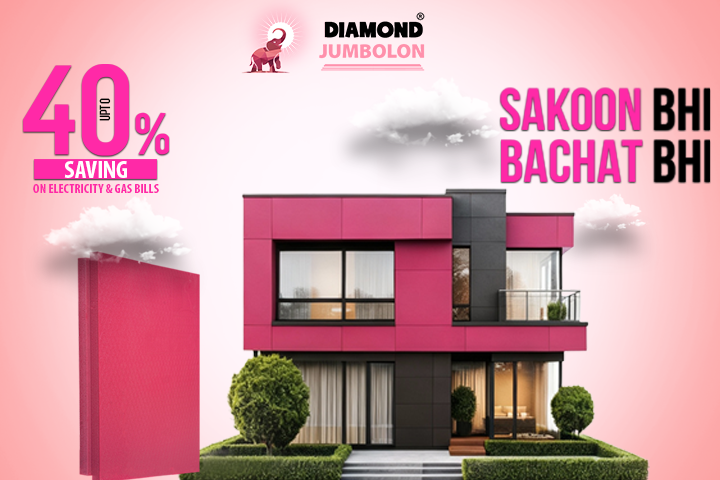
`Choosing among the Top Insulation Companies in Pakistan is an important decision for homeowners, builders, architects, contractors, and commercial property owners looking to improve building performance. Pakistan's hot summers can cause exposed roofs and exterior walls to absorb substantial solar heat, increasing indoor temperatures and cooling requirements. A properly selected insulation system can reduce unwanted heat transfer, improve indoor comfort, and help a property use cooling energy more efficiently.
Why Is Building Insulation Important in Pakistan?
Pakistan's climate makes thermal insulation particularly relevant for residential and commercial construction. During summer, direct sunlight can heat concrete rooftops and exterior walls for several hours each day.
Without adequate insulation, this heat gradually moves into occupied spaces. As indoor temperatures increase, air-conditioning systems have to remove more heat to maintain comfortable conditions.
This can increase cooling demand and electricity consumption.
Thermal insulation addresses this problem by creating resistance against heat flow between the exterior and interior of a building.
A suitable insulation system can help:
· Reduce solar heat gain
· Improve indoor temperature stability
· Reduce cooling demand
· Improve thermal comfort
· Support energy efficiency
· Limit unwanted heat transfer
Actual energy savings depend on the building design, climate, insulation specifications, HVAC efficiency, installation quality, and occupant behavior.
What Should You Look for in an Insulation Company?
Choosing an insulation provider should involve more than comparing prices.
A reliable insulation company should understand the relationship between material selection, building design, climate, and installation.
Important factors include:
Product Quality
Insulation should have suitable thermal, physical, and moisture-related properties for the intended application.
Technical Knowledge
Different areas of a building have different requirements. Roofs, walls, floors, foundations, water tanks, and pipes may require different insulation approaches.
Installation Expertise
Even high-performance insulation can underperform when it is poorly installed. Proper fitting, joint treatment, surface preparation, and coverage are essential.
Application-Specific Solutions
A professional provider should recommend insulation according to the actual structure rather than applying the same solution to every project.
Long-Term Performance
Durability, thermal performance, moisture resistance, and maintenance requirements should be considered alongside the initial purchase price.
XPS Insulation for Modern Construction
XPS, or extruded polystyrene, is a rigid insulation material commonly used in suitable building applications.
Its closed-cell structure provides thermal resistance, low water absorption, and compressive strength.
These properties make XPS insulation suitable for applications such as:
· Roof insulation
· Exterior wall insulation
· Floor insulation
· Foundation insulation
· Commercial construction
· Industrial facilities
· Cold storage
XPS boards provide a consistent insulation thickness and can be selected in different specifications according to project requirements.
The appropriate thickness and board specification should be determined based on climate, building design, structural requirements, moisture exposure, and desired thermal performance.
Roof Insulation for Extreme Heat
The roof is often one of the largest sources of heat gain in a building.
Concrete rooftops exposed to direct sunlight can become significantly hotter than the surrounding air. This stored heat can gradually transfer into rooms below.
Installing suitable roof insulation creates a thermal barrier that slows the movement of heat through the roof.
This can help improve upper-floor comfort and reduce the amount of heat an air-conditioning system needs to remove.
For buildings in hot areas of Pakistan, roof insulation can therefore be an important part of an energy-efficient building strategy.
Wall Insulation for Better Temperature Control
Exterior walls can also absorb solar radiation and transfer heat into indoor spaces.
This is particularly relevant for walls that receive direct sunlight during the afternoon.
Suitable wall insulation increases the thermal resistance of the building envelope and reduces the rate of heat transfer.
Depending on the construction, solutions may include external insulation, cavity insulation, or other wall-insulation systems.
The appropriate approach depends on wall construction, available space, moisture conditions, external finishes, and required thermal performance.
Thermal Insulation and Air-Conditioning Efficiency
Insulation and air conditioning work together.
An air conditioner removes heat from an indoor space. If heat continuously enters through an uninsulated roof or wall, the cooling system has to compensate for that heat repeatedly.
Reducing heat transfer through insulation can lower the cooling load.
This does not mean insulation replaces air conditioning or guarantees a specific reduction in electricity costs. Instead, it helps create conditions in which cooling equipment can operate more efficiently.
Combining insulation with regular AC maintenance, appropriate temperature settings, efficient equipment, and proper ventilation can provide a more complete energy-management strategy.
Moisture Resistance Matters
Moisture performance is another important consideration when selecting insulation.
Roofs, exterior walls, foundations, and other building components can be exposed to rain, humidity, condensation, and damp conditions.
XPS insulation has a closed-cell structure and low water absorption, making it suitable for certain applications where moisture resistance is required.
However, insulation should not be considered a substitute for waterproofing.
A properly designed building envelope should also include suitable drainage, waterproofing, and moisture-management measures.
Other Areas That Can Benefit from Insulation
A complete insulation strategy may extend beyond roofs and walls.
Depending on the property, insulation can also be used for:
· Floors
· Foundations
· Water tanks
· Exposed pipes
· Ceilings
· Temperature-controlled spaces
Rooftop water tanks, for example, can absorb considerable solar heat when exposed to direct sunlight. A suitable insulation jacket can slow heat transfer into stored water and help maintain more stable temperatures.
Treating multiple heat-transfer points can provide more comprehensive thermal protection.
Why Professional Installation Matters
Insulation performance depends heavily on correct installation.
Gaps between boards, incomplete coverage, poorly sealed joints, and incorrect detailing can create thermal bridges through which heat moves more easily.
Professional installation helps ensure that insulation is properly positioned and integrated with roofs, walls, waterproofing systems, windows, doors, and other building components.
Good installation can also help prevent avoidable moisture and durability problems.
How to Select the Right Insulation Solution
Before choosing a product or insulation provider, evaluate the actual requirements of the property.
Consider:
· Building type
· Local climate
· Roof and wall construction
· Required thermal resistance
· Insulation thickness
· Moisture exposure
· Compressive strength
· Installation method
· Long-term durability
This approach helps property owners select an insulation system based on performance rather than simply choosing the lowest initial price.
Building a More Energy-Efficient Future
Effective insulation is an important part of improving the thermal performance of homes, offices, factories, warehouses, and other buildings. XPS insulation boards, roof insulation, wall insulation, and other thermal solutions can reduce unwanted heat transfer and improve indoor temperature control when correctly specified and installed. Insulation works best when combined with efficient cooling equipment, proper maintenance, suitable shading, and responsible energy use. For homeowners and businesses looking for practical strategies on How to Reduce Electricity Bills, improving the building envelope with appropriate insulation can help reduce cooling demand and support better long-term energy efficiency.

