


Aluminium Barge Manufacturers: Innovations in Modern Marine Vessel Construction
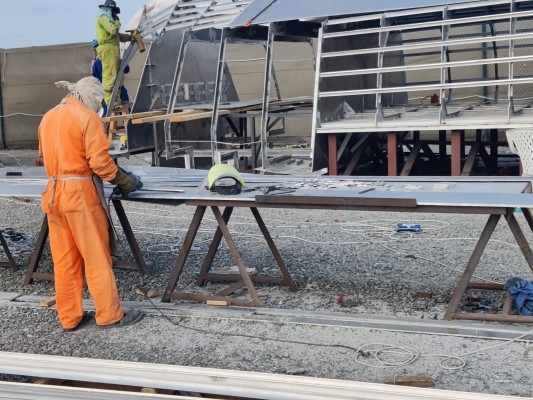
The marine industry is continuously evolving as vessel operators look for stronger, lighter, more efficient, and cost-effective solutions. Aluminium has become an important material in modern marine construction because of its lightweight structure, corrosion resistance, strength-to-weight ratio, and fabrication flexibility. From transportation vessels to offshore work platforms, aluminium construction can provide several practical advantages when the vessel is designed according to its intended application.
The Growing Importance of Aluminium Barges
Modern aluminium barge manufacturers are increasingly using advanced engineering methods to develop vessels that can meet demanding operational requirements. Aluminium has a density of approximately 2.7 tonnes per cubic metre, compared with around 7.85 tonnes per cubic metre for mild steel. This means aluminium is roughly one-third the density of steel, creating significant opportunities for weight reduction in suitable vessel designs.
A lighter vessel can potentially offer advantages in terms of payload, draft, propulsion requirements, and overall operational efficiency. The exact benefit depends on the hull design, dimensions, loading condition, propulsion system, and intended operating environment.
Material Selection and Marine-Grade Aluminium
Material selection is one of the most important stages of marine vessel construction. Aluminium alloys from the 5000 series are commonly used in marine applications because they provide a combination of strength, corrosion resistance, toughness, and weldability.
For example, aluminium alloy 5083 has a density of approximately 2.66 g/cm³, while its tensile strength can generally range from around 275 to 365 MPa, depending on its temper and specification. The appropriate alloy and plate thickness must be selected according to the vessel's structural requirements and operating conditions.
Modern Design and Engineering
Today's aluminum barge builders use increasingly advanced design and engineering techniques to improve vessel performance. Computer-aided design and three-dimensional modelling allow engineers to examine hull geometry, structural arrangements, weight distribution, buoyancy, and stability before fabrication begins.
Structural optimization is especially important for aluminium vessels. Instead of simply adding more material, engineers can determine where reinforcement is actually needed and develop a structure that provides the required strength without unnecessary weight. This approach can improve the relationship between structural weight and useful payload.
Advanced Fabrication Techniques
Modern aluminium vessel fabrication can involve CNC cutting, precision fitting, controlled welding, dimensional inspection, and detailed quality-control procedures. These technologies help improve manufacturing accuracy while reducing unnecessary material waste.
Welding requires particular attention because aluminium behaves differently from steel when exposed to heat. Proper welding procedures, suitable equipment, skilled operators, and appropriate joint preparation are essential for achieving reliable structural connections.
For a barge, welded joints must withstand water pressure, cargo loads, vibration, wave action, and repeated operational stresses. Frames, stiffeners, longitudinal members, transverse structures, decks, and watertight compartments all contribute to the strength of the finished vessel.
Aluminium Barges in the Middle East
The maritime sector in the Middle East has a wide range of requirements covering transportation, offshore operations, marine construction, logistics, and coastal activities. This has created demand for specialized vessel solutions, particularly in areas where marine infrastructure and offshore activities are developing.
For barge builders in UAE, factors such as high temperatures, seawater exposure, coastal operating conditions, payload requirements, and long-term durability can influence the selection and design of a vessel. Aluminium can be particularly useful when low weight and corrosion resistance are important considerations.
Corrosion Resistance and Maintenance
Marine vessels operate in environments where moisture, saltwater, and humidity can affect structural materials. Aluminium naturally forms a thin oxide layer that helps protect its surface from corrosion.
However, aluminium vessels still require proper maintenance and inspection. Areas around welds, drainage points, fasteners, and connections between different metals should receive appropriate attention. Galvanic corrosion can occur when dissimilar metals come into contact in a marine environment, so suitable isolation and material compatibility are important during construction.
Proper maintenance can help preserve structural performance and extend the useful service life of the vessel.
Fuel Efficiency and Operating Performance
Fuel consumption is a major consideration for commercial marine operators. A lighter vessel can potentially require less propulsion power than a heavier vessel with similar dimensions and operating characteristics.
However, fuel efficiency is influenced by many factors, including hull shape, vessel speed, engine selection, propeller efficiency, cargo weight, sea conditions, and operating route. Aluminium should therefore be considered as one part of an overall efficiency strategy rather than as a single solution.
A well-engineered lightweight hull can help operators achieve an effective balance between payload, speed, fuel consumption, and operating costs.
Payload and Practical Advantages
One of the main reasons aluminium is considered for specialized barges is the potential relationship between structural weight and payload. When a vessel's structure is optimized effectively, reducing unnecessary weight can allow more of the vessel's displacement to be allocated to cargo, equipment, or other useful loads.
This can be particularly beneficial for work barges and utility vessels that frequently transport machinery, construction materials, tools, or other heavy equipment. The final payload capacity must always be established through proper naval architecture and stability calculations.
Sustainability and Lifecycle Considerations
Sustainability is becoming an increasingly important part of modern marine engineering. Lightweight vessel construction can potentially reduce fuel consumption during operation, which may contribute to lower operational emissions.
Aluminium also has strong recycling potential. At the end of a vessel's useful life, the material can be recovered and reused. This makes material recovery an important consideration when evaluating the complete lifecycle of a marine vessel.
A sustainable approach therefore includes efficient material use, reduced fabrication waste, long service life, maintenance planning, operational efficiency, and responsible recycling.
The Role of VU Marine
A modern barge building company must combine engineering knowledge with practical fabrication capabilities to develop vessels that are suitable for their intended applications. VU Marine follows the broader modern approach of considering material selection, structural requirements, vessel layout, fabrication quality, and operational performance together.
Every barge can have different requirements depending on its purpose. Cargo transportation, offshore support, marine construction, passenger operations, and utility work may require different hull configurations, dimensions, deck arrangements, and structural specifications.
Important factors such as length, beam, draft, payload, stability, propulsion, operating environment, and expected loads must therefore be evaluated during the design process.
Conclusion
Aluminium has become an increasingly valuable material for modern marine vessel construction because it combines low weight, useful structural strength, corrosion resistance, and fabrication flexibility. Its density of approximately 2.7 tonnes per cubic metre provides a major weight advantage over conventional steel.
Advances in computer-aided design, structural optimization, precision fabrication, welding technology, and quality inspection are helping improve the performance and reliability of aluminium vessels.
As marine operators continue to seek better efficiency, greater payload capacity, durability, and lower lifecycle costs, aluminium barges are expected to remain an important option for many applications. Through modern engineering and careful fabrication practices, VU Marine can contribute to the development of efficient, reliable, and purpose-built marine vessels for today's changing maritime industry.

