


FMCS BIS Certification: Step-by-Step Guide for Overseas Manufacturers
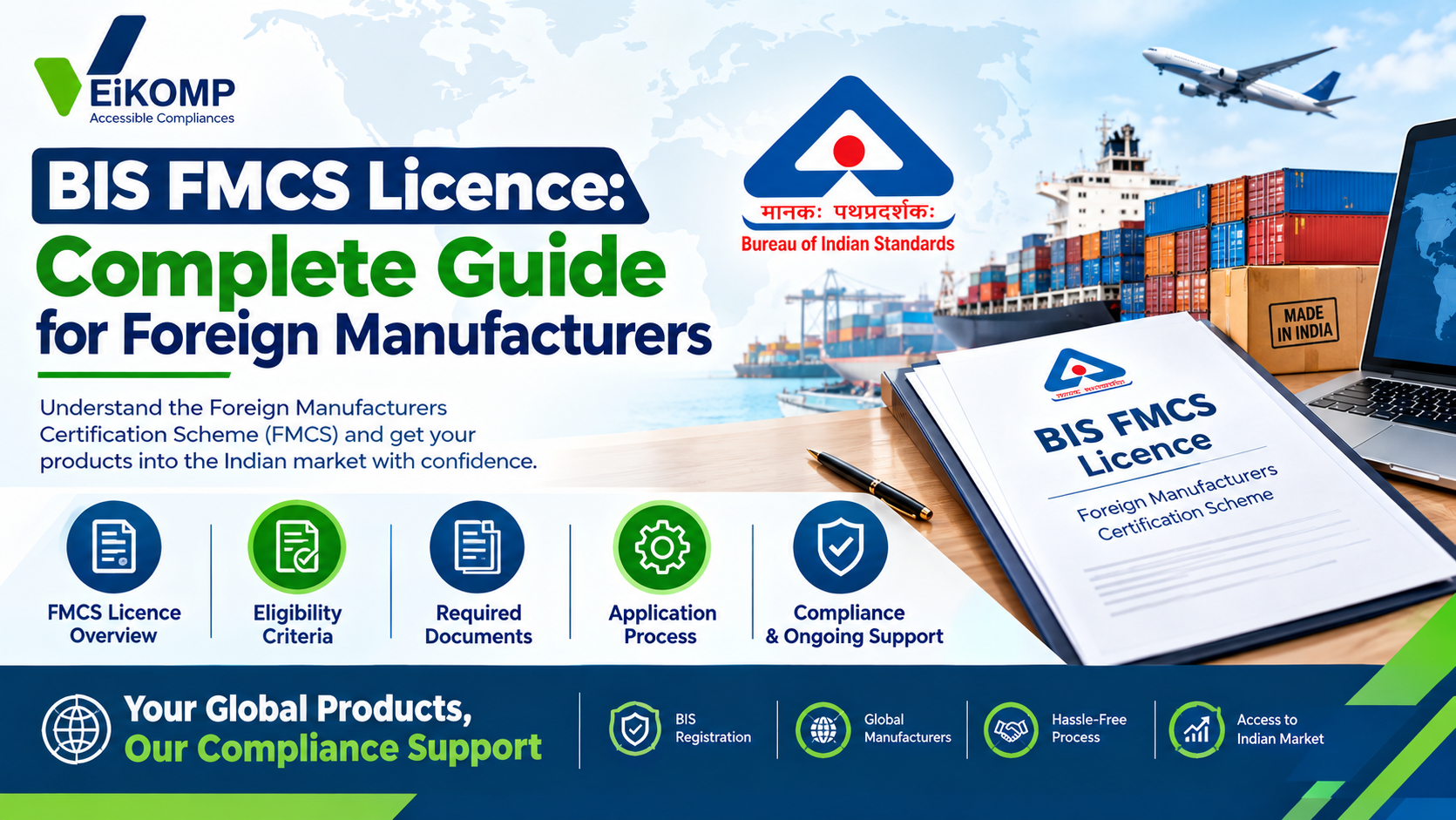
Foreign manufacturers planning to sell regulated products in India must understand the applicable quality and safety requirements before entering the Indian market. The Bureau of Indian Standards (BIS) operates the Foreign Manufacturers Certification Scheme (FMCS) to help eligible overseas manufacturers obtain certification for products covered under relevant Indian Standards.
A BIS FMCS Licence demonstrates that a foreign manufacturing facility has met the applicable requirements for the products covered by its licence. This certification is important for manufacturers exporting regulated goods to India, as it supports compliance with applicable Indian quality standards and product certification regulations.
Understanding the application process, documentation, testing requirements, and factory inspection procedures can help foreign businesses plan their market entry more efficiently.
What Is the Foreign Manufacturers Certification Scheme (FMCS)?
The Foreign Manufacturers Certification Scheme is a BIS certification scheme designed for manufacturers located outside India. Under this scheme, eligible foreign manufacturers can apply for a licence to use the BIS Standard Mark on products that comply with the relevant Indian Standard.
Unlike certification arrangements intended for domestic manufacturers, FMCS specifically addresses overseas manufacturing facilities. The process generally involves product testing, factory assessment, verification of manufacturing and quality-control arrangements, and compliance with applicable BIS requirements.
Manufacturers should first confirm whether their products fall under a compulsory BIS certification requirement and whether the relevant Indian Standard is covered by the applicable certification scheme.
Why Is BIS Certification Important for Foreign Manufacturers?
BIS certification for foreign manufacturers helps demonstrate that products meet the applicable Indian quality and safety requirements. For businesses exporting regulated products, obtaining the required approval can be an essential step before commercial sales in India.
Key benefits include:
-
Regulatory compliance: Helps manufacturers meet applicable Indian product certification requirements.
-
Market access: Supports the lawful supply of covered products in the Indian market.
-
Quality assurance: Demonstrates conformity with the relevant Indian Standard.
-
Buyer confidence: Provides greater assurance to importers, distributors, and commercial customers.
-
Clearer export planning: Helps manufacturers identify testing, documentation, and inspection requirements before shipment.
Certification does not automatically apply to every product. Requirements depend on the product category, applicable Indian Standard, and relevant government quality-control orders or regulations.
BIS FMCS Licence Requirements and Eligibility
To obtain an FMCS licence, a foreign manufacturer must satisfy the applicable BIS requirements for its product and manufacturing facility. The application should be submitted by the actual manufacturer rather than relying solely on an importer or trading company.
Common requirements include:
-
A valid manufacturing facility and appropriate production infrastructure.
-
Necessary machinery and testing facilities, where applicable.
-
Qualified technical personnel and quality-control arrangements.
-
Product samples that comply with the relevant Indian Standard.
-
Appointment of an authorized Indian representative, as required under the scheme.
-
Required undertakings, declarations, and application documents.
The manufacturer must also be prepared for a BIS factory inspection and verification of its production and quality-control systems.
Documents Required for FMCS BIS Certification
Preparing complete documentation can help reduce avoidable delays during the application process. Depending on the product and current BIS requirements, the following documents may be required:
-
Application form and manufacturer details.
-
Business registration and factory address documents.
-
Details of manufacturing machinery and testing equipment.
-
Manufacturing process flowchart.
-
Quality-control procedures and testing arrangements.
-
Product specifications and technical information.
-
Test reports from laboratories accepted by BIS, where applicable.
-
Details and authorization documents for the Indian representative.
-
Trademark or brand authorization documents, where relevant.
-
Required declarations, undertakings, and fee payment records.
The exact document checklist varies by product category and the applicable Indian Standard. Applicants should verify the latest requirements before submitting their application.
Step-by-Step Process for BIS Certification for Foreign Manufacturers
The process for obtaining an FMCS licence generally involves the following stages.
Step 1: Identify the applicable Indian Standard
Determine the relevant Indian Standard for the product and confirm whether BIS certification is mandatory.
Step 2: Prepare the application
Collect the required technical, manufacturing, and business documents. Ensure that the information provided is consistent and complete.
Step 3: Product testing
Submit product samples for testing through the applicable BIS-approved or otherwise accepted testing arrangements. The product must meet the relevant standard's requirements.
Step 4: Factory inspection
BIS officials may inspect the overseas manufacturing facility to evaluate production capabilities, quality-control systems, testing arrangements, and compliance with the scheme.
Step 5: Address non-conformities
If any deficiencies are identified during testing or inspection, the manufacturer must take appropriate corrective action and provide the required evidence.
Step 6: Licence grant
BIS evaluates the application, test results, inspection findings, and other required information. If all applicable conditions are fulfilled, the licence may be granted subject to the scheme's requirements.
Manufacturers should account for testing, inspection scheduling, documentation reviews, and any corrective actions when planning their export timelines.
BIS Certificate for Import in India: What Importers Should Know
A BIS certificate for import in India is often discussed by overseas suppliers and Indian importers seeking to bring regulated products into the country. However, importation alone does not determine the certification route.
Where a product is covered by a mandatory BIS requirement applicable to foreign manufacturing facilities, the overseas manufacturer may need the appropriate FMCS licence before the product can be supplied in India. Importers should verify the applicable product standard, regulatory notification, and licence status before placing commercial orders.
An importer cannot generally replace the manufacturer's required certification simply by holding an import licence or purchasing goods from an overseas supplier. Other product-specific permissions may also apply.
How to Choose the Best FMCS Agency in India
Working with the best FMCS agency in India can help foreign manufacturers understand the application process and manage compliance documentation more efficiently. However, private consultants do not issue BIS licences; the competent BIS authority makes the certification decision.
When selecting an FMCS consultant, consider the following factors:
-
Experience with foreign manufacturing certification.
-
Knowledge of relevant Indian Standards and product-specific requirements.
-
Support with documentation and application preparation.
-
Understanding of product testing and factory inspection procedures.
-
Transparent professional fees and realistic timelines.
-
Clear communication with overseas manufacturers and their Indian representatives.
A reliable consultant should explain the process, identify potential compliance gaps, and avoid guaranteeing approval before BIS completes its assessment.
Conclusion
Obtaining a BIS FMCS licence is an important compliance step for foreign manufacturers whose products fall under the applicable Indian certification requirements. From identifying the relevant standard to completing product testing and factory inspection, each stage requires careful preparation.
Whether a business is researching FMCS BIS requirements or seeking guidance on certification for exports to India, understanding the process can help minimize documentation errors and improve compliance planning. Manufacturers should always verify the latest BIS guidelines and product-specific regulations before beginning the application.

