


Advanced Mold Solutions for Vehicle Components
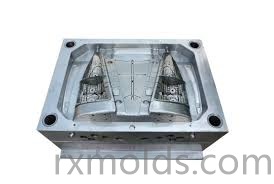
Automotive components are produced in many forms, from visible exterior panels and lighting housings to interior trim, structural covers, mounting brackets, and under-hood plastic parts. Although these products differ in size, geometry, and operating conditions, they share a common manufacturing requirement: the tooling must reproduce the approved design consistently across repeated production cycles. A well-developed Auto Parts Mould integrates material behavior, cavity geometry, cooling performance, ejection design, and manufacturing tolerances into a coordinated system that supports reliable component quality and practical production efficiency.
The engineering process normally begins with a detailed review of the component model and its intended function. Designers examine wall thickness, ribs, bosses, holes, clips, mounting points, and other features that affect molding or assembly. Potential undercuts and complex parting lines are identified early because they may require slides, lifters, or other mechanisms. Draft angles must be sufficient for release without compromising appearance or functional dimensions. When the part design is difficult to mold, early cooperation between the product designer and tooling engineer can reveal opportunities to simplify geometry without reducing performance.
Resin selection must also match the component's service environment. Different automotive applications may require impact resistance, dimensional stability, chemical resistance, flexibility, or heat tolerance. Polypropylene is widely used for various lightweight interior and exterior parts, while ABS can provide an attractive surface and useful impact properties. Polyamide, polycarbonate, and other engineering polymers may be selected when a component faces more demanding mechanical or thermal conditions. Material grades should be assessed using their actual technical data, because fillers, reinforcement, additives, and moisture absorption can influence shrinkage, strength, surface quality, and processing behavior.
Once the material and part geometry are understood, engineers develop the mold layout. This includes the mold base, core and cavity inserts, runner system, gate locations, vents, cooling channels, and ejection mechanisms. Gate placement affects filling patterns, weld-line positions, pressure requirements, and visible surface quality. Venting allows displaced air to escape as the cavity fills, helping reduce burn marks and incomplete filling. The parting line must provide a practical way to open the mold while limiting flash and preserving important surfaces. These decisions are interconnected, so a change to one feature may influence several other aspects of performance.
Computer-aided engineering tools can improve the decision-making process before mold construction. Filling and packing simulations help predict material movement, pressure distribution, weld lines, and potential air traps. Cooling analysis can highlight areas where heat removal may be uneven, while warpage predictions help engineers assess whether the proposed design is likely to meet dimensional requirements. Simulation results depend on the quality of the input data and assumptions, so they should be interpreted alongside engineering experience and physical testing. Their main value is helping teams identify possible problems early, when design adjustments are generally easier to implement.
Tool manufacturing requires accurate machining and careful control of critical interfaces. CNC equipment produces cavity profiles, mounting surfaces, and precision features, while EDM processes can create narrow details and complex shapes. Surface polishing or texturing is selected according to the product's appearance and functional needs. The mold must also withstand repeated clamping, injection pressure, thermal cycling, and mechanical movement. Appropriate steel selection, heat treatment, surface protection where applicable, and accessible maintenance features can contribute to durability. Inspection at key manufacturing stages helps verify that the finished tool matches the approved design.
Cooling and ejection systems strongly influence productivity. Cooling channels should remove heat consistently while avoiding unnecessary restrictions to maintenance access. If different sections of the part cool at substantially different rates, the component may shrink unevenly or distort after removal. Ejector pins, sleeves, lifters, and other release mechanisms must be positioned to avoid damaging cosmetic surfaces or delicate features. For parts with deep ribs or complex contours, engineers may need to balance release force, local stiffness, and cycle time. The best design is one that provides repeatable release while preserving part quality throughout extended production.
Mold trials provide the evidence needed to confirm whether the design works under practical conditions. Engineers assess filling, packing, cooling, demolding, visible defects, and dimensional results, then adjust processing conditions or tooling features where necessary. Short shots may indicate insufficient filling or restricted flow; flash may point to sealing, clamping, or pressure-related issues; warpage may reflect cooling imbalance, material shrinkage, or part geometry. Recording each trial and its adjustments makes troubleshooting more systematic and helps establish a stable production window.
After launch, preventive maintenance protects the investment and supports consistent output. Cleaning cavity surfaces, checking vents, lubricating moving mechanisms, inspecting wear points, and monitoring cooling performance can prevent small issues from developing into recurring defects. Manufacturers should also retain inspection results and maintenance histories so that performance changes can be traced over time. For purchasing teams, evaluating engineering support, quality procedures, communication, and after-sales service is as important as considering initial tooling cost. Taizhou Renxin Mould Co., Ltd. supports automotive mold development through coordinated design and manufacturing processes. To discuss a project and explore its capabilities, visit https://www.rxmolds.com and share your Auto Parts Mould application requirements.

