


Custom Patch Design: How to Create Unique Patches for Your Brand, Clothing, and Team
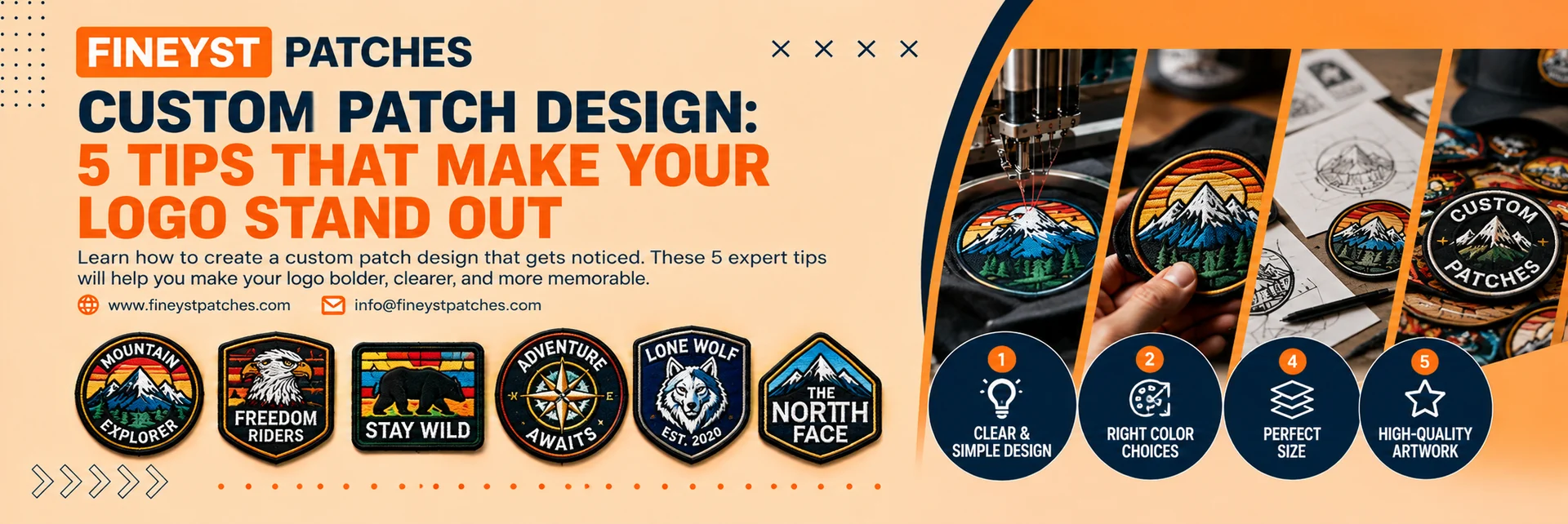
Custom Patch Design: How to Create Unique Patches for Your Brand, Clothing, and Team
Custom patch design is a creative way to showcase your brand identity, personalize clothing, and make uniforms or accessories stand out. Whether you need patches for a clothing brand, sports team, business, school, or personal project, a well-designed patch can turn a simple garment into something memorable.
From embroidered logos and woven labels to chenille designs and iron-on patches, there are many options to suit different styles and purposes. Choosing the right design, material, size, and backing helps ensure your custom patch looks professional and works well for its intended use.
In this guide, we will explain how to design custom patches, explore popular patch types, and share practical tips for creating a design that stands out.
What Is Custom Patch Design?
Custom patch design is the process of creating a personalized patch using specific artwork, text, colors, shapes, and materials. Unlike standard patches, custom designs can be tailored to match your brand, organization, event, or individual preferences.
Custom patches can feature:
-
Company logos and brand names
-
Sports team names and mascots
-
School emblems and graduation designs
-
Names, initials, and numbers
-
Decorative artwork and symbols
-
Special messages or commemorative designs
Depending on the intended use, a patch can be made with embroidery, woven threads, chenille, printed artwork, or other materials. The best choice depends on the complexity of the design and the appearance you want to achieve.
Why Is Custom Patch Design Important?
A thoughtful patch design helps communicate a message clearly while creating a consistent and recognizable appearance.
1. Builds Brand Recognition
Businesses and clothing brands can use custom patches to display logos, symbols, and brand names on jackets, hats, bags, and uniforms. Consistent colors and recognizable artwork help customers identify the brand.
2. Personalizes Clothing
Custom patches make it easy to add a personal touch to denim jackets, hoodies, backpacks, and other garments. You can create designs based on hobbies, interests, achievements, or individual style.
3. Creates a Professional Team Identity
Sports clubs, schools, and organizations can use matching patches to create a coordinated look. Team names, mascots, and logos help establish a shared identity.
4. Supports Promotional Campaigns
Patches can be used for events, product launches, membership programs, and promotional merchandise. Their compact size makes them suitable for a variety of wearable and fabric-based products.
Popular Types of Custom Patch Designs
Choosing the right patch type is an important part of the design process. Different construction methods create different textures, levels of detail, and visual effects.
1. Embroidered Patches
Embroidered patches use stitched threads to create a textured design. They are popular for logos, uniforms, jackets, hats, and team apparel.
Best for: Bold lettering, recognizable logos, badges, and designs that benefit from a traditional stitched appearance.
2. Woven Patches
Woven patches use fine threads woven together to create a smooth surface. They can reproduce smaller text and finer details more clearly than many traditional embroidered designs.
Best for: Detailed logos, small lettering, clothing labels, and designs that require a relatively flat finish.
3. Chenille Patches
Chenille patches feature a soft, raised texture that is commonly associated with varsity and letterman jackets.
Best for: Large school letters, sports numbers, collegiate designs, and bold decorative graphics.
4. Printed Patches
Printed patches transfer artwork onto a suitable patch surface, making them useful for designs with gradients, intricate illustrations, or many colors.
Best for: Complex artwork, photographic-style graphics, and designs that are difficult to reproduce with stitching alone.
5. Iron-On Patches
Iron-on patches feature a heat-activated adhesive backing that allows them to be attached to compatible fabrics using heat.
Best for: DIY clothing customization, casual apparel, craft projects, and convenient patch application.
Always check the patch manufacturer's instructions and the garment's care label before applying heat.
How to Design a Custom Patch Step by Step
Creating an effective custom patch starts with a clear idea and a design that suits the intended size and material.
Step 1: Define the Purpose of Your Patch
Start by deciding why you need the patch. A company logo, school emblem, fashion accessory, and sports badge may each require a different design approach.
Ask yourself:
-
Who will wear or use the patch?
-
Where will the patch be attached?
-
What message should it communicate?
-
Should the design look professional, sporty, decorative, or playful?
Answering these questions helps establish the direction for your design.
Step 2: Choose a Shape and Size
Common patch shapes include circles, rectangles, squares, shields, ovals, and custom outlines.
Select a size that fits the available space on the garment or accessory. A large back patch can accommodate a more detailed composition, while a small hat patch usually needs a simpler design.
Measure the intended placement area before finalizing the dimensions.
Step 3: Select Colors Carefully
Colors influence how easily a patch can be recognized. Use a color palette that matches your brand or design concept.
For the clearest result:
-
Choose colors with strong contrast.
-
Avoid using too many similar shades.
-
Keep text distinguishable from the background.
-
Check that the colors work well on the intended garment.
For business patches, using consistent brand colors can help maintain a recognizable visual identity.
Step 4: Choose Fonts That Are Easy to Read
Text can include a brand name, initials, slogan, team name, or year. However, very small or overly decorative lettering may become difficult to reproduce.
Use clear fonts and avoid crowding too many words into a small area. If your patch will be embroidered, remember that extremely thin lines and tiny text may not translate well into stitching.
Step 5: Prepare Your Artwork
Create a clean, high-quality design file and keep important elements within the patch's boundaries. Make sure the logo, text, and symbols are easy to distinguish.
For intricate artwork, ask the patch manufacturer which file formats and artwork specifications are preferred. A digital preview can help you identify problems before production begins.
Step 6: Select the Patch Material and Construction
Choose the patch type based on the level of detail, desired texture, budget, and intended application.
For example, embroidered patches provide a classic stitched look, woven patches suit finer details, and chenille patches create a bold, raised appearance.
The material should complement both the artwork and the garment where the patch will be used.
Step 7: Choose the Right Backing
The backing determines how the patch attaches to the garment or accessory.
Common options include:
-
Iron-on backing: Uses heat-activated adhesive on compatible fabrics.
-
Sew-on backing: Allows the patch to be stitched directly onto the garment.
-
Hook-and-loop backing: Makes the patch removable and reusable on compatible surfaces.
-
Adhesive backing: Can be suitable for certain temporary or light-duty applications, depending on the product.
Consider the garment material, how frequently it will be washed, and whether the patch needs to be removable.
Step 8: Review the Final Design
Before approving production, check the spelling, colors, dimensions, shape, and placement of every element.
Review the digital proof at its actual intended size, not just enlarged on a screen. This makes it easier to identify small text, crowded details, or elements that may be difficult to reproduce.
Essential Tips for a Professional Custom Patch Design
A strong patch design is easy to recognize, well balanced, and appropriate for its intended use.
Keep the Design Simple
A patch has limited space. Prioritize the most important visual elements instead of including every possible detail.
Use Readable Text
Choose lettering that remains legible at the finished size. If necessary, shorten the wording or increase the patch dimensions.
Maintain Good Contrast
Ensure that the text and graphics stand out against the background. Low contrast can make a design difficult to read from a distance.
Consider the Fabric
Think about the garment's texture, thickness, and color. A patch intended for a lightweight T-shirt may require a different construction from one designed for a heavy varsity jacket.
Match the Construction to the Artwork
Do not choose a patch style based only on appearance. Consider whether the construction method can reproduce the details of your design effectively.
Request a Digital Proof
Reviewing a proof before production can help prevent errors and clarify the final appearance of the patch.
Custom Patch Design Ideas for Different Uses
Custom patches can be adapted for a wide range of applications.
Clothing Brands
Fashion businesses can create logo patches for denim jackets, hoodies, jeans, caps, and outerwear. Woven or embroidered patches may suit brands looking for a recognizable clothing detail.
Sports Teams
Sports patches can feature team names, player numbers, mascots, and achievement symbols. Consistent colors and typography help create a coordinated team appearance.
Schools and Colleges
School patches may include institutional logos, graduation years, club emblems, and varsity letters. Chenille patches are particularly popular for traditional letterman jackets.
Corporate Uniforms
Businesses can use custom logo patches on workwear, staff uniforms, and jackets. Designs should prioritize readability and match the organization's visual identity.
Personal Fashion
Individuals can design patches featuring illustrations, initials, favorite themes, or decorative symbols. Mixing patch sizes and styles can create a personalized look on bags, jackets, and other accessories.
Common Custom Patch Design Mistakes to Avoid
Even a creative concept can be difficult to reproduce if the artwork is not prepared properly.
Avoid these common mistakes:
-
Using too much text: Long phrases can become unreadable on small patches.
-
Choosing low-contrast colors: Similar colors may blend together.
-
Including excessive detail: Tiny elements may not reproduce accurately with certain construction methods.
-
Ignoring patch dimensions: A design that looks good on a computer screen may not work at its actual size.
-
Selecting the wrong backing: The attachment method may not suit the garment or intended use.
-
Skipping the proofing stage: Spelling mistakes, incorrect colors, or alignment issues may go unnoticed until production.
Careful planning and a final review can help you avoid these problems.
How Much Does Custom Patch Design Cost?
The cost of custom patches depends on several factors, and there is no single price that applies to every design.
Common pricing factors include:
-
Patch size and shape
-
Patch type and construction method
-
Number of colors and level of detail
-
Backing and border options
-
Order quantity
-
Production requirements
A simple design may require less production work than a highly detailed patch with several colors or special construction features. Larger orders may also have different per-piece pricing than small orders.
To obtain an accurate quote, prepare your artwork, dimensions, preferred patch type, backing requirements, and expected order quantity before contacting a manufacturer.
Final Thoughts
Custom patch design offers a practical way to personalize clothing, strengthen brand identity, and create distinctive designs for teams, schools, businesses, and individuals.
The best results come from choosing a clear concept, using readable lettering, selecting suitable colors, and matching the artwork to the right patch construction. Size, backing, and garment compatibility are also important considerations.
Whether you need a bold chenille letter, a detailed woven logo, or an embroidered brand emblem, careful planning can help turn your idea into a patch that looks professional and suits its intended purpose.
Explore the possibilities of custom patches with Fineyst Patches and choose a design that reflects your brand, team, or personal style.

