


Model Approval Certificate for Electronic Weighing Scales: Process, Documents and Requirements
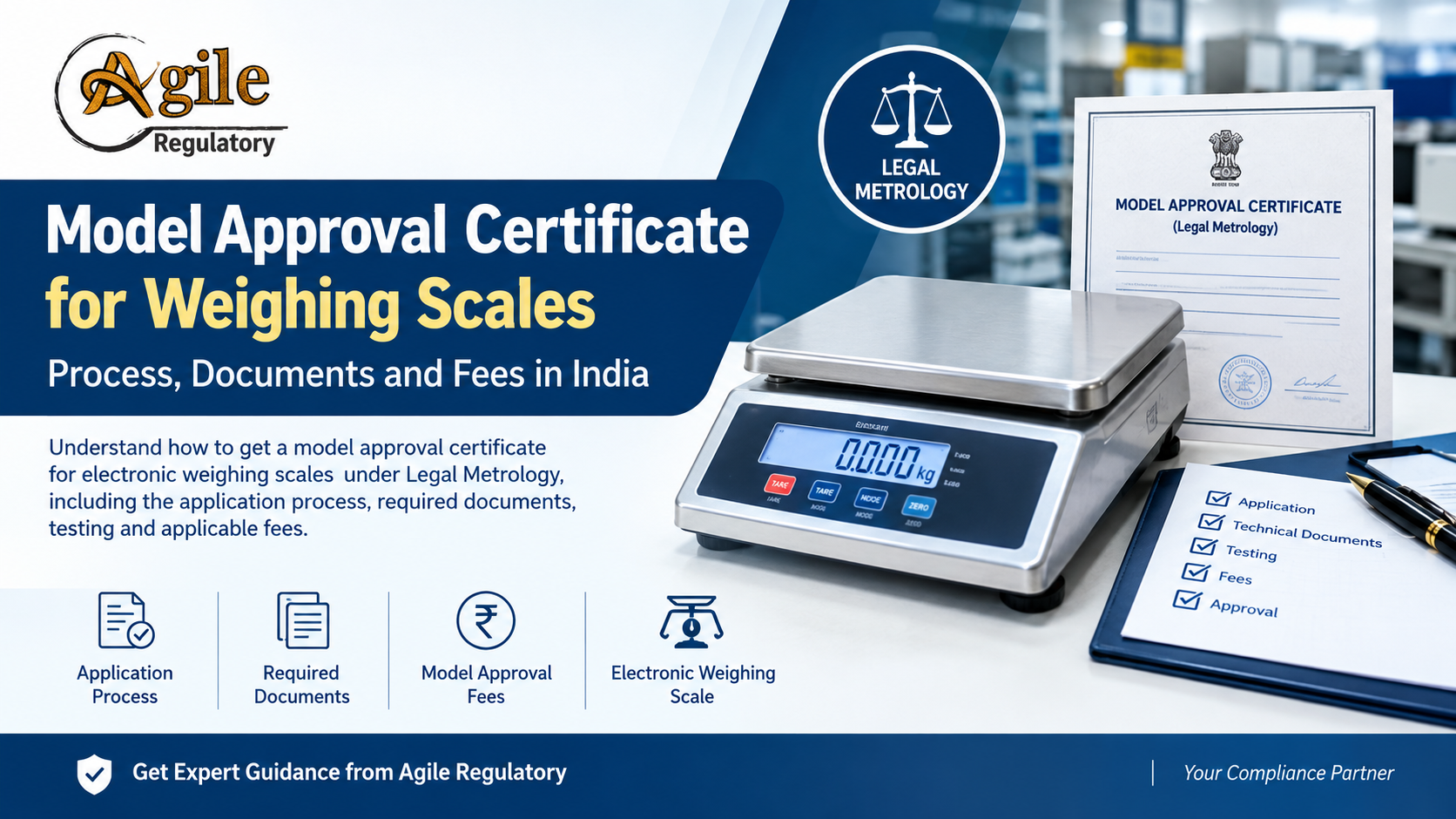
Electronic weighing scales are used in retail shops, warehouses, manufacturing units, laboratories, and many other commercial settings. When these instruments are intended for regulated use, businesses need to understand the applicable Legal Metrology requirements before manufacturing, importing, or selling them.
One important requirement for certain weighing instruments is model approval. It helps establish whether an instrument design meets the prescribed technical and metrological requirements for its intended use.
If your business manufactures or imports weighing equipment, understanding the model approval process early can help you prepare the right technical documents and avoid unnecessary application delays.
What Is a Model Approval Certificate?
A model approval certificate is an approval associated with a particular instrument design or model under the applicable regulatory framework. In India, Section 22 of the Legal Metrology Act, 2009, addresses model approval for weights and measures covered by the provision.
The approval process involves assessing whether the instrument model meets the applicable requirements. The exact procedure depends on the type of instrument, its intended use, and the relevant rules.
For businesses dealing with electronic weighing scales, model approval should not be confused with verification and stamping of individual instruments. These are separate compliance matters, and the requirements applicable to a product should be checked before it is placed into commercial use.
Model Approval Certificate for Electronic Weighing Scales
A model approval certificate for electronic weighing scale applications is relevant when the instrument falls within the scope of the applicable Legal Metrology provisions.
Electronic weighing instruments may differ in capacity, accuracy class, display, load cell configuration, software, and operating features. These technical characteristics can affect the documents and testing information required for assessment.
Manufacturers and importers should identify the exact model and specifications before applying. If several variants are involved, do not assume that approval for one model automatically covers every variant. Confirm the scope of approval with the competent authority.
Why Is Legal Metrology Model Approval Important?
A Legal Metrology model approval certificate can be an important part of compliance for instruments covered by the relevant rules.
Model approval helps assess whether an instrument design meets the technical requirements applicable to its intended use. It also helps businesses establish the regulatory position of a model before investing in production or commercial distribution.
This matters particularly for manufacturers introducing a new weighing scale, importers bringing equipment into India, and businesses planning to expand their existing product range.
However, model approval alone does not necessarily satisfy every obligation. Depending on the instrument and its use, additional requirements may include verification, stamping, registration, or other applicable approvals.
Documents Required for Model Approval
The document checklist depends on the instrument and the current application procedure. Applicants may need to prepare:
-
Applicant or manufacturer details
-
Brand name, model number, and instrument specifications
-
Technical drawings and design information
-
Operating manuals and product literature
-
Relevant test reports and technical data
-
Details of load cells, displays, sensors, and other components, as applicable
-
Photographs or samples of the instrument, if required
-
Authorisation documents and declarations requested by the authority
This is a general preparation checklist, not a definitive list for every instrument. Check the applicable rules and current instructions before submission.
How to Apply for a Model Approval Certificate Online
Businesses looking for a model approval certificate online should first identify the appropriate application route and competent authority.
Step 1: Identify the instrument category. Confirm the type of weighing scale and whether it falls under the model approval requirements.
Step 2: Finalise the model specifications. Ensure the model number, capacity, accuracy class, and technical details are consistent across documents.
Step 3: Prepare the supporting documents. Collect the required technical information, drawings, manuals, and test reports.
Step 4: Submit the application. Follow the current official procedure, complete the prescribed forms, and pay any applicable government fee.
Step 5: Complete testing or technical assessment. Provide the instrument or additional information if requested by the competent authority or designated testing facility.
Step 6: Respond to queries. Correct missing information or clarify technical details when required.
Step 7: Review the approval. Once issued, verify the approved model details and any conditions or limitations before proceeding.
The precise procedure and availability of online submission can vary. Applicants should confirm the latest instructions with the Department of Consumer Affairs or the relevant competent authority.
Understanding the Model Approval Certificate Format
The model approval certificate format depends on the issuing authority and the applicable approval procedure. An issued certificate may identify the applicant, manufacturer, instrument type, brand, model, technical characteristics, and approval reference.
It may also specify conditions, limitations, or other details relevant to the approved model.
Businesses should use the certificate actually issued by the authority rather than relying on an unofficial sample as a substitute for approval. If a certificate is needed for an application or internal compliance records, check the current prescribed format and documentation requirements.
How Agile Regulatory Can Help
Preparing an application for model approval Legal Metrology requirements can be challenging when technical documentation is incomplete or the applicable procedure is unfamiliar.
Agile Regulatory helps businesses understand regulatory requirements, organise supporting documents, identify information gaps, and prepare for the relevant application process.
Our assistance can be useful for manufacturers and importers of electronic weighing scales who need guidance on model approval documentation and related compliance steps. The scope of support depends on the instrument and applicable requirements, while approval decisions remain with the competent authority.
Frequently Asked Questions
1. Is model approval required for every electronic weighing scale?
The requirement depends on the instrument, its intended use, and the applicable Legal Metrology rules. Confirm whether the specific model falls within the relevant provisions.
2. Is model approval the same as verification and stamping?
No. Model approval concerns the instrument model, while verification and stamping relate to applicable checks on individual instruments.
3. Can I apply for model approval online?
The available application route depends on the current procedure and competent authority. Check the official instructions for the relevant instrument category.
4. Does approval of one model cover all variants?
Not automatically. Confirm the approved scope and whether changes to specifications or variants require further assessment.
Get Model Approval Guidance from Agile Regulatory
Planning to manufacture or import electronic weighing scales? Review the applicable Legal Metrology requirements before launching the product.
Contact Agile Regulatory for assistance with understanding model approval requirements and preparing the relevant application documentation.

