


Key Factors in Agricultural Spraying Equipment Selection
Agricultural spraying systems must deliver liquids reliably while adapting to changing field conditions, crop requirements, and application schedules. From applying crop protection products to distributing liquid fertilizers, the pumping assembly influences the consistency of delivery and the efficiency of the complete machine. A spray pump used in agriculture should be selected according to the liquid being handled, the required application rate, and the hydraulic characteristics of the spraying equipment. Understanding pump operation, material compatibility, and system design helps agricultural machinery manufacturers and distributors identify suitable solutions for different farm applications.
Different pumping mechanisms are used in agricultural equipment, including diaphragm, centrifugal, and roller-based designs. Each has characteristics that make it appropriate for particular operating conditions. Diaphragm pumps use a flexible membrane to create alternating suction and discharge cycles, while other designs move liquid through rotating components or different displacement mechanisms. The choice depends on the required pressure, flow, liquid properties, maintenance preferences, and equipment configuration. Selecting a pump based on the complete application is more effective than comparing a single performance figure.
In diaphragm-based systems, the diaphragm changes the volume of the pumping chamber as it moves. During intake, liquid enters through an inlet valve; during discharge, the chamber volume decreases and liquid is directed through an outlet valve. The repeated cycle supplies liquid to the connected hoses, manifolds, and spray nozzles. Stable performance depends on the diaphragm's flexibility, the sealing quality of the valves, and the accuracy of the mechanical drive. Consistent manufacturing and correct installation help the assembly maintain predictable operation over repeated working cycles.
Material selection is especially important because agricultural liquids can contain different chemicals, additives, and suspended substances. Some formulations may affect elastomers, metal surfaces, or plastic components over time. Materials such as EPDM, NBR, selected engineering polymers, and corrosion-resistant metals may be considered according to the application, but compatibility must be verified for the actual liquid. Concentration, temperature, exposure duration, and cleaning agents can all influence material performance. Confirming these conditions before purchasing equipment helps reduce the risk of swelling, cracking, corrosion, and leakage.
Flow and pressure requirements should be determined by examining the spraying system as a whole. Nozzle capacity, working width, hose length, filter resistance, and the number of active outlets all affect the pump's workload. If available flow is insufficient, the equipment may not distribute liquid evenly across the target area. Excessive or poorly regulated pressure can increase component stress and alter nozzle performance. Proper hydraulic matching allows the pump to operate within its intended range and helps maintain a consistent application rate under normal working conditions.
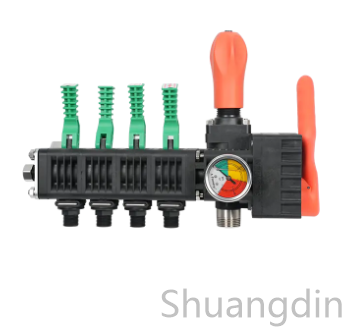
Pressure control devices provide an additional layer of system protection. Regulators can help maintain suitable pressure as spraying demand changes, while bypass arrangements may redirect excess liquid according to the equipment design. Filters prevent particles from entering the pumping chamber and obstructing valves or nozzles. However, filters must be cleaned regularly because accumulated debris can restrict intake flow and affect system performance. Hoses, clamps, and fittings should be suitable for the operating pressure and chemically compatible with the liquid being transferred.
Mechanical durability depends on the quality of the housing, drive components, seals, and mounting structure. Agricultural equipment often operates in dusty environments and experiences vibration, moisture, temperature changes, and repeated movement across uneven terrain. Secure mounting and proper alignment help reduce mechanical stress. In diaphragm systems, fatigue resistance is particularly important because the membrane flexes continuously during operation. Manufacturers can evaluate endurance, leakage, vibration, and pressure stability through testing that reflects the expected operating conditions.
Maintenance should be included in the regular equipment schedule. Before operation, users should inspect hoses, fittings, filters, and visible sealing components. Unusual noise, declining output, or unstable pressure may indicate blockage, wear, or an incorrect operating condition. After spraying, the system should be cleaned according to the chemical label and the pump manufacturer's instructions. Appropriate flushing helps limit residue buildup and cross-contamination between treatments. Storage procedures should also follow manufacturer guidance to protect the pump and its wetted components between operating seasons.
For agricultural equipment manufacturers, wholesalers, and distributors, long-term value depends on more than initial purchase price. Manufacturing consistency, spare parts availability, technical support, and ease of servicing can all influence ownership costs. A properly selected spray pump used in agriculture can contribute to dependable liquid delivery when integrated with suitable nozzles, filtration, and pressure controls. SHUANG DIN Co Ltd. provides agricultural diaphragm pump solutions for fluid handling applications, and buyers can explore the company's product range at https://www.agriculturaldiaphragmpump.com/product/ when evaluating equipment for agricultural spraying systems.

