


Precision Control for Automated Water Delivery
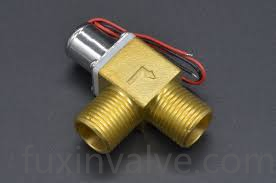
Touchless faucet systems are widely used in commercial buildings, hotels, healthcare facilities, offices, and modern residential bathrooms. These products rely on electronic detection and controlled water delivery to provide convenient, hands-free operation. A Sensor Faucet Solenoid Valve serves as the hydraulic switching component that responds to electrical commands from the faucet's control system. Its performance influences water delivery, shutoff reliability, and the overall consistency of the finished fixture, making careful component selection important for manufacturers and system integrators.
A typical sensor faucet combines a detection sensor, electronic controller, power supply, electromagnetic valve, and water passage assembly. When the sensor detects a user's hands, it sends a signal to the controller. The controller then activates the valve, allowing water to flow through the faucet. When the user moves away or the programmed operating condition ends, the controller deactivates the valve. Reliable coordination between these components helps ensure that water is delivered only when required.
The electromagnetic assembly must provide repeatable actuation under the intended operating conditions. Coil winding quality, insulation performance, magnetic circuit design, and armature alignment all influence switching behavior. The magnetic structure needs sufficient force to move the valve mechanism while maintaining suitable electrical efficiency. Accurate assembly reduces the possibility of friction, incomplete movement, or inconsistent response during repeated operation.
Hydraulic design is equally important. Internal passages, flow openings, valve seats, and connection structures determine how water moves through the valve. These features must be matched to the faucet's required flow and operating pressure. Precision machining helps maintain dimensional consistency, while properly designed sealing interfaces support effective shutoff. The valve should also fit within the faucet assembly without interfering with the sensor, controller, wiring, or other internal components.
Sealing materials must withstand repeated switching and contact with water. O-rings, diaphragms, gaskets, and valve seats should be selected according to the application's pressure, temperature, and water compatibility requirements. Reliable sealing reduces leakage when the valve is closed and helps maintain consistent performance over time. In high-use environments, appropriate material selection and controlled assembly can also help reduce maintenance frequency.
Electrical compatibility is a critical part of system integration. The valve's rated voltage, current demand, connection method, and operating characteristics must match the controller and power supply. Designers should also consider the control signal's timing and the expected number of operating cycles. In battery-powered products, power consumption and switching frequency may influence battery life, so the valve should be evaluated as part of the complete electrical system.
Manufacturing and quality-control procedures help maintain consistent performance across production batches. Relevant processes may include coil winding inspection, dimensional checks, electrical testing, assembly verification, and sealing inspection. Functional tests can confirm that the valve responds correctly to control signals, while leakage tests evaluate shutoff performance. Repeated-cycle testing under representative conditions can provide additional insight into operational consistency and durability.
For procurement teams, selecting a suitable valve involves confirming the electrical specification, water pressure range, flow requirements, connection dimensions, installation space, sealing materials, and controller compatibility. Buyers should also determine whether the valve's operating mode matches the faucet's intended control logic. Clear technical requirements help suppliers evaluate compatibility and support efficient product development for OEM and ODM projects.
Zhejiang Fuxin Electrical Technology Co., Ltd. supplies electromagnetic valve solutions for sanitary ware and water-control applications. Manufacturers developing touchless faucets and automated fixtures can explore the company's Sensor Faucet Solenoid Valve product range at https://www.fuxinvalve.com/product/sanitary-ware-solenoid-valves/ to assess potential solutions for their equipment requirements.

