


Selecting Flat Connectors for Modern Electrical Integration
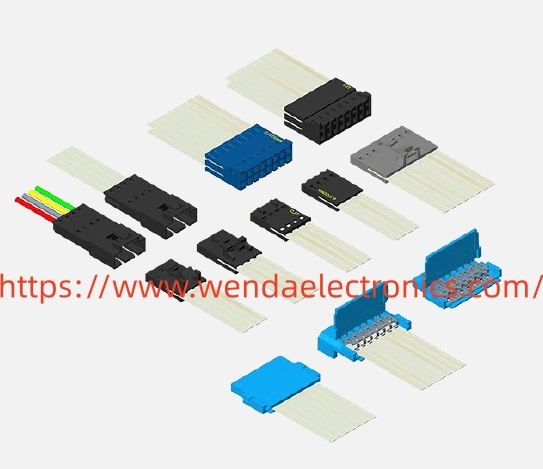
Electronic assemblies often contain closely arranged circuit boards, wires, terminals, and functional modules that must connect without creating unnecessary installation difficulties. A Flat Connector can support these arrangements by providing a low-profile connection interface that fits into a product's internal layout and helps organize the relationship between conductive components. Its usefulness depends on more than its physical shape. Contact materials, mating compatibility, retention methods, insulation, and assembly access all influence how effectively the connector performs within the finished product. Understanding these factors allows engineers and purchasing teams to assess whether a flat connection arrangement suits the electrical and mechanical requirements of a particular application.
Material selection affects both conductivity and the connector's ability to withstand repeated handling. Conductive contacts are often produced from copper alloys or other metals selected for their electrical properties and forming characteristics. Depending on the intended use, surface treatments may help manage contact wear, oxidation, and changes in electrical contact behavior. Insulating sections commonly use engineering plastics that maintain separation between conductive elements and provide structural support. Some designs may also incorporate protective covers, flexible components, or mounting features made from materials chosen for specific mechanical roles. The surrounding cable, terminal, or circuit-board interface matters just as much. A connector should be evaluated alongside its mating components because differences in material properties, contact finishes, or structural design can affect the performance of the complete connection.
Selecting an appropriate model begins with identifying how the connection will function within the product. Buyers should determine which components need to be joined, how the mating parts are arranged, and whether the interface will remain connected throughout the product's service life or require periodic removal. Available installation space, cable direction, mounting position, and access for assembly also deserve attention. A connection inside a compact electronic device may need to fit around nearby components, while an industrial control assembly may prioritize convenient wiring and straightforward inspection. Environmental conditions, including exposure to dust, moisture, vibration, and cleaning materials, should also inform the selection process. Drawings, samples, and clear descriptions of the intended use can help suppliers identify compatible designs and reduce uncertainty during product development.
The functional design of a flat connector coordinates electrical contact with mechanical support. Conductive elements establish the path through which current or signals travel, while the housing or supporting structure keeps those elements positioned relative to the mating interface. Depending on the design, contact pressure, alignment features, and locking mechanisms can help maintain a stable connection during normal operation. The connector must also work with the surrounding assembly so that cable movement or external forces do not place unnecessary strain on the contact area. For applications involving sensitive signals, designers may need to consider the connection's influence on electrical continuity and interference within the wider circuit. The appropriate design therefore depends on the complete electrical system rather than on connector shape alone.
Manufacturing consistency plays an important role in achieving predictable performance. Metal forming processes establish contact geometry, while surface finishing supports the intended contact characteristics. Housing production must maintain the shape and alignment needed for correct assembly, and subsequent component integration should preserve the relationship between conductive and insulating elements. Inspection can identify issues such as damaged contacts, imperfect molding, contamination, or inconsistent assembly. Prototype evaluation is also useful because it allows engineers to examine the actual mating process and identify difficulties that may not be obvious from drawings. Working with a supplier that understands the intended application can help align production methods, inspection practices, and component design with the needs of the finished product.
Ease of use influences how efficiently a connector can be installed, checked, and serviced. A well-arranged interface helps technicians identify the mating direction and position the connected components without unnecessary manipulation. Accessible connection points can simplify assembly, while suitable retention features may reduce the likelihood of accidental separation. If maintenance requires disconnection, the release method should be practical for the available working space and should not encourage excessive force that could damage the connector or adjacent parts. In production environments, consistent component orientation and straightforward handling can also help support repeatable assembly procedures. These practical details matter because the connection must function not only in the completed device but throughout manufacturing, inspection, and maintenance activities.
Physical design determines how naturally the connector integrates with the product's overall structure. A low-profile housing may help designers preserve internal space, while the placement of contacts and mounting features influences the routing of nearby wires and circuit sections. The entry direction can affect whether the connection is easy to reach after the enclosure is assembled. Smooth edges and a well-organized shape may also help prevent interference with neighboring components during installation. For equipment with multiple interfaces, a distinct layout can improve visual identification and make internal wiring easier to follow. However, compactness and appearance should remain compatible with the required electrical function, mechanical stability, and service access. The most suitable design is one that supports the intended product layout without introducing avoidable assembly complications.
Zhejiang Wenda Electronics Co., Ltd. supplies electronic connection products for applications that require practical integration between electrical components. When evaluating a flat connection solution, businesses can discuss the mating interface, installation conditions, material preferences, assembly workflow, and maintenance requirements with the company to clarify which design features deserve priority. Sharing product drawings or representative samples can help establish compatibility and guide further technical discussions. More information about the company's electronic components and connection solutions is available at https://www.wendaelectronics.com.

