


Improving Pesticide Transfer With Durable Pump Technology
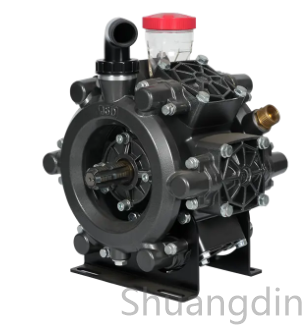
Agricultural pesticide handling requires pumping equipment that can transfer liquids reliably while maintaining effective sealing and compatibility with chemical formulations. Products used for crop protection may contain active ingredients, solvents, surfactants, and other additives that interact differently with pump materials. The pumping system must also operate within the pressure and flow requirements of the connected application equipment. A Diaphragm Pump For Pesticides uses a flexible membrane and coordinated valves to move compatible liquids through repeated intake and discharge cycles. For agricultural machinery manufacturers and chemical application equipment suppliers, careful consideration of materials, hydraulic performance, and maintenance requirements helps support dependable operation.
The diaphragm creates fluid movement by changing the volume of the pumping chamber. During intake, the chamber expands and draws liquid through the inlet valve. During discharge, the diaphragm moves in the opposite direction, reducing chamber volume and pushing liquid through the outlet valve. This cycle repeats as the drive mechanism operates. Effective performance depends on the diaphragm's flexibility, the accuracy of valve movement, the condition of sealing surfaces, and the stability of the mechanical assembly. Consistent component quality helps maintain predictable delivery throughout regular operating cycles.
Material compatibility is one of the most important selection criteria. EPDM, NBR, and other specialized elastomers have different resistance characteristics, so the correct choice depends on the actual formulation and operating conditions. Chemical concentration, temperature, exposure duration, and cleaning agents can all affect material behavior. Pump housings, valve seats, seals, and connectors must also withstand the intended liquid. Buyers should obtain material compatibility guidance from the equipment manufacturer rather than assuming that a material suitable for one pesticide will perform equally well with another. Proper selection helps reduce swelling, hardening, cracking, and leakage.
The diaphragm itself must balance flexibility with fatigue resistance. Repeated movement creates mechanical stress, while prolonged chemical exposure may change the material's physical properties. Poor compatibility or operation beyond recommended limits can shorten service life and affect sealing performance. Manufacturing consistency is therefore essential. Uniform diaphragm geometry, controlled material quality, and accurate assembly help reduce variations that may affect pumping behavior. Manufacturers can evaluate these characteristics through endurance testing and inspections designed to identify deterioration under representative operating conditions.
Valve design also affects the reliability of chemical transfer. Inlet and outlet valves must open and close correctly as chamber pressure changes. Residue, suspended particles, or worn sealing surfaces may interfere with valve movement and allow reverse flow. These problems can reduce output, cause pressure fluctuations, or increase the need for maintenance. Appropriate valve materials and accurate manufacturing tolerances help maintain reliable sealing. Filtration can protect internal components from unwanted particles, although filters must be selected and maintained to avoid restricting the liquid supply.
Hydraulic system matching is essential for pesticide application equipment. The pump must supply the required flow while overcoming resistance from hoses, filters, connectors, regulators, and spray nozzles. Required performance depends on the application rate, nozzle arrangement, hose length, and number of active outlets. Insufficient flow may result in uneven delivery, while excessive pressure can place unnecessary stress on seals and connections. Suitable pressure regulation helps keep the system within its intended operating range. Equipment designers should evaluate the complete hydraulic circuit rather than selecting a pump solely by its maximum pressure capability.
Safe installation and operation help protect both equipment and operators. Hoses and fittings should be rated for the intended pressure and compatible with the chemical being transferred. Connections should be secured, and the pump should be mounted in a position that allows routine inspection and servicing. Operators must follow pesticide labels, applicable safety procedures, and the pump manufacturer's instructions. Appropriate protective equipment and measures to prevent accidental leakage are important when handling agricultural chemicals. Any damaged components should be addressed according to established maintenance procedures before the system returns to service.
Cleaning and storage also influence long-term reliability. After use, the liquid circuit should be flushed according to the chemical label and the manufacturer's guidance. This helps reduce residue buildup and the risk of contamination when changing formulations. Cleaning agents must themselves be compatible with the diaphragm, seals, and other wetted components. Regular inspections should check for leakage, material deterioration, reduced output, and unusual pressure behavior. Before extended storage, operators should follow the recommended procedures for draining, cleaning, and protecting the equipment.
For agricultural machinery manufacturers, wholesalers, and distributors, selecting a Diaphragm Pump For Pesticides requires attention to chemical compatibility, pressure requirements, manufacturing quality, serviceability, and replacement part availability. A properly matched pumping system can support dependable pesticide transfer when integrated with suitable filtration and pressure controls. SHUANG DIN Co Ltd. provides agricultural diaphragm pump solutions for fluid handling applications, and business buyers can review the company's product information at https://www.agriculturaldiaphragmpump.com/about/ when evaluating equipment options for agricultural chemical application systems.

