


How Does CricMatch Help You Read a Match During the Powerplay?
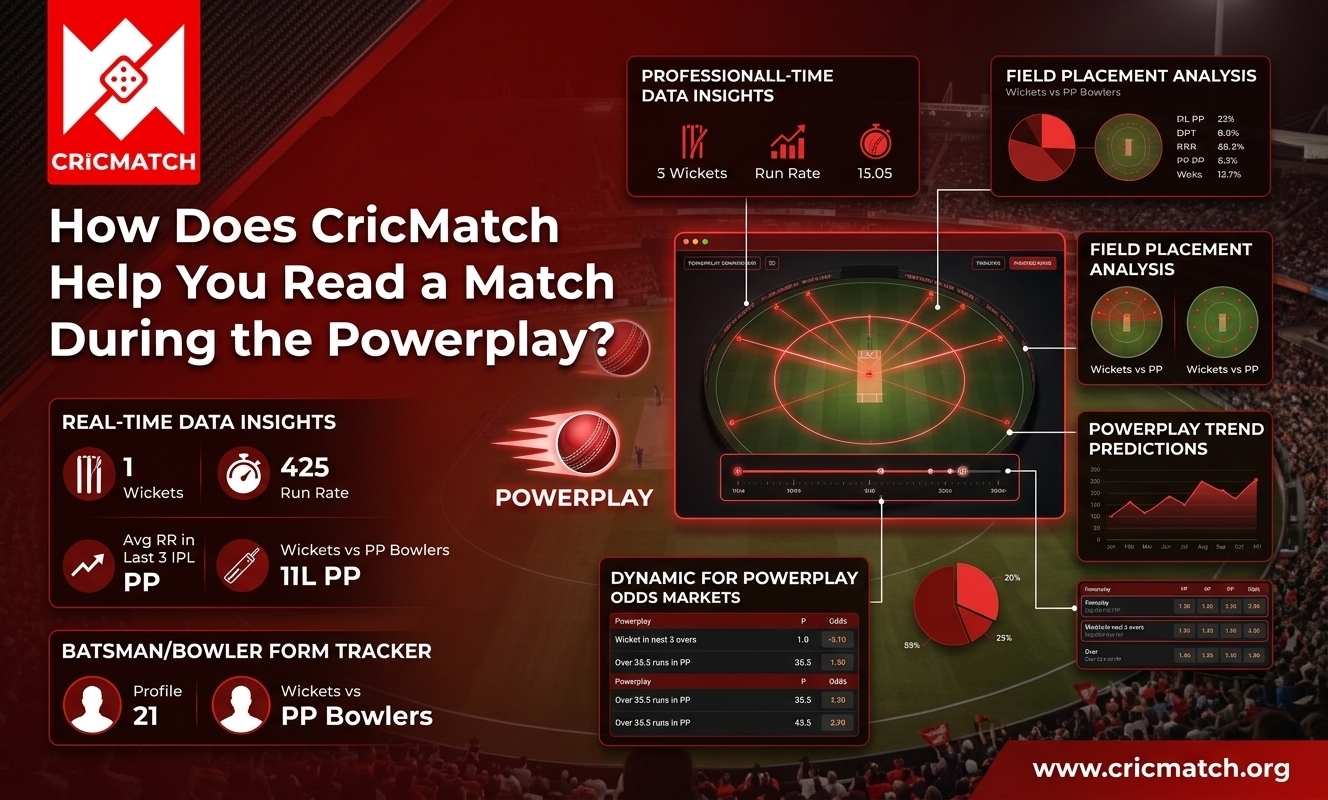
The powerplay is one of the most informative phases of a limited-overs cricket match. CricMatch readers can better understand this period by examining the opening score, wickets lost, scoring rate, fielding restrictions, and bowling performance. These details help explain whether a team is building a steady foundation or taking early risks that could influence the rest of the innings.
What Makes the Powerplay Important in Cricket?
In men's T20 internationals, the powerplay covers the first six overs, during which no more than two fielders can be outside the designated fielding restriction area. This creates opportunities for batters to find gaps and score boundaries, while bowlers must balance attacking deliveries with controlling runs.
The opening phase also reveals how teams approach different match situations. Some batters attack from the first over, while others focus on protecting their wickets before increasing the scoring rate. Understanding this difference provides useful context for reading the scoreboard.
Check the Score and Run Rate Together
The total number of runs scored during the powerplay does not tell the complete story. You should also consider how many wickets have fallen and how quickly the team has scored.
For example, a team scoring 50 runs without losing a wicket has a different starting position from a team reaching the same total after losing three wickets. Although the scores match, the second team may need to rebuild its innings and protect its remaining batting resources.
When reviewing live score information, focus on:
-
Current run rate: The average runs scored per over so far.
-
Wickets lost: The number of batters dismissed during the opening phase.
-
Boundary contribution: Whether runs come mainly from boundaries or singles and doubles.
-
Balls remaining: The opportunities available to build the innings.
These indicators work best when considered together rather than separately.
Understand Batting Intent and Fielding Restrictions
Fielding restrictions influence how batters approach the opening overs. With fewer fielders allowed outside the circle in a T20 powerplay, gaps may be available for well-timed shots. However, attacking too aggressively can also lead to early dismissals.
The Cricmatch app can be part of your match-following routine when reviewing available score information. Look at whether batters are finding boundaries consistently, rotating the strike, or struggling to connect against particular deliveries.
A high scoring rate may indicate positive intent, but it does not automatically mean the batting side has complete control. The quality of the bowling, the wickets remaining, and the conditions all matter.
Evaluate the Bowling Performance
A bowler's performance during the powerplay should be assessed through more than the number of runs conceded. Wickets, dot balls, extras, and pressure created through disciplined bowling can all influence the innings.
For instance, a bowler who concedes a few boundaries but dismisses an established batter may still have made a significant contribution. Similarly, a spell with limited runs but no wickets may help restrict scoring without immediately changing the batting team's position.
Consider whether bowlers are maintaining a consistent line and length, limiting easy scoring opportunities, and forcing batters to attempt difficult shots. These details provide a clearer picture of the contest between bat and ball.
Compare the Opening Phase With Match Context
Powerplay numbers become more useful when you consider the conditions surrounding the match. Pitch behaviour, weather, ground dimensions, team selection, and the quality of the opposition can all affect how the opening overs unfold.
A score that appears modest on a slow surface may represent a reasonable start, while the same total could be below expectations on a ground where boundaries come easily.
Readers using login to access available platform information should also distinguish between confirmed match statistics and early assumptions. An opening partnership or a few expensive deliveries may influence the game's direction, but neither guarantees the final result.
For further context, you can also read our India vs New Zealand match analysis to explore how team combinations and match conditions contribute to pre-match assessments.
Recognise When Momentum Is Changing
The powerplay often provides early clues about momentum, but the situation can change quickly. A wicket in the final over of the phase, a sudden increase in dot balls, or a change in bowling approach may affect the next stage of the innings.
cricmatch247 and cricmatch 365 may appear in searches related to the same brand, but readers should focus on verified statistics and consistent analysis rather than relying on names alone.
A useful habit is to compare the score at the end of the powerplay with the team's wickets remaining, the batters at the crease, and the conditions expected during the middle overs.
Conclusion
Reading the powerplay requires more than checking the opening score. Run rate, wickets, boundary frequency, bowling discipline, and fielding restrictions collectively explain how the innings is developing. By comparing these factors with the match context, readers can build a more balanced understanding of early momentum without treating a short period of play as a guarantee of the final outcome.

