


How Is Botox Injection Used for Facial Rejuvenation?
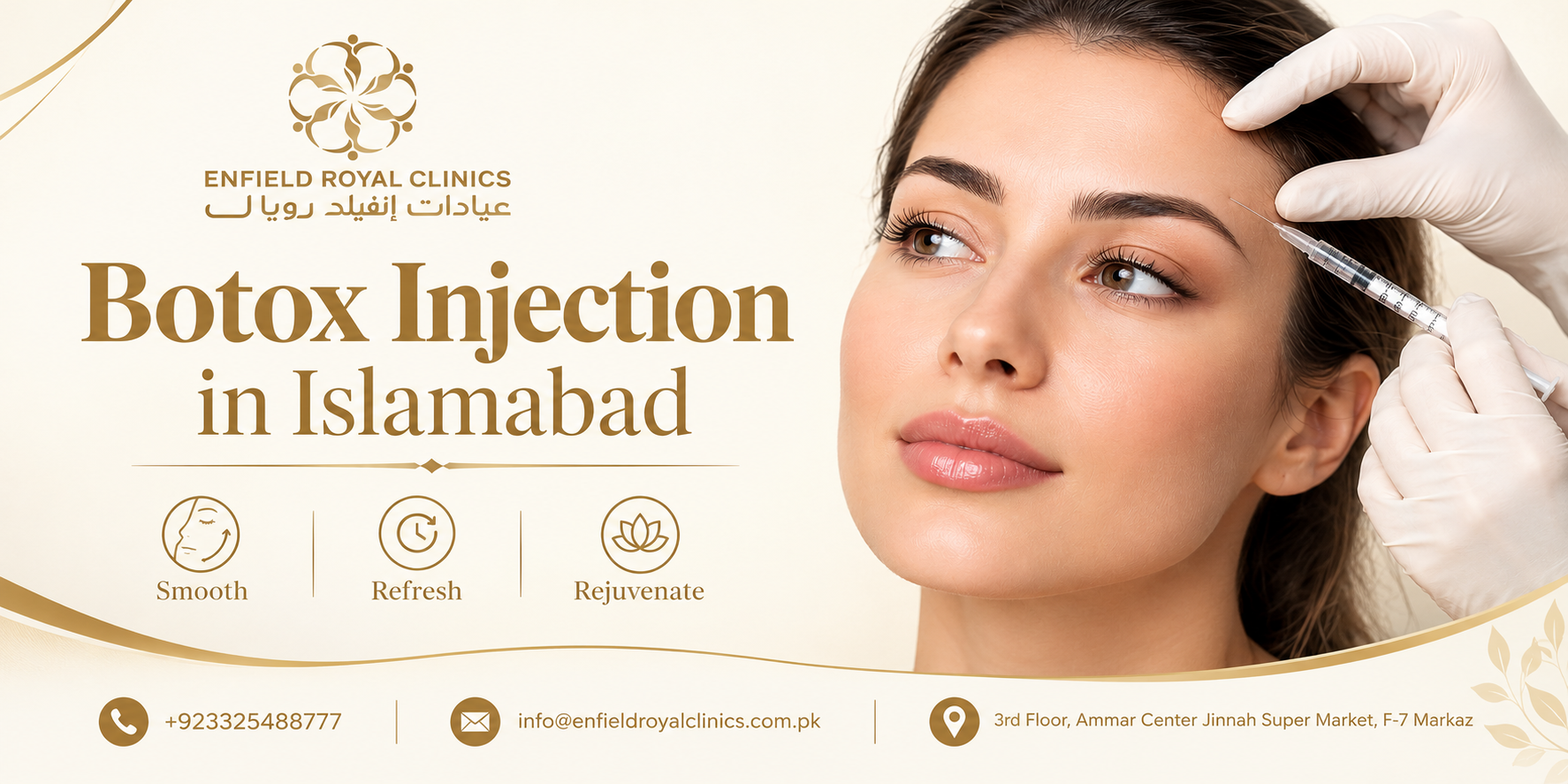
Facial rejuvenation involves improving the appearance of the face while maintaining a natural, balanced look. As the skin ages, fine lines, wrinkles, and changes in skin texture can become more noticeable. Repeated facial expressions, sun exposure, and the gradual loss of collagen and elasticity all contribute to these changes. Botox has become a popular non-surgical option for people who want to soften certain wrinkles and achieve a fresher appearance without undergoing an operation.
For individuals considering Botox injection in Islamabad, understanding how the treatment supports facial rejuvenation can help them decide whether it suits their needs. Botox works by temporarily relaxing selected facial muscles, reducing the appearance of expression lines. Although it can provide noticeable improvements, it does not address every sign of ageing, and the best results depend on a personalized treatment plan, realistic expectations, and appropriate medical care.
1. What Is Botox and How Does It Support Facial Rejuvenation?
Botox is a purified form of botulinum toxin type A used in controlled doses for cosmetic and medical purposes. In facial rejuvenation, it is primarily used to reduce wrinkles that develop from repeated muscle movements.
When a person smiles, frowns, or raises their eyebrows, facial muscles contract and cause the overlying skin to fold. Over time, these repeated movements can contribute to visible lines. Botox temporarily reduces muscle activity by blocking the release of acetylcholine, a chemical messenger involved in muscle contraction.
When selected muscles relax, the skin above them experiences less repetitive folding. This can make certain wrinkles appear softer and give the face a more refreshed appearance.
Botox is commonly used to improve:
-
Forehead lines: Horizontal wrinkles caused by raising the eyebrows.
-
Frown lines: Vertical lines between the eyebrows that appear during frowning.
-
Crow's feet: Fine lines around the outer corners of the eyes.
-
Selected expression-related lines: Other areas may be considered when appropriate for the individual's facial anatomy and treatment goals.
The aim of facial rejuvenation is not necessarily to remove every line. A carefully planned treatment can soften prominent wrinkles while preserving enough muscle movement for natural facial expressions.
2. Which Facial Areas Can Benefit from Botox Injection?
Botox treatment is tailored to the areas where muscle activity contributes to visible wrinkles. A professional assessment helps identify which muscles are responsible for particular lines and whether injections are likely to provide a worthwhile improvement.
Forehead and frown lines
Forehead lines often appear when someone raises their eyebrows. Frown lines develop between the eyebrows when the muscles contract during concentration, frustration, or other expressions. Botox may soften these lines by reducing activity in the targeted muscles.
Treatment in this area requires careful planning because the muscles that raise and lower the eyebrows work together. Excessive relaxation or unsuitable injection placement can cause eyebrow heaviness or drooping.
Lines around the eyes
Crow's feet can become more noticeable when smiling or squinting. Botox may reduce the appearance of these lines by relaxing selected muscles around the outer corners of the eyes. The treatment should be planned carefully to preserve normal eye function and a natural smile.
Other selected areas
In certain cases, Botox may be considered for other cosmetic concerns, depending on the product's approved uses, local regulations, and the practitioner's assessment. Not every facial line responds equally well, so treatment should be selected according to its cause rather than applied uniformly across the face.
People researching Botox injection in Islamabad should seek an individualized assessment rather than relying on a standard injection pattern. Facial anatomy, muscle strength, skin condition, and personal expectations all influence the appropriate approach.
3. What Happens During a Botox Facial Rejuvenation Session?
A Botox appointment generally begins with a consultation. The healthcare professional reviews the person's medical history, current medicines, allergies, previous cosmetic treatments, and specific concerns. Facial movements may be assessed to identify the muscles contributing to visible wrinkles.
The professional should explain the expected benefits, limitations, possible side effects, and alternatives before obtaining informed consent.
If treatment is appropriate, the process generally includes the following steps:
-
Facial assessment: The treatment areas and desired outcome are discussed.
-
Skin preparation: The relevant areas are cleaned, and injection points are selected.
-
Targeted injections: Small amounts of the product are injected into carefully chosen muscles using a fine needle.
-
Aftercare guidance: The individual receives instructions about caring for the treated areas and when to seek advice.
The injections usually take only a short time, although the overall appointment may be longer because of consultation and preparation. Most people do not require an extended recovery period and can usually return to routine activities soon afterward, following the professional's guidance.
Botox does not produce immediate results. Some changes may become noticeable within three to five days, while the full effect commonly develops over approximately 10 to 14 days. A follow-up assessment may be recommended to evaluate the outcome and address concerns.
4. What Results Can Botox Provide for Facial Rejuvenation?
The main benefit of Botox is its ability to soften selected expression lines without surgery. When the treatment is suitable and administered carefully, it may help the face appear more rested and refreshed.
Potential benefits include:
-
Softer expression lines: Forehead lines, frown lines, and crow's feet may become less prominent.
-
A refreshed appearance: Reducing prominent lines may make the face look less tired or tense.
-
Minimal downtime: Most people can resume their usual activities relatively quickly.
-
Temporary effects: The results gradually wear off, allowing future treatment decisions to be reassessed.
-
Personalized improvement: The treatment plan can be adjusted to individual features and goals.
Results vary from person to person. The effect typically lasts around three to four months, although the duration depends on the treated area, dose, muscle activity, and individual response. As the effect fades, muscle movement gradually returns and the lines may become visible again.
Botox also has important limitations. It does not directly restore lost facial volume, significantly tighten loose skin, or remove every deep wrinkle. Lines caused mainly by sun damage or reduced skin elasticity may respond less effectively than wrinkles caused by repeated muscle contractions. Other treatments may be more appropriate for these concerns.
For anyone considering Botox injection in Islamabad, a useful consultation focuses on achievable improvements rather than promising a completely wrinkle-free face.
5. Is Botox Safe for Facial Rejuvenation?
Botox is widely used in cosmetic medicine, but it is not suitable for everyone and should not be treated as a routine beauty service without medical assessment. Safety depends on correct dosing, appropriate injection placement, product quality, and the qualifications of the person administering it.
Common temporary side effects include redness, swelling, tenderness, bruising around the injection sites, and occasional headaches. Some individuals may experience temporary eyebrow or eyelid drooping, asymmetry, or an unwanted change in facial expression.
Serious complications are uncommon, but the effects of the toxin can rarely spread beyond the intended area. Difficulty breathing, swallowing, or speaking after treatment requires immediate medical attention.
People with certain neuromuscular conditions, allergies to product ingredients, or infections at the intended injection site should be assessed carefully before treatment. Cosmetic Botox is generally avoided during pregnancy and breastfeeding because safety data are limited.
Before proceeding, the individual should disclose all medicines, supplements, medical conditions, allergies, and previous cosmetic procedures. A suitably qualified healthcare professional should use legitimate products in an appropriate clinical setting and explain the risks and aftercare instructions clearly.
6. How Can Someone Maintain Facial Rejuvenation Results?
Botox can improve selected wrinkles, but maintaining healthy-looking skin requires a broader approach. Good skincare habits may help protect the skin from environmental damage and complement the cosmetic effects of treatment.
Daily sun protection: Ultraviolet radiation contributes to premature ageing, fine lines, pigmentation, and reduced skin elasticity. Using broad-spectrum sunscreen with SPF 30 or higher and reapplying it during prolonged outdoor exposure helps protect the skin.
Gentle cleansing and moisturizing: A mild cleanser and suitable moisturizer help maintain the skin barrier and reduce dryness that can make fine lines appear more noticeable.
Appropriate skincare ingredients: Some topical retinoids can improve the appearance of fine lines over time, but they may cause irritation and are not suitable during pregnancy. Professional advice can help determine whether these products are appropriate.
Healthy lifestyle habits: Adequate sleep, a balanced diet, and avoiding smoking can support overall skin health. These measures do not stop ageing, but they can help reduce certain factors associated with premature skin changes.
Realistic treatment planning: Botox should be repeated only when appropriate and at intervals recommended by the healthcare professional. More frequent injections do not automatically produce better results.
Facial rejuvenation works best when the treatment addresses the individual's actual concerns. Botox can be a useful option for expression-related wrinkles, while skincare and other suitable treatments may be needed for different signs of ageing.
For more information visit Enfield royal clinic in islamabad
Frequently Asked Questions
1. How long does Botox take to rejuvenate the face?
Some improvements may appear within three to five days, while the full effect commonly develops within 10 to 14 days. The timing varies according to the treatment area and individual response.
2. Does Botox make the face look younger?
Botox may create a fresher appearance by softening certain expression lines. However, it does not reverse every sign of ageing, and natural-looking results depend on appropriate treatment planning and dosing.
3. How long do Botox facial rejuvenation results last?
Results typically last around three to four months, although some individuals experience shorter or longer effects. As muscle activity returns, expression lines may gradually reappear.
4. Is Botox enough for complete facial rejuvenation?
No. Botox primarily targets wrinkles caused by muscle movement. Sun protection, suitable skincare, and other professionally recommended treatments may be needed to address concerns such as pigmentation, skin texture, volume loss, or loose skin.

