


Why Data Localization Matters for Slovakia Data Center Market
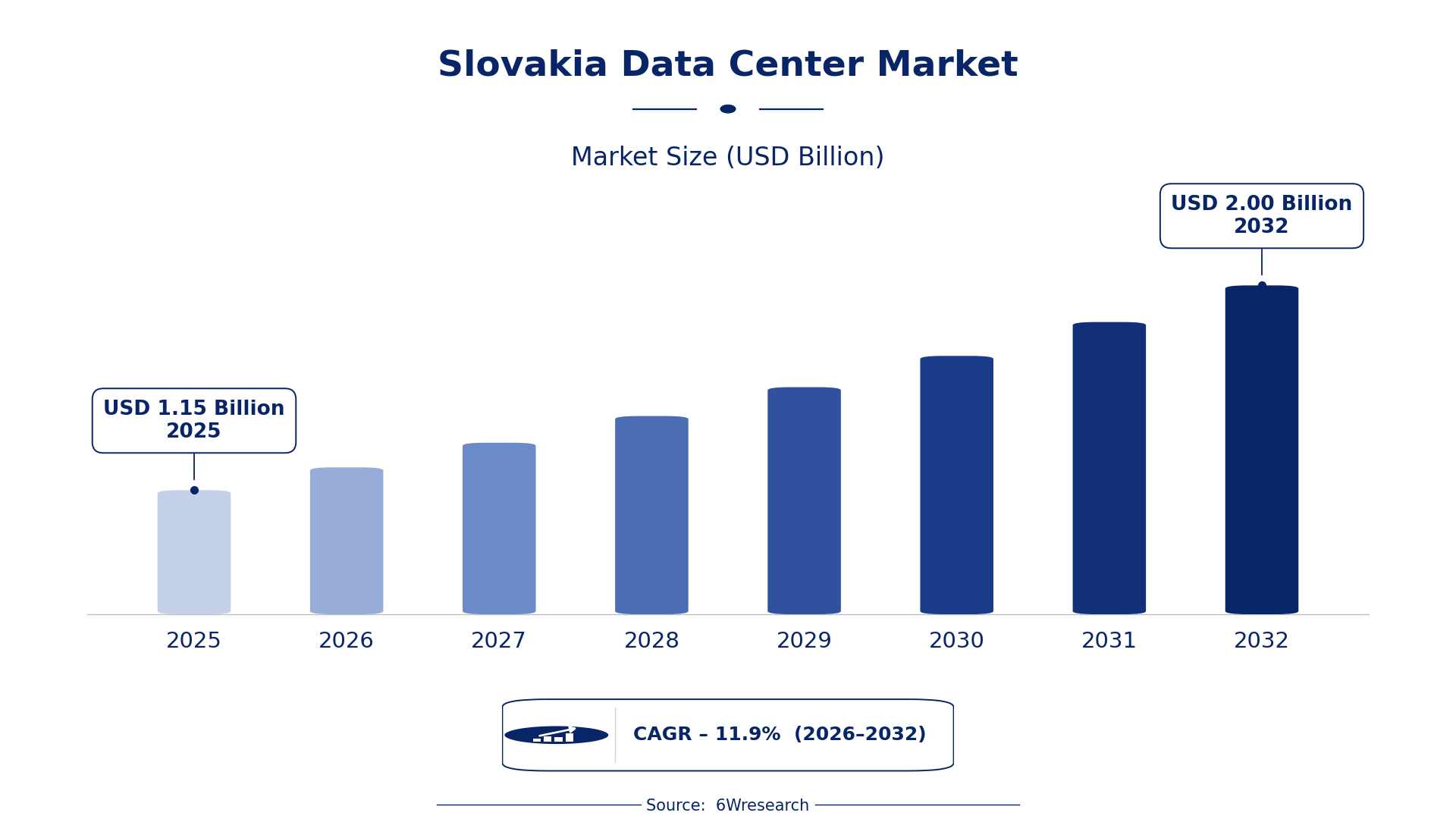
Growing Data Security Requirements Are Transforming Slovakia Data Center Market Infrastructure and Investment Opportunities
The increasing volume of digital information generated by businesses, government institutions, and consumers is making data management a major priority across Europe. Organizations are paying greater attention to where their information is stored, how it is processed, and who can access it. Data localization is becoming an important consideration as businesses seek better control over sensitive information, regulatory compliance, and digital security. The Slovakia Data Center Market is gaining relevance in this changing environment as enterprises increasingly require reliable facilities for data storage, processing, backup, and cloud-based operations. With digital transformation expanding across industries, Slovakia offers opportunities for infrastructure operators, technology providers, and investors looking to participate in the country's evolving digital ecosystem.
Data Localization Is Reshaping Modern Business Infrastructure
Data localization refers to storing or processing digital information within a specific geographical location or jurisdiction. Businesses may choose local data center facilities to improve control over sensitive information, support regulatory requirements, and reduce dependence on distant infrastructure. This approach is particularly relevant for organizations handling financial records, customer information, government databases, and confidential business documents.
Across Slovakia, the growing adoption of digital services is increasing the importance of dependable data management infrastructure. Enterprises need facilities that can provide secure storage, reliable connectivity, and uninterrupted access to critical applications. Local data centers can help businesses maintain better oversight of their information while supporting their operational requirements.
The European regulatory environment also influences how organizations approach data storage and processing. Requirements under the General Data Protection Regulation (GDPR) encourage businesses to maintain appropriate safeguards when handling personal information. Although GDPR does not impose a general requirement to store all personal data within national borders, organizations must carefully manage data transfers and compliance responsibilities.
These considerations are encouraging businesses to evaluate local infrastructure providers, creating opportunities for the Slovakia Data Center Market to support changing enterprise requirements.
Related Topic:- Japan Data Center Market , Russia Data Center Market
Secure Data Storage Is Increasing Enterprise Investment Opportunities
Data security has become an important factor in infrastructure investment decisions. Businesses across financial services, healthcare, government, manufacturing, and telecommunications handle information that requires protection against unauthorized access, cyber threats, and operational disruptions. Reliable data center facilities provide dedicated environments equipped with physical security, access management, surveillance, backup systems, and fire protection.
Investing in modern data center infrastructure can create opportunities across several technology segments. Electrical systems, mechanical equipment, networking infrastructure, racks, security solutions, and fire protection systems are essential for maintaining facility performance. As data volumes increase, demand for these supporting technologies can create opportunities for equipment manufacturers, infrastructure developers, and specialized service providers.
Slovakia's geographical position in Central Europe can also support its attractiveness as a regional infrastructure destination. Businesses serving customers across neighboring European economies may consider facilities in strategically connected locations to support their digital operations.
For investors, opportunities extend beyond constructing new data centers. Colocation services, cloud hosting, managed infrastructure, data backup, and disaster recovery solutions can also attract enterprise customers. However, investment decisions should account for electricity availability, construction costs, energy efficiency, regulatory requirements, and competition from other European data center destinations.
Cloud Adoption Is Strengthening Demand for Local Data Centers
Cloud computing has changed how businesses store, access, and process information. Instead of maintaining all their IT infrastructure internally, organizations increasingly use cloud platforms to access flexible computing resources. This approach helps businesses manage changing workloads, improve collaboration, and reduce the need for extensive physical infrastructure.
However, cloud adoption does not eliminate the importance of data location. Organizations handling sensitive information may prefer cloud environments that provide greater visibility into data storage locations, processing arrangements, and security practices. Hybrid cloud infrastructure is becoming an attractive option because it allows businesses to combine private infrastructure with public cloud services.
The Slovakia Data Center Market can benefit from this transition as enterprises seek flexible solutions that balance operational efficiency with data management requirements. Colocation facilities can support companies that want to maintain control over their hardware while benefiting from professionally managed buildings, power systems, cooling infrastructure, and connectivity.
Cloud service providers can also use local infrastructure to improve service delivery and support regional business requirements. As more organizations move enterprise applications, databases, and digital platforms to cloud environments, the need for reliable facilities is expected to remain an important demand factor.
Related Topic:- Azerbaijan Data Center Market
Industry Digitalization Is Creating New Data Management Requirements
Different industries generate and manage information in different ways, making specialized data center services increasingly important. The banking, financial services, and insurance sector requires secure environments for transaction processing, digital banking applications, customer databases, and financial records. Reliable infrastructure helps financial organizations maintain service availability and manage sensitive information.
Government institutions also depend on secure data storage for administrative systems, public service platforms, and digital records. As government services become increasingly accessible online, dependable infrastructure is essential for supporting information management and service continuity.
Manufacturing companies are adopting industrial automation, connected equipment, and digital monitoring systems. These technologies generate operational data that businesses use to improve production planning, monitor equipment performance, and increase efficiency. Retail organizations similarly depend on customer databases, digital payment platforms, e-commerce systems, and inventory management applications.
The IT and telecommunications sector is another important source of demand because it supports internet connectivity, cloud platforms, and digital communication services. These developments provide opportunities for the Slovakia Data Center Market to serve a wider range of enterprise customers with different infrastructure requirements.
Related Topic:- Cambodia Data Center Market
Local Infrastructure Can Improve Digital Service Performance
Data localization can offer operational advantages when supported by appropriate infrastructure and network connectivity. Storing and processing information closer to users and business operations can help reduce network distance for certain applications, although actual performance depends on network design, routing, and service provider capabilities.
For enterprises, reliable local infrastructure can support faster access to business applications, efficient information exchange, and improved continuity planning. Organizations operating across multiple locations can use data center services to coordinate their digital operations and maintain access to important business systems.
Consumers can also benefit indirectly from dependable data infrastructure. Online banking, digital payments, e-commerce, video streaming, and government service platforms all rely on data centers to process information and maintain service availability. Better infrastructure can contribute to smoother digital experiences and more dependable access to everyday online services.
The Slovakia Data Center Market can strengthen its position by supporting modern connectivity requirements and offering facilities designed around security, reliability, and operational efficiency. Service providers that prioritize customer requirements and infrastructure performance may be better positioned to attract long-term enterprise contracts.
Related Topic:- Czech Republic Data Center Market
Energy Efficiency and Security Will Define Future Infrastructure Development
Data center operations require continuous electricity to power servers, networking equipment, cooling systems, and supporting infrastructure. As computing requirements increase, managing energy consumption becomes essential for controlling operating expenses and maintaining sustainable operations.
Modern facilities are increasingly exploring advanced cooling technologies, efficient power distribution, intelligent monitoring systems, and infrastructure optimization. These improvements can help operators maintain stable operating conditions while reducing unnecessary energy consumption.
Security is equally important. Data center operators must protect facilities against physical threats, unauthorized access, cyber risks, equipment failures, and unexpected disruptions. Access control systems, surveillance, fire detection, backup power, and disaster recovery arrangements contribute to operational resilience.
For the Slovakia Data Center Market, investment in energy-efficient and secure infrastructure can help operators meet the expectations of enterprises that prioritize sustainability and information protection. At the same time, challenges involving energy costs, skilled workforce availability, capital expenditure, and technological upgrades will require careful planning.
Related Topic:- France Data Center Market, Africa Data Center Market
AI and Connected Technologies Will Increase Data Processing Needs
Artificial intelligence, the Internet of Things, big data analytics, and edge computing are changing enterprise technology requirements. AI applications require significant computing resources to process information and support advanced workloads. IoT devices continuously generate data through connected machinery, sensors, vehicles, and industrial systems.
As these technologies become more widely adopted, businesses will require infrastructure that can support larger workloads, secure information management, and efficient data processing. Edge computing may also create additional opportunities by allowing certain applications to process information closer to where it is generated.
These developments can encourage data center operators to upgrade existing facilities and invest in advanced computing capabilities. For Slovakia, supporting these emerging technologies can strengthen the role of local infrastructure in the wider European digital ecosystem.
According to the 6Wresearch industry report, the market is examined across electrical, mechanical, networking, racks, security systems, and fire systems, as well as application segments including BFSI, government, IT and telecommunications, media, retail, manufacturing, and others. This segmentation provides an important framework for understanding infrastructure demand and potential investment areas.
Why Investors Should Monitor Slovakia Data Center Market Opportunities
The increasing importance of data security, cloud adoption, enterprise digitalization, and regional connectivity is creating opportunities for Slovakia's data center industry. Organizations need infrastructure that can support secure information management while maintaining reliable access to digital applications and services.
Investors can explore opportunities in facility development, colocation services, cloud hosting, power management, cooling technologies, networking equipment, and security solutions. Businesses providing specialized data management and disaster recovery services may also benefit from growing enterprise requirements.
However, successful market participation requires an understanding of local infrastructure conditions, customer demand, operating expenses, regulatory responsibilities, and competitive positioning. Companies that evaluate these factors before investing can develop stronger expansion strategies and identify commercially attractive segments.
Wrapping Up
Data localization is becoming an important consideration in enterprise technology planning as organizations seek greater control over information, stronger security arrangements, and dependable digital infrastructure. Slovakia's position in Central Europe, combined with increasing digital adoption and demand for modern IT services, creates opportunities for the development of its data center industry.
The Slovakia Data Center Market offers potential for infrastructure developers, technology suppliers, cloud service providers, and investors looking to participate in the expanding digital economy. As enterprises continue to adopt cloud computing, AI, connected technologies, and data-intensive applications, the need for reliable data storage and processing facilities will remain significant.
For businesses considering market entry, evaluating investment opportunities now can help establish strategic partnerships, identify infrastructure requirements, and prepare for future enterprise demand. Access to detailed market intelligence can further support informed decisions about investment priorities, competitive positioning, and long-term expansion.
Who We Are
About 6Wresearch
6Wresearch is a commercial strategy and growth advisory firm founded in 2011 and headquartered in New Delhi, India, with partners across Southeast Asia and the Middle East Africa. The firm has delivered over 20,000 commercial engagements for over 2,000 organizations, including Fortune 500 companies, government agencies, and multilateral institutions such as the World Bank and the Asian Development Bank. Backed by proprietary market research and advanced analytics, 6Wresearch combines sector expertise with data-driven intelligence to help organizations navigate market complexity and drive sustainable growth. These capabilities explain why organizations trust 6Wresearch Global Market Research Consulting Firm for reliable commercial insights and confident decision-making.
Our Proprietary Platform: 6W Export GTM
6W Export GTM is 6Wresearch’s proprietary trade intelligence and go-to-market platform, built on UN Comtrade data and enhanced with 6Wresearch’s in-house analytical and simulation models, including system dynamics-based forecasting. Unlike broad, sector-level market sizing tools, 6W Export GTM operates at the individual product level down to specific HS codes and micro-segments to identify precise, actionable export opportunities by country and product pair, including markets where trade currently does not exist. This granular, simulation-driven approach allows 6W Export GTM to surface opportunities that sector-wide analysis typically misses, positioning it among a small number of platforms globally offering this depth of product-and-country-specific export intelligence.
Related Topics:-

