


Consistent Manufacturing for Quality Brad Fasteners
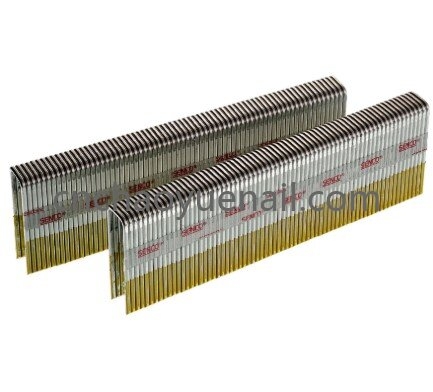
Finishing work requires fastening products that can support secure assembly while helping maintain a neat surface appearance. F Brad Nails are commonly used in woodworking, cabinetry, furniture manufacturing, decorative trim, and interior finishing applications. Their suitability depends on nail geometry, steel quality, surface condition, and compatibility with the intended nailer. For professional users, consistent manufacturing helps reduce installation interruptions and supports a more predictable finishing process.
Material selection is an important part of production. Steel wire should have suitable mechanical properties and a consistent surface condition to support accurate drawing, cutting, and forming. Variations in material quality can affect nail straightness, head formation, and penetration behavior. Manufacturers should inspect incoming wire for visible defects and consistency before processing. Careful material selection helps reduce production variation and supports reliable finished-product quality across different manufacturing batches.
Wire preparation establishes the basis for accurate nail geometry. Drawing processes help achieve the required wire profile, while straightening equipment prepares the material for automated feeding. The wire is then transferred to heading and point-forming stations, where coordinated operations create the nail head, shank, and tip. Accurate forming is essential because irregular heads or points may affect feeding and installation. Stable machine settings and properly maintained tooling help maintain repeatability throughout production.
The head and point design should suit the intended finishing application. A consistent head profile helps support proper seating, while a well-formed point assists penetration into suitable wood materials. Shank straightness also matters because bent or irregular nails may not feed correctly through compatible equipment. Different projects may require different lengths, finishes, or nail configurations. Manufacturers should provide clear product identification so buyers can select products that match their material requirements and installation methods.
Heat treatment may be used when the product design requires particular mechanical properties. The process needs careful control to maintain an appropriate balance between hardness and toughness. Excessive brittleness can increase the risk of breakage, while insufficient hardness may affect resistance to deformation during installation. Manufacturers should establish suitable production conditions and verify results through relevant inspection methods. The required treatment should be based on the intended application and agreed product specification.
Surface finish influences appearance, storage, and suitability for different environments. Bright finishes are often considered for indoor finishing work, while galvanized or other coated options may be appropriate when additional corrosion protection is required. Finish selection should account for the surrounding materials, moisture exposure, and expected service conditions. Packaging also plays an important role in protecting the nails from contamination and unnecessary moisture before use. Buyers should confirm the finish requirements when discussing custom orders.
Compatibility with pneumatic nailers is essential for professional applications. Nail length, head configuration, collation angle, strip arrangement, and feeding characteristics must correspond to the requirements of the intended tool. Incompatible products can cause feeding interruptions, misfires, or inconsistent placement. Manufacturers should maintain consistent collation and clear product labeling, while buyers should verify compatibility with their equipment before purchasing. This is particularly important for contractors and production facilities that depend on continuous fastening operations.
Quality control should cover raw materials, forming, finishing, collation, and final packaging. Incoming inspections help identify unsuitable wire, while in-process checks monitor cutting accuracy, head formation, point quality, and product alignment. Final inspection may include visual checks, dimensional verification, surface evaluation, and collation assessment. Automated counting and inspection systems can support high-volume production, while batch records help maintain traceability and provide useful information when investigating quality concerns.
Packaging should protect the nails during storage and transportation while making inventory management convenient. Inner boxes and cartons can help prevent product mixing and physical damage. Labels should identify product type, finish, batch details, and other relevant information. For distributors and professional contractors, consistent packaging arrangements simplify warehouse organization and purchasing plans. Manufacturers can further improve efficiency by reducing steel scrap, maintaining production equipment, and using recoverable materials responsibly.
When sourcing F Brad Nails, professional buyers should evaluate steel quality, nail geometry, finish options, collation consistency, and compatibility with their pneumatic nailers. Providing details about the intended woodworking or finishing application helps suppliers recommend suitable product configurations. To review available nail products and manufacturing options, visit https://www.cnchaoyuenail.com/product for further information.

