


Thanksgiving Packaging for Shelf Sales and Corporate Gifts
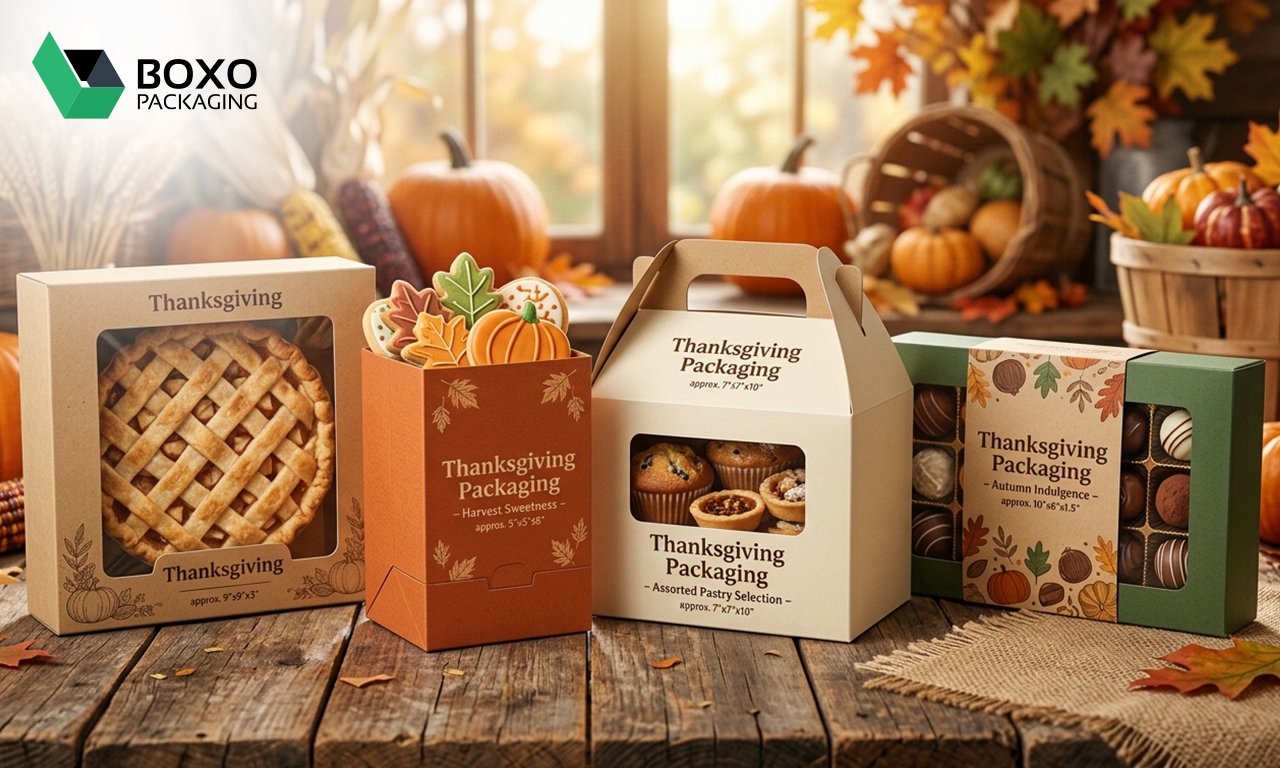
Shops stocking seasonal shelves, food makers selling at markets, and companies sending gifts to staff or clients all need holiday cartons. Each group wants something different from thanksgiving packaging. A shop needs a carton that stands out among its neighbors, a market seller needs one that fills quickly, and a company needs one that looks tidy when it's opened on a desk.
Shelf products compete at arm's length. A front panel with a clear product name and one strong image does more than a crowded layout. Warm colors such as rust, mustard, and deep green read as autumn without needing a pumpkin on every face.
How Early Should Orders Be Placed?
Earlier than feels necessary. Artwork approval, sample rounds, printing, and delivery each take their own time, and a holiday date doesn't move. Work backward from the day cartons must reach the packing table, then add a cushion for a correction. Cartons that arrive early can wait in storage. Cartons that arrive late can't be sold.
What Do Corporate Gift Boxes Need?
Corporate gifts often go out in batches of fifty or several hundred, so every carton has to pack at the same speed and arrive intact. A set might include a small food item, a card, and a printed insert. Plan where the card sits, because a loose card slides around and creases. A slot in the insert keeps it flat. Recipients may work in different offices, so a plain outer shipping carton is worth pricing alongside the gift box.
Which Finishes Survive Handling?
Cartons pass through many hands before a sale. Coatings change how scuffs and fingerprints show, and large dark solid colors tend to show scratches more than light or patterned surfaces. Rub a sample against a shopping bag and a cardboard shipper before approving a finish. It takes a minute and shows what a week on a shelf would.
How Do Related Formats Fit the Season?
Gift boxes hold larger sets, and sleeve boxes add a seasonal wrap over a plain tray. Folding cartons with windows suit baked goods, while small pillow boxes can carry a favor at each place setting. Handled cartons work for a hostess gift that pairs a bottle with a loaf. A single shape rarely covers every need, which is why thanksgiving packaging often mixes several formats under one color scheme.
Before choosing formats, answer these questions:
-
Who receives it: a guest, a customer, or a coworker.
-
How far it travels: a hand-off, a drive, or a shipment.
-
Whether the contents are food, and if so, whether they need a liner.
-
How many will be packed, and by how many people.
Ask a supplier such as Boxo Packaging for a dieline of each shortlisted structure, so artwork can be tested on the real shape before anything is printed. Seeing a logo on a flat template and seeing it across a folded edge are two different experiences.
Custom Tuck Boxes Sized and Tested for Gift Sets
Measure the packed set, not the loose pieces. Stack the items the way they'll sit, wrap them the way they'll be wrapped, and record length, width, and depth. Custom tuck boxes then need a few millimeters of clearance on each side, plus extra depth for the tuck flap. Skip the clearance and the box fights the closure. Add too much and the set shifts around.
Where Should Barcodes and Text Panels Go?
Put the barcode and ingredient text on a flat, quiet panel, usually the back, and keep them off creases and the flap edge. Side panels suit short facts such as net weight or a serving note. If the set will be sold online, remember that the front and top panels are the ones shown in photos, so they should carry the name and the main image.
What Closure Test Is Worth Doing?
Open and close a sample ten times. If the flap tears at the crease or the corners crush, the board is too thin or the tuck allowance is too tight. Then squeeze the box gently, the way it will be squeezed in a shopping bag. A closure that holds on a desk can pop open in a tote.
A few construction details are easy to overlook:
Which Board Thickness Suits Heavier Sets?
A set with a jar or tin needs thicker board than one holding tea sachets or seed packets. Ask for samples in two thicknesses and lift each by the top flap with the set inside. The thinner board often looks fine until it's loaded. If a thicker board makes the flap hard to tuck, the insert can carry more of the weight instead.
• Thumb notch or finger cut-out, so a cold or gloved hand can open the flap
• Dust flap depth, sized so corners don't crush when the lid closes
• Insert style, from simple paperboard dividers to a die-cut tray
• Print coverage around the flap crease, where color can crack
Reuse is the quiet advantage. Keep the structure, change the sleeve or the sticker each year, and the fit testing already done carries forward, which means custom tuck boxes get cheaper to manage with every season. Reverse tuck boxes, sleeve boxes, and custom inserts are natural companions when a set grows beyond one product.

