


How to Drive at Night While Maintaining Good Visibility
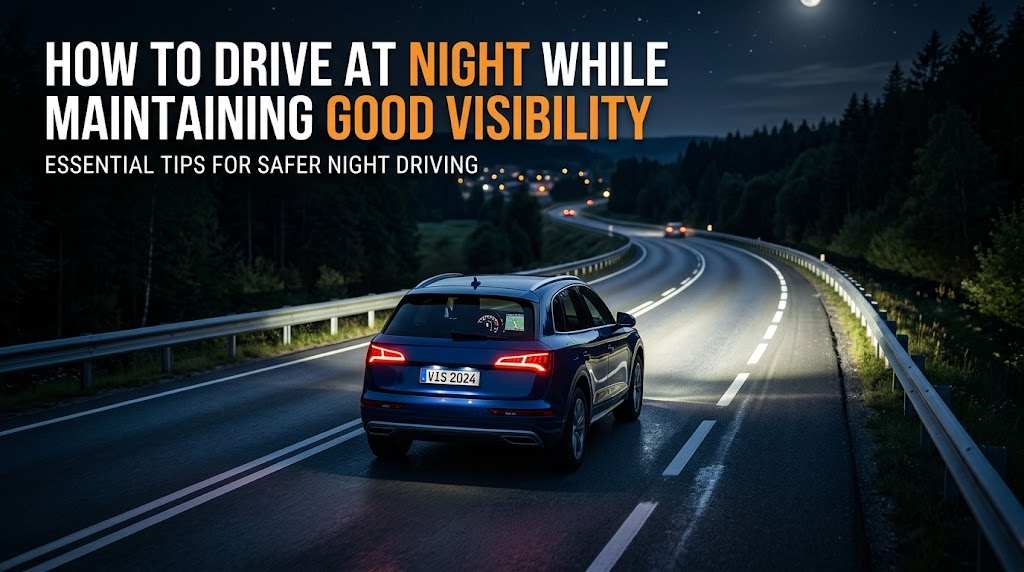
Driving at night can feel very different from driving during the day. Roads that look familiar in daylight may become difficult to navigate after sunset, while pedestrians, cyclists, road signs, and unexpected obstacles can be harder to notice. Reduced natural light also makes it more challenging to judge distances, recognize hazards, and react quickly to changing traffic conditions. Even experienced drivers need to adjust their habits to stay safe when visibility decreases.
Developing good nighttime driving habits starts with understanding how darkness affects what you can see and how quickly you respond. Whether you are a new driver or someone looking to improve your confidence, learning through professional guidance, such as lessons at a Driving school in Richmond, can help you develop the awareness and practical skills needed to handle low-light conditions. With the right preparation, proper lighting, and a calm approach, nighttime driving can become much more comfortable and manageable.
Why Is Visibility More Challenging When Driving at Night?
The biggest difference between daytime and nighttime driving is the amount of available light. During the day, sunlight helps drivers identify objects, read road signs, and recognize potential dangers from a distance. At night, your eyes depend heavily on vehicle headlights, streetlights, and other artificial lighting.
This creates several challenges:
- Reduced depth perception: It can become harder to judge how far away another vehicle or object is.
- Limited peripheral vision: Darkness makes it more difficult to notice movement outside your direct line of sight.
- Glare from headlights: Bright lights from approaching vehicles can temporarily affect your ability to see clearly.
- Hidden road hazards: Potholes, debris, pedestrians, and animals may be difficult to recognize until you are closer.
- Eye fatigue: Concentrating on a dark road for extended periods can make your eyes feel tired.
Understanding these challenges is the first step toward making safer decisions behind the wheel.
1. Check Your Headlights Before Starting Your Journey
Your headlights are one of the most important safety features when driving after dark. They help you see the road ahead and make your vehicle visible to other road users.
However, simply switching them on is not enough. You should make sure they are clean, working properly, and correctly positioned.
Clean Your Headlights Regularly
Dust, mud, road grime, and moisture can collect on headlight covers over time. This buildup can reduce the amount of light reaching the road.
Before driving at night, check that your headlights are clean. If the covers look cloudy or yellow, they may need proper restoration or replacement.
Check That Both Headlights Work
A faulty headlight can significantly reduce visibility and make your vehicle harder for other drivers to recognize. Check both headlights regularly, along with your rear lights, brake lights, and turn signals.
If one light is damaged or noticeably dimmer than the other, have it inspected before driving at night.
Make Sure Your Headlights Are Properly Aligned
Headlights that point too low may not illuminate enough of the road. Those pointing too high can shine directly into the eyes of approaching drivers.
If you notice that your headlights do not light the road evenly or other drivers frequently flash their lights at you, have their alignment checked by a qualified technician.
2. Know When to Use High Beams and Low Beams
Using the correct headlight setting can make a major difference in nighttime visibility. High beams provide stronger illumination, but they are not suitable for every situation.
Use High Beams on Dark, Open Roads
High beams can help you see farther ahead when driving on poorly lit roads without nearby traffic. They are especially useful in rural areas where streetlights may be limited.
However, always switch to low beams when approaching another vehicle or following a vehicle closely. This prevents your lights from affecting another driver's vision.
Switch to Low Beams in Well-Lit Areas
Low beams are generally more appropriate in urban areas, where streetlights and surrounding buildings already provide some illumination.
They also help reduce glare for other road users.
Avoid Using High Beams in Fog
One common mistake is using high beams during foggy conditions. The stronger light can reflect off water droplets and create additional glare, making it even harder to see.
Use low beams or fog lights when appropriate, and reduce your speed according to visibility and road conditions.
3. Reduce Glare From Oncoming Vehicles
Headlight glare is one of the most uncomfortable parts of nighttime driving. Bright headlights from approaching vehicles can temporarily make it difficult to see the road.
This problem can be particularly noticeable when driving on narrow roads or highways with limited lighting.
Here are a few ways to manage glare more effectively:
- Avoid looking directly at approaching headlights.
- Focus on the right edge of your lane or the road markings as a visual guide.
- Keep your windshield clean to reduce light reflections.
- Make sure your mirrors are properly adjusted.
- Use your rearview mirror's nighttime setting if available.
- Avoid staring at bright dashboard screens.
If an approaching vehicle has extremely bright headlights, stay focused on your lane and maintain a steady, controlled speed rather than making sudden movements.
If glare regularly causes significant difficulty, consider having your eyesight checked. Some vision problems can become more noticeable at night.
4. Keep Your Windshield and Windows Clean
A dirty windshield can make nighttime driving much more difficult than many people realize.
During daylight, small marks and fingerprints may not seem like a serious problem. However, when headlights and streetlights shine through a dirty windshield, these marks can scatter light and create distracting reflections.
Clean Both Sides of the Windshield
Do not focus only on the outside of your windshield. Dust, smoke residue, and fingerprints can also build up on the inside.
Clean both sides regularly using a suitable glass cleaner and a microfiber cloth.
Replace Worn Windshield Wipers
Old wiper blades may leave streaks, skip across the glass, or fail to remove water effectively.
Check your wipers periodically and replace them when they begin showing signs of wear.
Keep Your Windows Free From Condensation
Temperature differences can cause windows to fog up, particularly during colder weather or when it is raining.
Use your vehicle's defrost settings to clear condensation before driving. Avoid relying on partially cleared windows because even small areas of fog can obstruct your view.
5. Adjust Your Speed According to Visibility
One of the most important nighttime driving habits is knowing when to slow down.
A road that feels safe at 60 km/h during the day may require a lower speed at night, especially when lighting is limited.
Your headlights only illuminate a certain distance ahead, so you need enough time and space to recognize a hazard and stop safely.
Follow the Safe Stopping Distance Principle
Always drive at a speed that allows you to stop within the distance you can clearly see ahead.
For example, if a pedestrian, animal, or stopped vehicle suddenly appears in your path, you should have enough time to respond without braking aggressively.
Remember that stopping distance increases when roads are wet, slippery, or covered with loose material.
Slow Down on Unfamiliar Roads
Unfamiliar roads can be particularly challenging after sunset. You may not know where sharp turns, intersections, uneven surfaces, or pedestrian crossings are located.
Reduce your speed when approaching areas you do not recognize. Give yourself additional time to observe road signs and identify possible hazards.
6. Watch Carefully for Pedestrians, Cyclists, and Animals
Not every road user is easy to see at night. Pedestrians wearing dark clothing, cyclists without proper lights, and animals crossing rural roads can appear unexpectedly.
This is why maintaining good visibility also involves actively looking for things that may be difficult to notice.
Pay Attention Near Pedestrian Crossings
Reduce your speed when approaching pedestrian crossings, bus stops, schools, and residential streets.
Look carefully along both sides of the road, especially where pedestrians may step out from behind parked vehicles.
Give Cyclists Enough Space
Cyclists can be harder to recognize when their bicycles have limited lighting or reflective equipment.
Check your mirrors and blind spots before changing lanes, and leave sufficient space when passing.
Stay Alert on Rural Roads
Animals such as deer and other wildlife may suddenly enter the road, especially in areas surrounded by trees or open fields.
Watch the roadside carefully and avoid driving too fast in locations where animals are commonly present.
If you see one animal crossing, remain cautious because others may follow.
7. Manage Eye Fatigue and Stay Mentally Alert
Nighttime driving requires consistent concentration. Your eyes must continuously adjust to different lighting conditions while your brain processes information from the road.
Over time, this can lead to fatigue, especially during long journeys.
To stay alert:
- Get enough sleep before planning a nighttime journey.
- Avoid driving when you feel excessively tired.
- Take regular breaks during longer trips.
- Keep the cabin comfortable and properly ventilated.
- Avoid unnecessary distractions, including mobile phones.
- Stop somewhere safe if your concentration begins to decrease.
Never assume that opening a window or turning up the music will make it safe to continue driving while sleepy.
If you feel drowsy, stop driving and rest. Fatigue can slow reaction times and affect decision-making just as seriously as other forms of impairment.
8. Use Your Mirrors Properly
Your mirrors help you monitor surrounding traffic, particularly when changing lanes, turning, or slowing down.
At night, headlights from vehicles behind you can create distracting reflections, so proper mirror adjustment becomes even more important.
Before starting your journey:
- Adjust your rearview mirror to provide a clear view through the back window.
- Position your side mirrors to minimize blind spots.
- Use the nighttime mirror setting if your vehicle has one.
- Check your mirrors regularly without taking your attention away from the road.
Remember that mirrors do not show everything around your vehicle. Always perform appropriate shoulder checks before changing lanes or moving into traffic.
9. Be Extra Careful When Driving in Rain or Fog
Nighttime driving becomes more challenging when combined with poor weather.
Rain can create reflections on the road, while fog can reduce the distance you can see ahead. Both conditions require additional caution.
Driving at Night in Rain
Wet roads can reflect headlights and streetlights, making lane markings harder to identify.
To improve safety:
- Reduce your speed.
- Increase your following distance.
- Use your windshield wipers at an appropriate setting.
- Use low-beam headlights.
- Avoid sudden braking or steering movements.
- Watch for standing water and slippery road surfaces.
Driving at Night in Fog
Fog can significantly reduce visibility and make it difficult to identify vehicles and road boundaries.
Use low beams and fog lights where appropriate. Avoid high beams because they can reflect off the fog and create more glare.
If visibility becomes extremely poor, find a safe place to stop away from moving traffic rather than continuing under dangerous conditions.
10. Avoid Looking Directly at Bright Screens
Modern vehicles often have large infotainment displays, navigation systems, and digital dashboards.
Although these features can be useful, bright screens may distract drivers and affect their ability to adjust to darker surroundings.
Before starting your journey, set your navigation destination and adjust your dashboard brightness to a comfortable level.
If you need to change a setting or check directions, pull over somewhere safe first.
You should also avoid using your mobile phone while driving. Even a quick glance away from the road can cause you to miss an important hazard.
11. Plan Your Route Before Driving at Night
Planning your journey can reduce unnecessary stress and help you concentrate on the road.
When you know where you are going, you are less likely to make sudden turns, miss intersections, or become distracted by navigation instructions.
Before leaving:
- Check your route and estimated travel time.
- Identify major intersections and turns.
- Check weather conditions.
- Make sure your fuel or battery level is sufficient.
- Save your destination in your navigation system.
- Allow extra travel time in case visibility or traffic conditions change.
If possible, choose familiar roads with better lighting, particularly when you are still developing your nighttime driving confidence.
12. Practice Night Driving to Build Confidence
Reading about nighttime driving is helpful, but practical experience is what allows you to develop better judgment.
New drivers should gradually become familiar with different lighting conditions instead of immediately attempting long nighttime journeys.
Start with quieter roads in areas with adequate street lighting. Practice maintaining a safe speed, identifying road signs, using headlights correctly, and recognizing pedestrians.
As your confidence improves, you can gradually experience more challenging conditions under suitable supervision.
Professional instruction can also help you recognize mistakes and develop safer driving habits. An experienced instructor can explain how to respond to glare, maintain lane position, judge distances, and adjust driving behaviour when visibility changes.
The goal is not simply to become comfortable driving in darkness. It is to learn how to make safe decisions even when you cannot see everything clearly.
Common Nighttime Driving Mistakes to Avoid
Even careful drivers can develop habits that reduce visibility and increase risk. Recognizing these mistakes can help you avoid unnecessary problems.
|
Common mistake |
Why it is risky |
Better approach |
|
Driving with dirty headlights |
Reduces road illumination |
Clean headlights regularly |
|
Using high beams around other vehicles |
Creates glare for other drivers |
Switch to low beams |
|
Driving too fast |
Reduces reaction time |
Adjust speed to visibility |
|
Ignoring windshield streaks |
Creates distracting reflections |
Clean glass and replace wipers |
|
Looking directly at headlights |
Can temporarily affect vision |
Focus on the right road edge |
|
Driving while tired |
Slows reactions and judgment |
Rest before continuing |
|
Following too closely |
Leaves less time to stop |
Maintain a safe following distance |
Small adjustments can make a meaningful difference to your safety and the safety of everyone sharing the road.
Conclusion
Driving at night safely requires more than simply switching on your headlights. It involves keeping your vehicle's lighting system in good condition, maintaining clean windows, managing glare, adjusting your speed, and staying alert to hazards that may be difficult to recognize in darkness. Developing these habits can improve your visibility, reduce unnecessary stress, and help you respond more confidently to unexpected situations.
Remember that good nighttime driving comes with preparation, patience, and consistent practice. Never rush when visibility is limited, and always adjust your driving to match the road and weather conditions. If you want to strengthen your driving skills and become more confident in different road situations, Benche Driving School can be a helpful place to develop the knowledge and practical experience needed for safer driving. The more you understand nighttime road conditions, the better prepared you will be to make responsible decisions behind the wheel.

