


From App to Club: Turning Digital Friendships Into Real-World Belonging
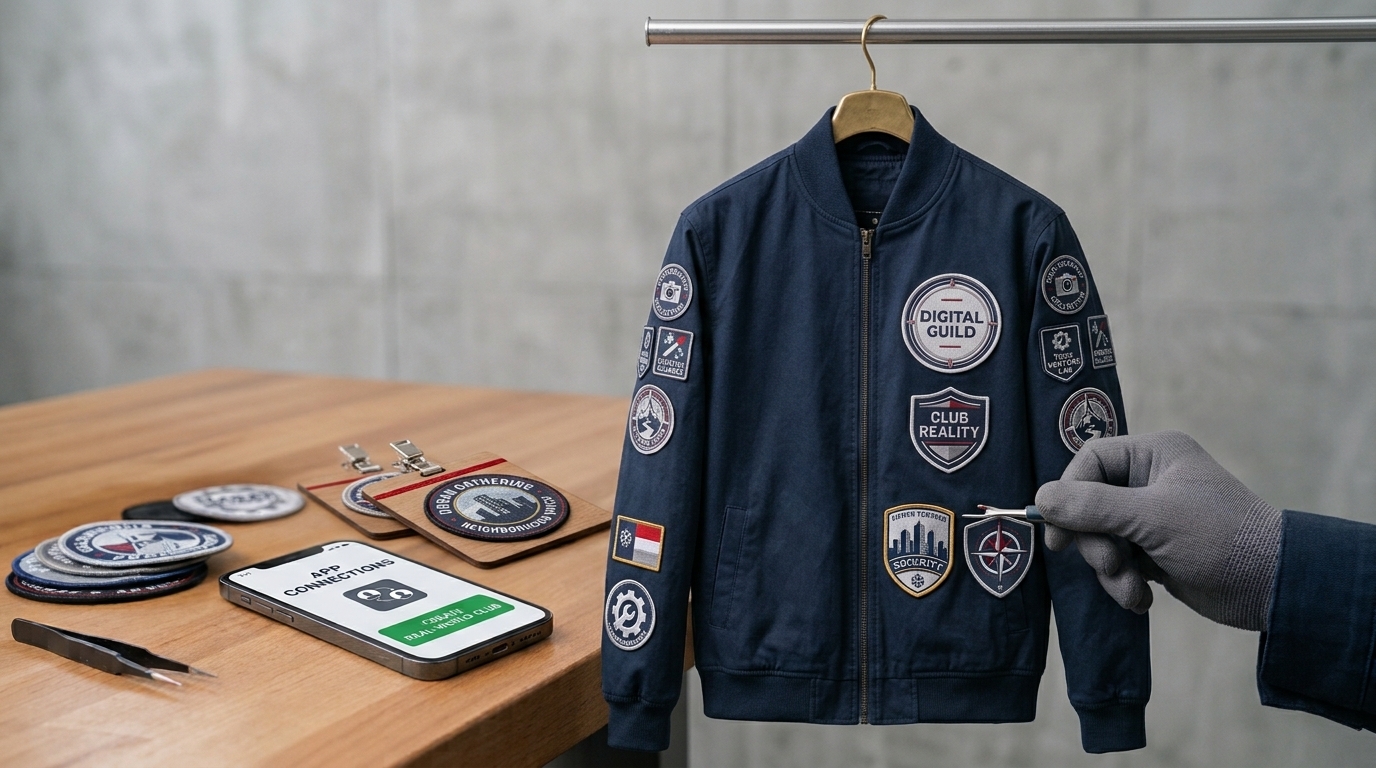
Downloading a friendship app is easy. You create a profile, swipe or tap through a few faces, and start a conversation with someone who lives across the city or across the world. The introduction is almost frictionless. What comes after is harder. The conversation fades, the plans fall through, and the connection stays digital a name in a list, not a person in your week. The gap between meeting someone and belonging somewhere is where most friendships stall. For the groups that make the leap, Woven Patches Canada supplies the physical emblems that help a circle feel like a community. This article looks at why digital introductions rarely become real friendships on their own, what clubs and crews do differently, and how a small piece of stitched identity can help a group become a place people belong.
Why Meeting Someone Is Not the Same as Belonging
A dating or friendship app is built for introductions. Its success metric is the match, the message, the first conversation. That is genuinely useful, especially for people who have moved cities, changed jobs, or lost the social structures that once made meeting people automatic.
But an introduction is not a relationship. Research on friendship formation consistently points to the same ingredients: repeated unplanned interaction, shared activity, and a context where people see each other regularly without having to schedule it. A messaging thread does not provide any of those. It provides contact, not context.
This is why so many app connections stay in the phone. The people are real, but the setting is not. A friendship needs a place to happen.
What a Club Provides That an App Cannot
Clubs, teams, hobby groups and neighbourhood crews solve the context problem. They provide three things an app cannot manufacture.
A recurring time and place. A weekly run, a monthly meeting, a season of games. The structure means people see each other without arranging it. Familiarity builds through repetition.
A shared activity. The activity gives the conversation a subject that is not the conversation itself. Birding, curling, board games, choir, hiking the thing you do together gives the group a reason to be together.
A visible boundary. Clubs have members. Membership is not a feeling; it is a fact. That fact is what turns a group of acquaintances into a community with an inside.
The transition from app to club is essentially a transition from contact to context. The app made the introduction. The club makes the friendship possible.
The Small Object That Makes a Group Feel Real
Once a group exists, it tends to produce symbols. A team has a crest. A club has a badge. A crew has a jacket. These are not decorations. They are the physical evidence that the group is real, and they do specific social work.
They mark belonging. A patch on a jacket tells another member, before a word is spoken, that this person is one of us. In a new city, that signal can be the difference between walking into a room as a stranger and walking in as a member.
They mark history. A patch from a first season, a first trip, a first tournament becomes a record. It carries the story of the group in a way that a group chat cannot.
They mark contribution. A name patch, a role patch, a volunteer badge these say that a person did something, not just that they showed up. Recognition is one of the strongest retention tools a club has.
A cheap sticker does none of this. A well-made woven emblem does all three, because it survives long enough to accumulate meaning.
Why Woven, and Why It Matters for Clubs
A woven patch is constructed by interlacing fine threads into the design itself, rather than printing on a surface or stitching thicker thread on top of a base fabric. The image becomes part of the textile.
For a club emblem, that construction matters for three practical reasons.
Legibility at small sizes. Club crests often include a name, a founding year, a motto or a location. Woven construction holds small lettering more cleanly than embroidery at the same scale, which means the details survive on a jacket sleeve or a cap front.
Durability. A club patch is worn on the same jacket for years. It goes to meetings, trips, tournaments and funerals. Woven patches resist fading and fraying better than printed alternatives, and they sit flat against the fabric rather than adding bulk.
Comfort on everyday garments. Many club members wear a polo, a hoodie or a softshell rather than a heavy uniform. A flat woven patch does not stiffen the garment or catch on things. People wear it more often because it feels like part of the clothing, not an attachment.
Choosing a Backing for Club Patches
The backing determines how the patch attaches and how long it lasts. Clubs usually need to think about three options.
Sew-on backing is the most durable choice for jackets, hoodies and garments that are washed often. It does not depend on an adhesive layer, and the stitched border gives the patch a finished look that suits a club aesthetic.
Iron-on backing is faster and suits low-wear items a display banner, a sample garment, a first run for a small group. It is a reasonable entry point, but it is not built for a jacket that will be worn weekly and washed often.
Velcro backing allows the patch to be swapped. It suits clubs where roles change, where members collect and trade emblems, or where the same garment serves different events. It requires a loop panel on the garment, which not every item has.
The practical rule is to match the backing to how the item will be worn and washed, not to whichever option is cheapest on the day.
Designing an Emblem That a Group Can Actually Read
A club patch is a small canvas. Most design mistakes are avoidable.
Simplify the artwork. A crest with a motto, a date, three icons and a website will not read on a two-inch patch. Choose the strongest element.
Test at final size. Print the design at the actual dimensions and look at it from arm's length. If the text is not legible there, it will not be legible in thread.
Open the letter spacing. Tight kerning collapses at small scale. Slightly wider spacing reads more cleanly.
Prioritise contrast. Low-contrast colour combinations look subtle on a screen and disappear on fabric.
Proof before production. A physical or high-fidelity proof catches colour shifts and legibility problems before the full run is produced.
A Checklist for Club Organisers
Before ordering an emblem for a club or friend group, confirm the following:
-
The proof has been approved on the actual item.
-
The artwork has been tested at final size and is legible from a few metres.
-
The backing matches how the item will be worn and washed.
-
The minimum order quantity has been confirmed before the design is locked.
-
One person owns the approval, so the supplier receives consistent instructions.
For Canadian clubs ordering domestically, a shorter feedback loop on proofs and shipping is a practical advantage. A modest first run of custom patches Canada wide is usually enough to test whether the emblem lands with members, and a personalized patches order for a founding group is a low-risk way to trial a design before committing to a full membership run.
Common Mistakes Friend Groups Make
-
Designing before deciding who the group is. A patch that tries to represent everyone represents no one.
-
Choosing the cheapest backing. An iron-on patch on a weekly-worn jacket will lift.
-
Approving from a screen mockup. Screen previews hide thread texture and colour shift.
-
Overcrowding the design. A small emblem cannot carry everything.
-
Ordering without checking the minimum. Confirm the minimum before the artwork is finalised.
-
Treating the patch as the goal. The patch is a marker of the community, not a substitute for it. The meetings, the activity and the people come first.
FAQs
Can a patch really help a group feel like a community?
It can help, but it is not the cause. The community comes from repeated shared activity. The patch makes that community visible, which reinforces belonging and helps new members recognise the group.
Which backing is best for a club jacket?
Sew-on is the most durable for a jacket worn regularly. Iron-on suits low-wear display items. Velcro suits patches that members want to swap or trade.
How small can the text be on a woven club patch?
It depends on the typeface and the weave, but fine lettering in the region of a few millimetres is generally achievable. Always test the longest word in the design at the final patch size.
Can small clubs and friend groups order custom patches in modest quantities?
Many suppliers accommodate small runs, though minimums vary. Confirm the minimum before finalising the artwork so the design is not built around a quantity the group cannot meet.
Conclusion
An app can introduce you to someone. It cannot make you belong to something. That requires a place, a rhythm and a group of people who show up for the same thing.
Clubs, crews and chosen families provide that context. A woven emblem gives it a physical form a small, durable marker that says this group is real, this person is part of it, and this history happened. For the groups that make the leap from a group chat to a standing Thursday night, the patch is not the point. But it is a quiet, stitched reminder that the point is worth showing up for.

