


Engineering Heavy Duty Pipeline Isolation Equipment
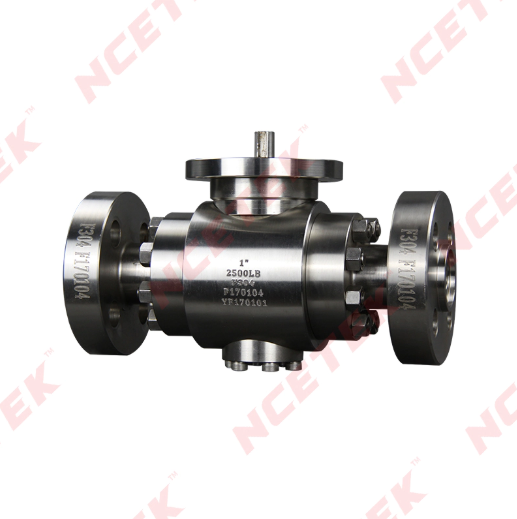
Industrial pipeline networks often require shutoff equipment designed to handle significant pressure loads and repeated operating cycles. A Cast Steel Trunnion Mounted Ball Valve combines a mechanically supported ball with a cast steel pressure-containing body. This configuration is commonly considered for selected large-diameter and higher-pressure pipeline applications where the internal support structure and seat arrangement need to accommodate substantial operating forces.
The main difference between a trunnion-mounted ball valve and a floating ball valve lies in how the ball is supported. In a trunnion-mounted structure, the ball is held by upper and lower support components. These supports maintain the ball's position and help transfer mechanical loads into the valve body. The seats perform the sealing function through their interaction with the supported ball.
When the valve is open, the bore through the ball aligns with the pipeline passage. A quarter-turn movement rotates the ball to block the flow path. Because the ball is mechanically supported, the seating system can be designed to respond to pressure conditions without relying entirely on the ball's movement toward the downstream seat. This arrangement can be useful in applications where pressure-related loads and operating torque require careful management.
Cast steel construction provides flexibility in producing the valve body geometry. The body may incorporate internal chambers, trunnion support areas, seat pockets, and other structural features. Casting is suitable for manufacturing relatively complex shapes, although the quality of the finished pressure-containing component depends on appropriate control of the entire production process.
Material selection should reflect the intended pipeline service. Carbon steel grades may be considered for many petroleum and general industrial applications. Stainless steel or alloy steel materials may be selected where corrosion resistance, temperature performance, or other mechanical characteristics are important. The exact material grade must be consistent with the design pressure, operating temperature, transported medium, and relevant specifications.
Casting production involves several controlled stages. These may include raw material preparation, melting, chemical composition control, mold preparation, pouring, cooling, and subsequent processing. Heat treatment may be required according to the specified material grade and applicable manufacturing requirements. Material verification and inspection help determine whether the casting meets the approved specifications.
Following casting, machining establishes the accurate dimensions needed for assembly. The body must provide suitable interfaces for the ball, trunnion supports, stem, seats, and pipeline connections. Machining accuracy influences internal alignment and component positioning. Inadequate tolerances may cause assembly interference, uneven seat loading, or difficulties during operation.
The ball and trunnion support arrangement are essential to the mechanical design. The ball needs suitable spherical accuracy and surface finishing, while the support components must maintain the intended position during operation. Depending on the configuration, bearings or other supporting elements may be incorporated to manage movement and friction. The specific structure should be verified through sectional drawings.
The seating system determines the valve's sealing behavior. Trunnion-mounted designs commonly use movable seat arrangements that respond to mechanical loading, fluid pressure, or both. Some configurations use spring-assisted seats to maintain initial contact, while pipeline pressure may increase the sealing force under particular operating conditions. The precise arrangement varies according to the product design.
Soft-seated configurations may be selected for applications where polymeric sealing materials provide suitable performance within their operating limitations. Metal-seated arrangements may be considered for selected high-temperature, abrasive, or demanding services. The choice requires consideration of fluid composition, temperature, differential pressure, leakage requirements, and expected operating cycles.
Body cavity pressure management is another important engineering consideration. When the ball is closed, fluid may become trapped in the internal cavity. If the trapped liquid expands because of temperature changes, cavity pressure may increase. Depending on the seat arrangement and project requirements, an automatic pressure-relief structure or another suitable engineering solution may be incorporated. Buyers should confirm the intended relief direction and operating characteristics.
The stem connects the external operating mechanism with the internal ball assembly. It must transmit operating torque while maintaining pressure containment at the body interface. Appropriate stem materials, sealing components, and retention structures are selected according to the design. Manual gearboxes, pneumatic actuators, hydraulic actuators, and electric actuators may be considered depending on valve size, torque requirements, and automation needs.
Operating torque depends on several factors, including seat friction, differential pressure, bearing characteristics, stem packing resistance, and component alignment. Actuator sizing should use actual operating torque data under the specified service conditions. For automated pipeline systems, additional considerations may include control signals, position feedback, emergency shutdown arrangements, and available power sources.
These valves are used in oil and gas transmission, petroleum processing, gas distribution facilities, storage terminals, and selected industrial infrastructure projects. Each application may involve different combinations of pressure, temperature, and fluid characteristics. Buyers should also consider installation orientation, external protection, pipeline connections, and future maintenance access.
Quality inspection should begin with material verification and continue through casting, machining, assembly, and final testing. Depending on the applicable requirements, inspection may include dimensional checks, nondestructive examination, shell pressure testing, seat leakage testing, and operational testing. Inspection records help verify that the finished equipment corresponds to the approved technical documentation.
API and ASME standards may apply to specific product designs, dimensions, materials, and testing procedures. The exact requirements depend on the intended service and purchasing specification. Buyers should identify the applicable standards and editions before production and confirm the required documentation, including material records and pressure test reports.
Zhejiang Naishi Valve Co., Ltd. operates under the NCETEK and Naishi Valve brands, providing industrial valve products for different flow control applications. Selecting a Cast Steel Trunnion Mounted Ball Valve requires evaluating the casting process, support structure, seat configuration, pressure management, and inspection arrangements as an integrated system. For additional product information and available industrial valve configurations, visit https://www.ncevalve.com/product/.

