


Server Virtualization Market Share Across Components Verticals and Regions
Hypervisor Software Captures Leading Revenue Share While Managed Services Expand Rapidly
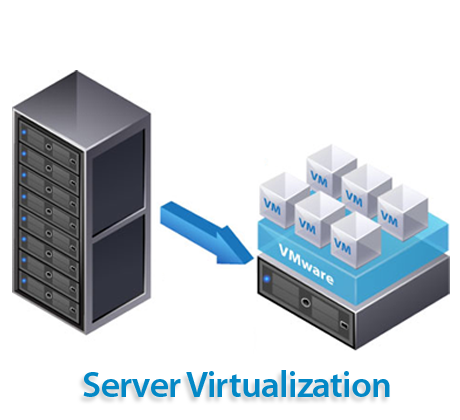
An examination of the Server Virtualization Market Share reveals distinct structural distribution across software components, deployment architectures, organization tiers, and geographic regions. By component, hypervisor software and centralized management platforms capture the dominant majority share of global industry revenue. Enterprises rely on bare-metal Type 1 hypervisors, virtual machine orchestration consoles, and integrated container-VM platforms as the foundational control plane for data center operations. Recurring enterprise software subscriptions and support agreements anchor primary vendor revenue streams. Simultaneously, professional and managed services represent the fastest-expanding component segment as organizations outsource complex hypervisor migrations, multi-cloud architecture design, and continuous security compliance management to specialized IT service partners. As platform disruption prompts enterprises to evaluate alternative hypervisors, migration and advisory services capture growing proportional budgets.
On-Premises Deployment Retains Majority Share While Cloud Virtualization Accelerates
Analyzing deployment models demonstrates that on-premises server virtualization continues holding the largest proportional share of installed enterprise capacity worldwide. Regulated institutions across banking, healthcare, defense, and public administration maintain dedicated on-premises virtual clusters to satisfy strict data sovereignty rules, predictable latency requirements, and direct hardware control. However, cloud-hosted server virtualization represents the fastest-expanding deployment model as organizations adopt hybrid cloud operating frameworks. Cloud-based virtualization enables businesses to provision virtual server instances elastically, burst seasonal workloads into public cloud bare-metal environments, and replicate disaster recovery sites across geographic regions without building secondary physical data centers. Together, on-premises private clouds and public cloud virtual instances form unified hybrid estates managed through consistent orchestration interfaces.
North America Leads Regional Distribution Through Enterprise Scale and Cloud Maturity
Geographically, North America commands the leading regional share of global server virtualization activity, underpinned by massive hyperscale data center capacity, headquarters of major virtualization software innovators, and aggressive enterprise modernization spending. Enterprises across the United States and Canada lead global adoption of full software-defined data centers, virtual desktop infrastructure, and AI-optimized server virtualization across financial, healthcare, and government verticals. Europe secures the second-largest regional position, driven by stringent data protection mandates, corporate energy reduction targets, and widespread data center consolidation across Germany, the United Kingdom, France, and the Nordics. Meanwhile, Asia-Pacific captures a rapidly expanding proportional share as surging cloud adoption, smart city infrastructure programs, and massive telecom network modernizations across India, China, Japan, and South Korea fuel substantial virtualization deployments.
Full Virtualization and OS-Level Container Virtualization Anchor Technology Adoption
Categorization by virtualization technology highlights that full hardware-assisted virtualization commands the primary share of enterprise server workloads, enabling unmodified guest operating systems—including Linux and Windows Server—to run simultaneously on shared physical hosts with complete kernel isolation. Full virtualization remains essential for running diverse legacy enterprise applications, relational databases, and mission-critical ERP suites reliably. Concurrently, operating-system-level virtualization—encompassing lightweight containers and Kubernetes-native virtual machine orchestration—is capturing a rapidly expanding proportional share. OS-level virtualization eliminates guest operating system duplication, delivering ultra-fast startup times and superior compute density for microservices, DevOps pipelines, and cloud-native web applications. Leading enterprises increasingly deploy converged platforms supporting both full virtual machines and OS-level containers side by side.
IT Telecommunications BFSI and Healthcare Capture Leading End-User Vertical Positions
Across end-user industries, IT and telecommunications enterprises command the largest proportional share of server virtualization adoption, propelled by cloud hosting operations, high-volume data traffic, and virtualized network function deployments. Banking, financial services, and insurance institutions represent another major vertical segment, utilizing virtualized servers to run resilient core banking platforms, algorithmic trading engines, and compliant disaster recovery environments. Healthcare and life sciences organizations capture a substantial share by virtualizing electronic health record systems, medical imaging repositories, and secure clinician remote desktops while maintaining strict patient data isolation. Manufacturing, retail, and public-sector government agencies further reinforce vertical distribution as industrial edge computing, omnichannel commerce platforms, and digital citizen services rely heavily on agile virtualized server infrastructure.
➤ Latest Market Intelligence from Market Research Future:

