


Precision Gear Solutions for Automation Equipment
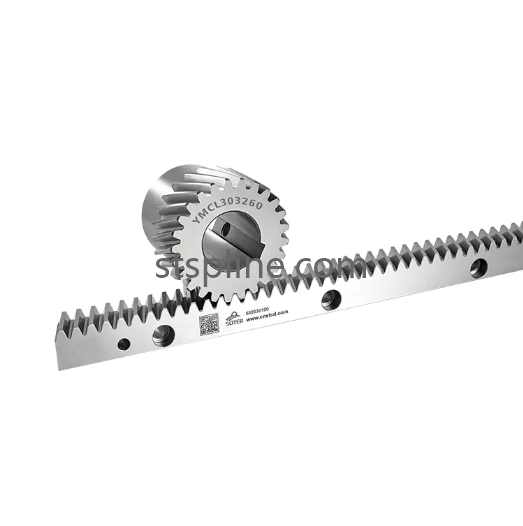
Industrial equipment manufacturers often require transmission components that match specific mechanical structures rather than relying entirely on standard products. A Custom Gear Rack provides a flexible solution when the equipment design involves particular dimensions, tooth configurations, installation conditions, or movement requirements. Through coordination between product design, material selection, machining processes, and quality inspection, manufacturers can develop rack components that integrate more effectively into different mechanical transmission systems.
A gear rack is a straight mechanical component with teeth arranged along its working surface. When combined with a compatible pinion gear, it converts rotational movement into linear displacement. This mechanism is used in machinery requiring controlled travel along a straight path. Depending on the equipment configuration, the rack can remain stationary while the pinion moves, or the rack itself can travel as part of the mechanical assembly.
Customization usually begins with reviewing the machine's application and technical requirements. Different industrial systems have different installation spaces, supporting structures, load conditions, and movement cycles. A rack designed for a compact positioning unit may require a different structure from one used in a large laser cutting machine. Manufacturers therefore need to understand the intended application before determining the appropriate dimensions, tooth profile, material, and processing route.
Material selection is one of the first technical considerations. Carbon steel is commonly used for industrial gear racks because it provides a practical combination of machinability and mechanical strength. Alloy steel may be considered when different material characteristics or specific processing requirements are involved. The choice should reflect the working environment, expected contact conditions, lubrication method, and equipment design. Consistency in raw material quality also helps maintain predictable machining and inspection results.
Tooth geometry must be coordinated with the mating pinion. Module, pressure angle, tooth profile, and pitch are important characteristics that determine compatibility and engagement. Standard straight teeth are used in many mechanical transmission arrangements, while helical teeth may be selected for applications requiring a different engagement configuration. V-type guide rack structures and other specialized rack designs may also be considered according to the machine's mechanical layout. The final selection should be based on the actual application rather than general assumptions about one tooth type being suitable for every machine.
Manufacturing processes depend on the required geometry and accuracy. Rack teeth may be formed through specialized cutting and milling operations, with additional grinding or finishing where appropriate. The production process should maintain dimensional consistency along the rack length and provide suitable surface conditions for engagement with the pinion. For customized products, reviewing the drawing before machining is particularly important because small differences in tooth geometry or mounting dimensions may affect compatibility with the existing equipment.
Quality inspection helps confirm that the finished rack meets the agreed technical requirements. Relevant characteristics may include overall dimensions, tooth pitch, profile, straightness, and surface condition. The inspection approach should correspond to the product design and the customer's requirements. When multiple racks are intended for the same machine, maintaining consistency between production batches and individual components is also important. Clear technical documentation supports communication between the manufacturer and equipment developer.
Customized rack products serve a wide range of industrial applications. CNC machining centers may use rack-driven mechanisms in selected linear movement systems, depending on their mechanical architecture. Laser cutting machines incorporate transmission components to move machine structures and cutting assemblies. Industrial robots and truss manipulators may also use rack-based systems where linear travel is required as part of an automated movement process.
Automotive automation production lines provide another application area. These systems often involve material transfer, positioning, and coordinated mechanical operations between different production stations. Lithium battery automation equipment and intelligent manufacturing systems also depend on mechanical transmission components for various handling and positioning tasks. In each case, rack dimensions, mounting arrangements, and tooth configurations need to correspond with the overall machine design.
Installation conditions should be considered before customized components enter service. The mounting surface needs to provide suitable support, and the rack must be aligned along the intended travel direction. If multiple rack sections are installed together, their connection points should maintain consistent tooth spacing and alignment. The pinion mounting position must also be checked to ensure appropriate engagement. These steps help reduce unnecessary wear and irregular movement during operation.
Maintenance requirements vary according to operating conditions and equipment usage. Regular inspection can help identify contamination, lubrication problems, loosened fasteners, and visible tooth wear. In environments with metal particles or industrial dust, cleaning may need to be more frequent. Equipment operators should follow the lubrication and inspection recommendations established for the specific machine and transmission assembly.
For B2B buyers, a manufacturer's customization experience is an important purchasing consideration. Providing technical drawings, physical samples, or detailed application information can help the supplier evaluate the required structure and manufacturing process. Buyers should also discuss material preferences, tooth specifications, surface treatment, inspection requirements, and matching pinion compatibility before placing an order. These details make the production requirements clearer and support more efficient communication throughout the procurement process.
Selecting a suitable Custom Gear Rack involves matching the component design with the machine's transmission structure and manufacturing requirements. Zhejiang Soter Transmission Technology Co., Ltd. has specialized in high-precision rack and gear production since 2006, with manufacturing and inspection capabilities and customization based on customer drawings and samples. Its products support CNC machining centers, laser cutting machines, industrial robots, and other automation equipment. Buyers can review its https://www.stspline.com/product/straight-teeth-rack/ to learn more about available rack solutions.

