


Apparel Logistics Market Forecast to 2034 as E-Commerce Reshapes Fulfillment
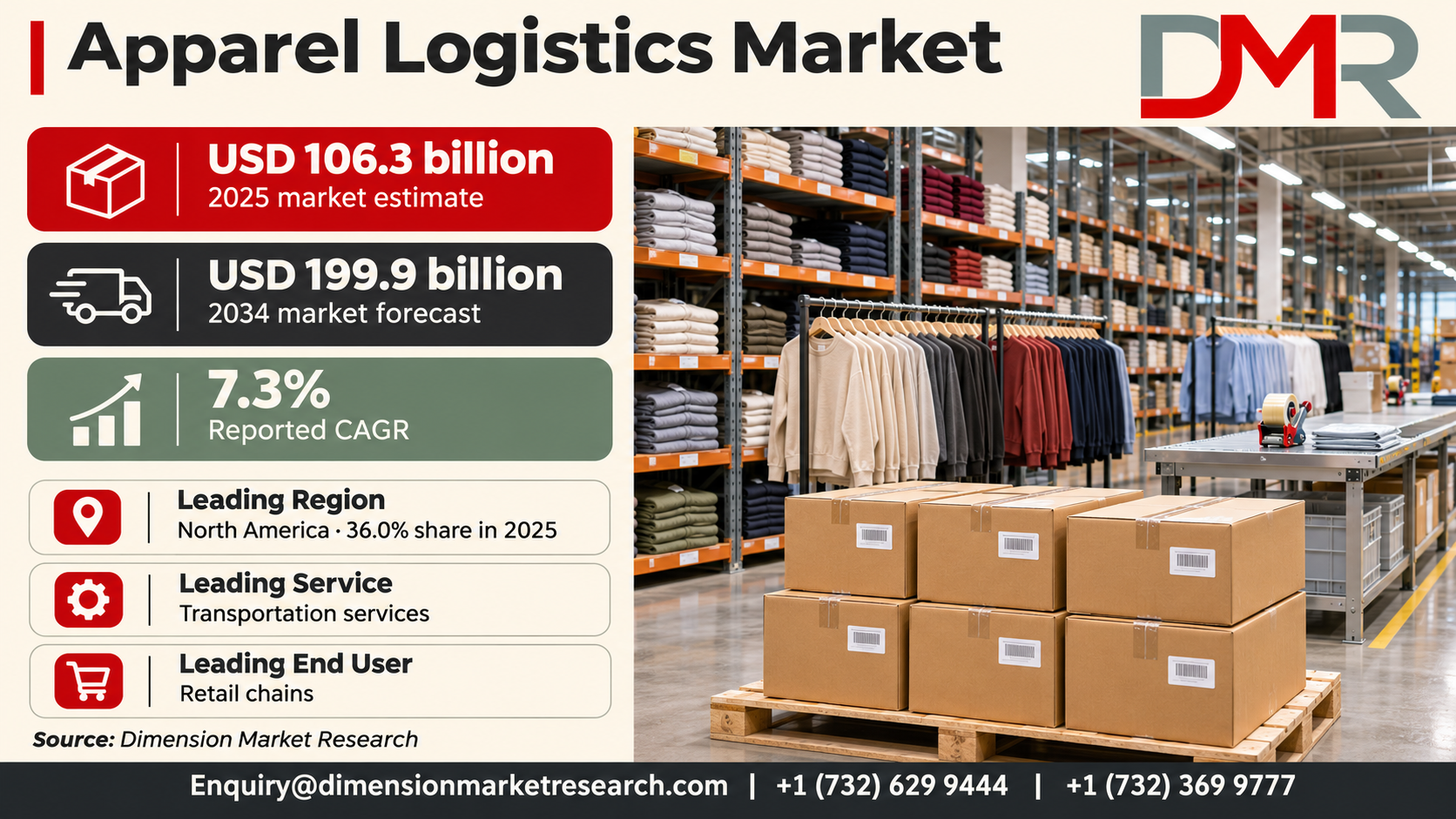
The Apparel Logistics Market Share outlook reflects how fashion brands are adapting to shorter selling seasons, faster delivery expectations and more complex returns. According to Dimension Market Research, the global market was estimated at USD 106.3 billion in 2025 and is projected to reach USD 199.9 billion by 2034, with a reported CAGR of 7.3% from 2025 to 2034.
An apparel retailer can sell the same garment through a store and a website, but each channel puts different demands on inventory. Stores need regular replenishment across sizes and styles. Online orders require individual picking, packing and delivery, and a returned item may need inspection before it can go back on sale. The ability to coordinate these workflows becomes especially valuable during promotions and seasonal launches.
What Is the Apparel Logistics Market?
Apparel logistics covers the transportation, storage, inventory management and distribution of clothing across domestic and international supply chains. It includes moving goods from manufacturers to distribution centers, replenishing stores and delivering online orders. Services such as labeling, packaging, quality inspection and returns processing help retailers prepare garments for sale and recover value from items that come back.
Get a Free Customized Sample of This or Any Other Market Research Report
https://dimensionmarketresearch.com/request-sample/apparel-logistics-market/
Apparel Freight and Warehousing Lead Different Parts of the Market
Transportation is the largest service category because garments move repeatedly between manufacturers, warehouses, retailers and customers. Warehousing and distribution are growing faster as brands place inventory closer to shoppers and build capacity to handle more online orders and returns.
● Transportation services accounted for approximately 42.0% of the market in 2025. Shipment tracking and route planning help retailers coordinate deliveries around launches, promotions and restocking schedules.
● Warehousing and distribution are the fastest-growing service segment. Regional fulfillment centers can shorten delivery distances, while automated picking and sorting help warehouses handle more orders during peak periods.
● Road freight led by transport mode with approximately 46.0% in 2025. DMR identifies air freight as the fastest-growing mode, supported by urgent replenishment, premium collections and time-sensitive cross-border shipments.
Fashion E-Commerce Drives Omnichannel Fulfillment and Returns
Retail chains were the largest end-user segment, accounting for approximately 44.0% of the market in 2025. Their stores need a steady flow of stock, particularly when promotions or seasonal launches change which sizes and styles sell fastest. E-commerce apparel platforms are the fastest-growing end-user segment, with demand centered on processing large order volumes, delivering quickly and handling returns.
Returns management gives logistics providers another way to compete. A garment sent back because of a sizing issue may still be suitable for resale. The provider has to receive it, check its condition, update the inventory record and decide whether it should be restocked, refurbished or recycled. For retailers selling seasonal products, the speed of that decision affects how much time remains to resell the item.
Third-Party Logistics Helps Apparel Brands Manage Seasonal Peaks
Third-party logistics providers, or 3PLs, accounted for approximately 51.0% of the market by supply chain model in 2025. Outsourcing allows brands to add transport, storage and fulfillment capacity during peak periods without making the same upfront investment in their own networks. Providers can also combine those services with packaging, labeling and returns processing.
Warehouse automation, RFID tracking and predictive demand planning can improve inventory visibility and order accuracy. The trade-off is cost. Automation and digital platforms require upfront investment, while fuel, labor and warehouse leases affect ongoing costs. Smaller brands may find the economics more favorable when a logistics provider can spread those investments across several customers.
North America Leads Apparel Logistics as Asia Pacific Grows Fastest
North America held 36.0% of global revenue in 2025, with the US market estimated at USD 32.0 billion. DMR attributes the region’s position to established transport networks, large retail chains, strong online apparel demand and a mature 3PL network. Fast fulfillment and flexible returns are important services for retailers operating across stores and online channels.
Asia Pacific is the fastest-growing region in the report. China, India, Vietnam and Bangladesh are important apparel production hubs, while rising online sales add demand for regional fulfillment and last-mile delivery. That combination creates opportunities to serve both export shipments and domestic orders.
Apparel Logistics Providers Compete on Automation and Returns Services
Companies covered include DHL Supply Chain, Kuehne + Nagel, DSV, CEVA Logistics, GEODIS and GXO Logistics. DMR reports that in March 2025, DHL Supply Chain expanded automated apparel fulfillment capacity in North America, using AI-driven sorting and inventory tools to support fashion e-commerce during peak periods. The report also highlights lower-emission transport and circular logistics as areas where providers can expand their services.
Explore the Complete Apparel Logistics Market Analysis
https://dimensionmarketresearch.com/checkout/apparel-logistics-market/
Frequently Asked Questions
How large is the Apparel Logistics Market?
DMR estimates the global market at USD 106.3 billion in 2025 and projects it to reach USD 199.9 billion by 2034.
What is the projected Apparel Logistics Market CAGR?
DMR reports a CAGR of 7.3% from 2025 to 2034.
Which apparel logistics service holds the largest share?
Transportation services led with approximately 42.0% in 2025. Warehousing and distribution are the fastest-growing service segment.
Which region leads the Apparel Logistics Market?
North America led with 36.0% of global revenue in 2025. Asia Pacific is projected to grow fastest.
Why is reverse logistics important in apparel e-commerce?
It helps retailers process returns, restock saleable garments and direct other items to refurbishment, resale or recycling.
Conclusion
Through 2034, apparel logistics demand will increasingly depend on how well providers coordinate store replenishment, online fulfillment and returns. Transportation remains the largest service category, while regional fulfillment centers and returns processing give providers room to grow. For apparel brands, the practical challenge is securing enough capacity for seasonal peaks while keeping routine fulfillment costs manageable.

