


Photography and Video Formats: Understanding Frame Ratios
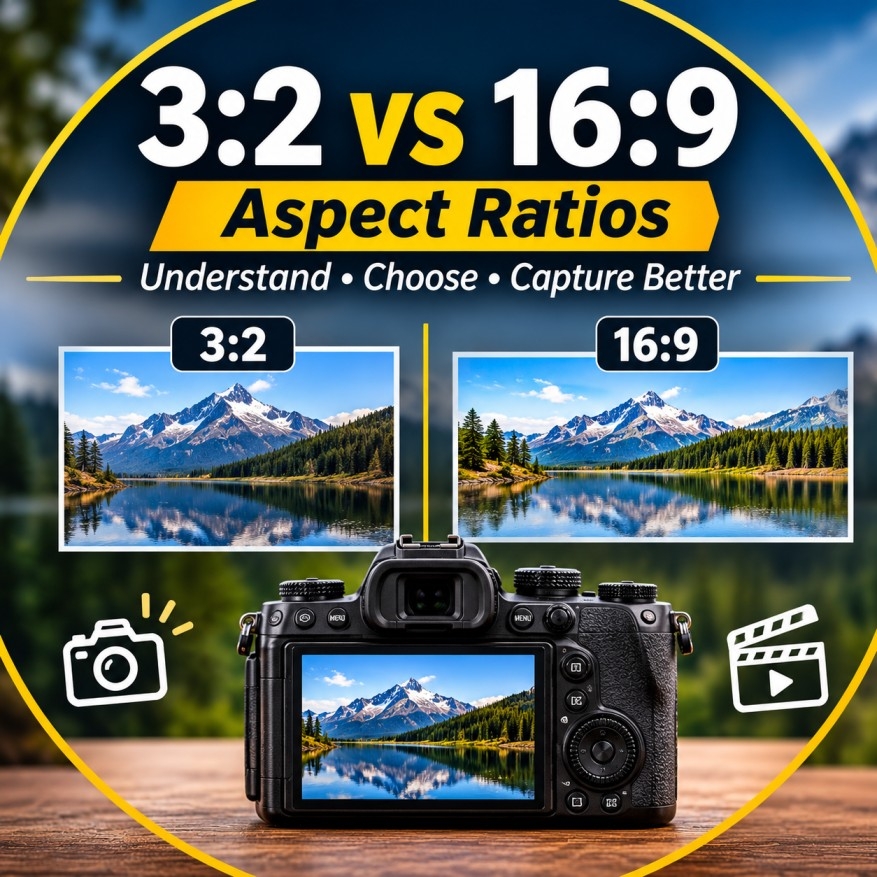
When starting with a 3:2 sensor and cropping it to 16:9, you're also slightly cropping out some of the original image, which means less space above and below your subject. Not all photos and videos require the same ratio of the shot. The 3:2 vs 16:9 difference will be useful in your work to help you make a better decision regarding the form of the composition of your photos to look optimal on camera displays, in printed form, and on widescreen monitors. The 3:2 is undoubtedly branded with 35mm film, but it's a familiar native format for most mirrorless and DSLR cameras. Its width and height together generate a neutral aspect ratio that lends itself well to everyday photography of city streets and the many places you might travel, including, of course, portraits. On the other hand, the broad 16:9 aspect ratio has been the aspect ratio of traditional, high-quality video (including full HD footage).
Think about the medium and the reason for your content before making an aspect ratio decision. Using dimensions for viewing the image in traditional 4-by-6-inch prints and as a still photo typically works best with 3:2. Narrower, longer dimensions used to frame a single subject (a lot of portraits are like this, for instance), as well as when printing with a top and bottom margin, can usually make good use of 3:2 as well. For videography and other presentations where the image is shown in a wider aspect ratio, go for the wider 16:9 aspect ratio. As always, aspect ratio is not the same as resolution, which is the amount of detail in your image.

