


Local SEO Strategy: How to Build Stronger Visibility in Google Maps and Local Search
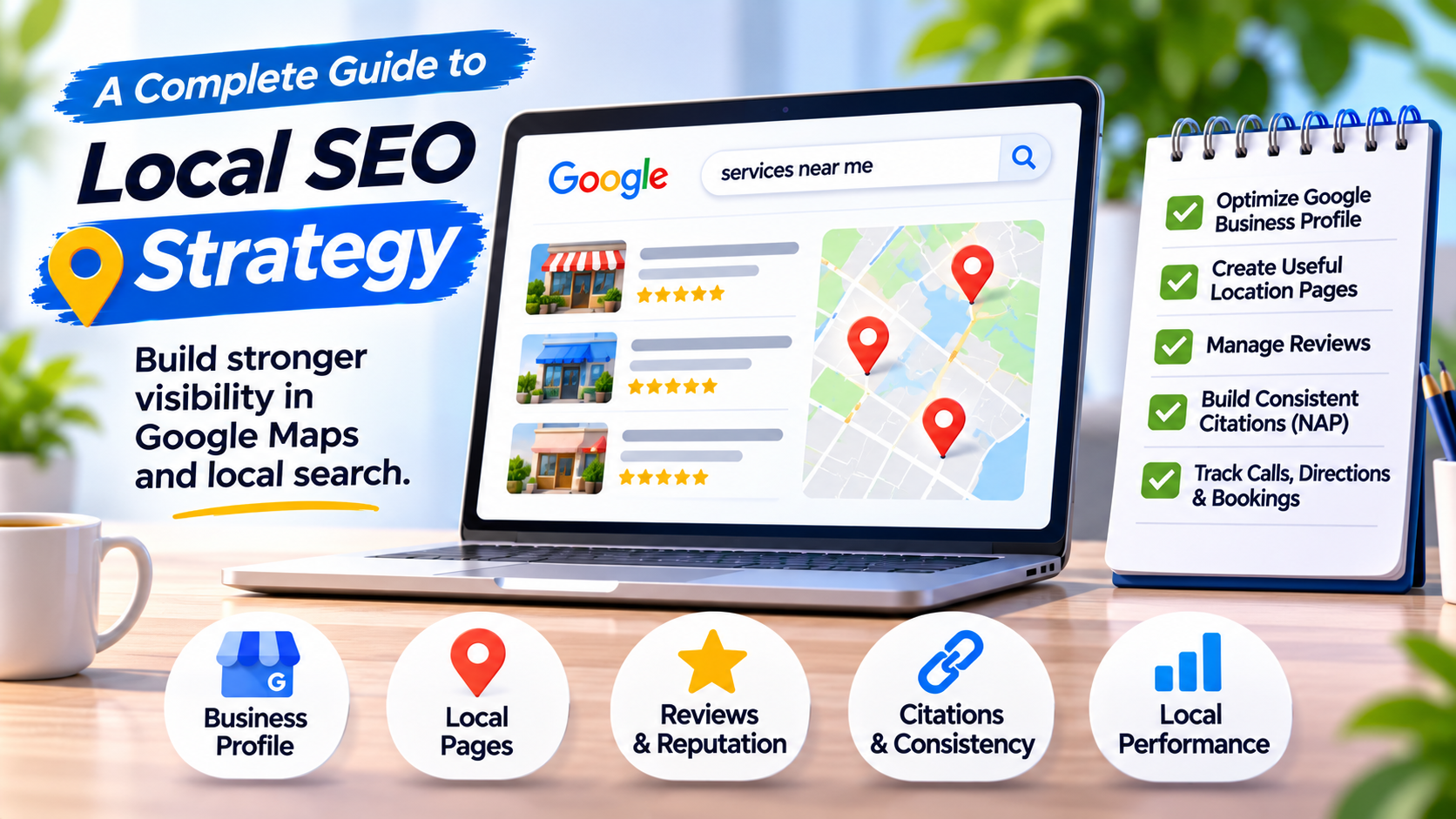
When customers search for a service near them, appearing in the right local results can influence whether they call, visit or choose a competitor. Businesses looking to improve this visibility can explore MoxSEO's Local SEO services, which focus on connecting Google Business Profiles, location pages, reviews, citations and conversion paths.
Local SEO is not simply about adding a city name to a website or creating a business listing. It involves making sure that search engines and potential customers receive accurate, useful and consistent information about a business and the locations it serves.
A strong strategy considers the entire journey: how customers discover a business, what helps them trust it, and how easily they can take the next step.
What Is Local SEO?
Local SEO is the process of improving a business's visibility in searches with local intent.
These searches can include explicit location terms, such as:
- Dentist in Mumbai
- Digital marketing agency in Pune
- AC repair services in Delhi
They can also include searches such as "near me" or "open now", where the search engine uses the searcher's location and other context to identify relevant businesses.
Local visibility generally involves two important search surfaces:
Google Maps and the Local Pack: These display business listings, locations, reviews and other useful information directly in search results.
Local organic results: These are regular website listings that may include service pages, location pages and relevant local content.
A business may perform well in one area without performing equally well in the other. That is why a Local SEO strategy should consider both business profiles and website performance.
1. Build an Accurate Google Business Profile
Google Business Profile is one of the most important parts of local discovery. It gives potential customers quick access to business information before they even visit the website.
An incomplete or inaccurate profile can create unnecessary friction. A customer may find an outdated phone number, incorrect opening hours or services that the business no longer provides.
Start with the information customers need most:
- Correct business name and primary category.
- Relevant secondary categories.
- Accurate address or service area.
- Current phone number and website URL.
- Regular and holiday opening hours.
- Services and products.
- High-quality business photos.
- Relevant business updates and posts.
Business categories should accurately describe the business. Adding unrelated keywords to the business name in an attempt to influence rankings can violate platform guidelines and create profile risks.
For businesses with multiple locations, each profile should represent a genuine operating location with accurate information and appropriate ownership.
2. Keep Business Information Consistent Across the Web
Name, address and phone number are commonly referred to as NAP information.
When a business's details differ between its website, business profile and third-party directories, customers may become confused about which information is correct.
For example, a business might have:
- One phone number on its website.
- An older number on a directory.
- A different address format on Google Maps.
- Outdated opening hours on a third-party listing.
These inconsistencies make business information harder to trust and maintain.
A citation audit should identify duplicate, incomplete and conflicting listings. The next step is to correct important records and establish a reliable source of truth for future updates.
Quality and relevance matter more than creating hundreds of low-quality directory listings. Focus on directories and platforms that customers actually use.
3. Create Useful Location Pages
A business serving multiple cities or neighbourhoods may need dedicated location pages.
However, creating a separate page for every city does not automatically create a useful Local SEO strategy.
Each page should have a genuine purpose and provide information relevant to the location.
A useful location page can include:
- Services available in that area.
- Accurate address or service-area details.
- Location-specific contact information.
- Relevant staff, facilities or service details.
- Genuine customer testimonials or reviews.
- Local FAQs.
- Directions, booking options or enquiry forms.
For example, a dental clinic with two branches should provide useful information about each clinic, including its services, location, appointment process and facilities.
Simply copying one page and replacing the city name creates little value for visitors. MoxSEO's approach specifically avoids mass-produced, interchangeable city pages.
4. Develop a Genuine Review Management Process
Reviews influence how people evaluate local businesses. They can provide information about service quality, customer experiences and the way a business handles problems.
A sustainable review process should be built around genuine customer feedback.
Businesses can:
- Make it easy for customers to leave honest reviews.
- Send appropriate review requests after service interactions.
- Respond professionally to positive feedback.
- Address negative feedback constructively.
- Escalate serious complaints to the right team.
- Monitor recurring themes in customer comments.
Review management should never involve fabricated feedback or review gating. Businesses should not selectively ask only satisfied customers to leave public reviews while discouraging others.
The purpose is to understand customer experiences and maintain a transparent reputation.
5. Strengthen Local Entity Consistency
Search engines need to understand what a business does, where it operates and which services are available at each location.
This information should agree across the website, Google Business Profile, directories and structured data.
For example, if a business offers emergency plumbing in a particular service area, its website and business profile should communicate that accurately.
Structured data can help describe relevant business information in a machine-readable format. Depending on the business, this may include appropriate LocalBusiness details, address information, opening hours and location-specific URLs.
Structured data should accurately reflect visible page content. It should not be used to claim services, locations or reviews that do not exist.
6. Make the Customer's Next Step Obvious
Local visibility is only part of the job. The website and business profile should make it easy for potential customers to act.
Depending on the business, the next step may be:
- Calling the business.
- Requesting directions.
- Booking an appointment.
- Submitting an enquiry form.
- Requesting a quote.
- Visiting a physical location.
Location pages should make these actions easy to find, particularly on mobile devices.
A customer searching for a nearby clinic, for example, should not have to navigate several pages just to find its phone number or appointment option.
7. Measure Local SEO Through Meaningful Actions
Rankings and impressions can help explain visibility, but they do not tell the entire business story.
Local SEO reporting should connect discovery with actual customer actions.
Important measurements include:
Qualified calls and bookings: How many enquiries are relevant to the business?
Map visibility by location: How visible is each business location for relevant local searches?
Profile actions: Are people calling, requesting directions or visiting the website?
Location-page conversions: Are visitors completing forms, bookings or other useful actions?
Review operations: Are customer feedback requests and responses being handled consistently?
Measurements should be reviewed against a baseline and implementation dates. This makes it easier to distinguish genuine improvement from seasonal changes, market fluctuations or other external factors.
8. Build a Repeatable Local SEO Operating Process
Local SEO becomes more complicated as a business grows. Different locations may have different managers, services, opening hours and customer requirements.
A repeatable operating process helps prevent these details from becoming inconsistent.
A practical approach includes four stages:
- Establish the baseline: Inventory locations, profiles, landing pages, citations, review processes and conversion paths.
- Fix priority gaps: Resolve conflicting information and improve the locations with the strongest qualified demand or greatest operational risk.
- Activate locally: Improve profiles, publish useful location content and establish review and response workflows.
- Measure by market: Track visibility, calls, bookings, directions and page performance for each location.
MoxSEO's Local SEO approach follows this location-by-location operating model, combining centralized standards with local ownership and reporting.
Common Local SEO Mistakes to Avoid
Some shortcuts can create more problems than they solve.
- Keyword-stuffing business names: Business names should reflect the real-world business name.
- Publishing duplicate city pages: Each location page should have genuine local value.
- Buying or fabricating reviews: Feedback must represent real customer experiences.
- Ignoring duplicate listings: Conflicting records can confuse customers and complicate business data management.
- Focusing only on rankings: Calls, directions, bookings and qualified enquiries matter too.
- Promising guaranteed map positions: Local rankings are affected by relevance, distance, prominence, competition and platform changes.
How MoxSEO Approaches Local SEO
MoxSEO's Local SEO service is designed around the relationship between business profiles, location architecture, reviews, citations and local conversion paths.
Its operating model includes location and profile inventories, priority market opportunity mapping, Google Business Profile standards, location-page briefs, review workflows and measurement playbooks.
The published starting programs are:
- Local Practice Leader: $499 per month.
- Regional Practice Network: $999 per month.
- National Location Program: $1,899 per month.
These are starting prices rather than automatic quotes. The final scope depends on factors such as location count, market complexity, listing ownership, data quality and implementation responsibilities.
You can review the MoxSEO Local SEO service for the detailed approach and Local SEO pricing for the published starting scopes.
Final Thoughts
Local SEO works best when business information, location pages, reputation and customer actions support one another.
A complete strategy should help people find accurate information, understand why a business is relevant to their needs and take the next step without confusion.
Instead of chasing map rankings through shortcuts, businesses should build a reliable local presence that can be maintained as their services, markets and locations change.

