


Beyond Recyclable: Innovation Trends in Sustainable Packaging Market Outlook 2036
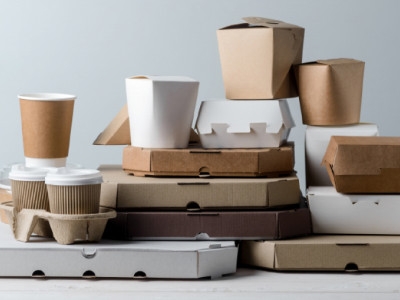
The global sustainable packaging market is undergoing a structural transformation, moving from a niche CSR (Corporate Social Responsibility) initiative to a fundamental regulatory and operational requirement. By 2036, the industry is defined by a shift from simple "recyclability" to integrated circularity, where material science, IoT-enabled tracking, and aggressive plastic-reduction mandates converge to redefine how goods are delivered.
The global sustainable packaging market size was valued at USD 298.9 Billion in 2025 and is projected to reach USD 546.3 Billion by 2036, expanding at a CAGR of 5.6% from 2026 to 2036. This growth is primarily driven by "regulation-first" market dynamics, where legal mandates for recycled content and bans on single-use plastics are forcing a massive capital pivot toward sustainable materials.
- Primary Growth Drivers: Regulation and EPR Integration
The march toward USD 546.3 Billion is anchored in a global landscape where non-compliance has become more expensive than innovation:
- Stringent Regulatory Frameworks: Major policies—such as the EU Packaging and Packaging Waste Regulation (PPWR) and India’s Plastic Waste Management Rules—are mandating minimum recycled-content thresholds (often reaching 30–60% by 2030). These laws are eliminating "regulatory arbitrage" and creating a standardized global market for sustainable substrates.
- Extended Producer Responsibility (EPR): Over 60 countries have now implemented EPR schemes, shifting the financial burden of packaging end-of-life management onto brand owners. This is incentivizing the design of "right-sized" and mono-material packaging that is easier and cheaper to recycle.
- E-commerce & Protective Logic: The permanent rise of e-commerce is driving demand for "ships-in-own-container" (SIOC) designs and paper-based protective mailers, reducing the need for secondary plastic void-fillers.
- Technological Evolution: Material Science and Smart Sorting
By 2036, the "barrier gap" between conventional plastics and sustainable alternatives has effectively closed.
- Next-Gen Barrier Coatings: Innovation in bio-based coatings (e.g., nanocellulose, seaweed-derived, and PVOH) has enabled paper and fiber-based packaging to achieve the moisture and oxygen resistance previously only possible with multi-layer plastic laminates.
- AI-Driven Recycling: AI and machine-learning-enhanced sortation facilities are achieving 99% purity in recycled streams. This is critical for meeting the high-quality Food-Grade PCR (Post-Consumer Resin) requirements of the beverage and pharmaceutical sectors.
- Mono-Material Supremacy: The market is seeing a massive transition to mono-material flexible packaging. By using a single polymer type (like all-PE or all-PP structures), these formats are fully recyclable within existing infrastructure, unlike traditional multi-material "pouches."
- Market Segments: Material and Format Diversification
- Paper & Paperboard (Market Leader): Holding approximately 40% of the market, paperboard remains the dominant material due to its established recycling infrastructure and renewable origins. Innovations in "molded fiber" are rapidly replacing Expanded Polystyrene (EPS) in electronics and food service.
- Bio-Based Plastics (Fastest Growing): Within the plastic segment, PHA and PLA are seeing double-digit growth. PHA, in particular, is gaining traction for its "home compostable" and marine-biodegradable properties.
- Reusable & Refill Systems: Moving beyond single-use, large-scale "Reuse Pools" for e-commerce and retail (e.g., standardized returnable bottles and bulk dispensers) are projected to capture an increasing share of the primary packaging market.
- Regional Outlook: The Global Center of Gravity
- Europe (The Policy Pioneer): Europe remains the largest and most regulated market. It serves as the global testing ground for circular economy principles, leading in "Closed-Loop" recycling systems and carbon-neutral production.
- Asia-Pacific (The Volume Driver): Projected to be the fastest-growing region (6.2% CAGR in India; 5.8% in China). Driven by massive urbanization and aggressive national "Green" initiatives, APAC is rapidly scaling its manufacturing capacity for bio-based and agricultural-waste-derived packaging.
- North America: Growth is characterized by a "Patchwork to National" transition. As more U.S. states implement single-use bans, national brands are adopting universal sustainable standards to optimize their North American supply chains.
Conclusion: Packaging as a Life-Cycle Asset
Reaching a valuation of USD 546.3 Billion by 2036 signifies the end of the "disposable" era. Packaging is no longer a peripheral cost—it is a critical asset in a brand’s ESG (Environmental, Social, and Governance) framework. The most successful players of the next decade will be those who master Reverse Logistics and provide "Performance-Based" packaging that delivers product safety without the environmental debt of the past.

