


Lightweighting the Future: Drivers for the Composite Tooling Market Outlook 2034
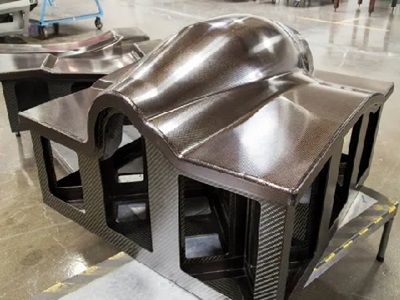
As industries transition toward lightweight, high-strength structures—particularly in aerospace, electric vehicles (EVs), and renewable energy—the role of the tooling that shapes these components has become a critical bottleneck and a source of innovation. Composite tooling (tools made from composites to manufacture composite parts) is increasingly preferred over traditional metallic tooling due to its thermal stability and lower mass.
The global composite tooling market was valued at US$ 528.0 Million in 2023 and is projected to reach US$ 983.3 Million by 2034, expanding at a CAGR of 5.8% from 2024 to 2034. This growth represents a strategic shift toward manufacturing efficiency and the mass-production of complex composite geometries.
- Market Drivers: The Weight-Reduction Imperative
The climb toward nearly US$ 1 Billion is anchored in the necessity for precision in extreme environments:
- Aerospace "Next-Gen" Aircraft: Commercial aviation is moving toward aircraft that are over 50% composite by weight (e.g., Boeing 787, Airbus A350). To manufacture these large-scale fuselage and wing sections, composite tools are required because they share the same Coefficient of Thermal Expansion (CTE) as the parts being made, ensuring micron-level accuracy during high-heat curing.
- The EV Battery Enclosure Boom: Electric vehicles require lightweighting to offset heavy battery packs. Composite tooling allows automotive OEMs to rapidly prototype and produce lightweight battery housings and structural chassis components that improve vehicle range.
- Wind Energy Scaling: As wind turbine blades exceed 100 meters in length, traditional metal molds become prohibitively heavy and difficult to heat. Composite molds allow for more efficient heating and easier handling of these massive structures.
- Technological Evolution: Additive Manufacturing and Out-of-Autoclave (OOA)
By 2034, the industry is moving away from labor-intensive "hand-layup" tooling toward digitized, automated processes.
- 3D Printed Tooling (LSAM): Large Scale Additive Manufacturing (LSAM) is revolutionizing the market. 3D printing composite tools using carbon-fiber-reinforced thermoplastics can reduce lead times from months to days, allowing for rapid iterative design in the aerospace and defense sectors.
- Out-of-Autoclave (OOA) Curing: Traditionally, composite parts require massive, expensive pressure vessels (autoclaves). There is a significant shift toward OOA tooling, which allows parts to be cured using only a vacuum bag and an oven, significantly reducing capital expenditure and energy consumption.
- Smart Tooling: Tools are being embedded with fiber-optic sensors and IoT-connected thermal couples. These "smart molds" provide real-time data on the curing process, ensuring part quality and reducing scrap rates in high-value manufacturing.
- Material Dynamics: Epoxy and Carbon Fiber Dominance
The choice of tooling material is dictated by the production volume and the "service temperature" required:
- Epoxy Resins: Remain the workhorse of the industry due to their excellent balance of cost, ease of fabrication, and durability.
- BMI (Bismaleimide) and Cyanate Ester: These high-temperature resins are gaining traction for military and space applications where parts must be cured at temperatures exceeding 200°C.
- Carbon Fiber vs. Glass Fiber: Carbon fiber tooling is the premium choice for high-precision aerospace parts due to its near-zero CTE, while glass fiber tooling remains the standard for the marine and wind energy sectors where cost-efficiency is prioritized over extreme thermal precision.
- Regional Outlook: Aerospace Hubs and Energy Frontiers
- North America: Holds a dominant position due to the presence of major aerospace and defense giants (Boeing, Lockheed Martin). The region is a leader in adopting 3D-printed composite tooling technologies.
- Europe: A key hub for automotive composite innovation and wind energy. Countries like Germany and the UK are pioneering sustainable, recyclable tooling resins to meet EU environmental mandates.
- Asia-Pacific: Projected to be the fastest-growing region. Massive investments in domestic aircraft programs (such as China's COMAC) and the world's largest EV production infrastructure are driving a surge in high-volume composite tooling demand.
Conclusion: The Infrastructure of Innovation
Reaching a valuation of US$ 983.3 Million by 2034 highlights that composite tooling is no longer a niche craft; it is an industrial necessity. The successful players of the next decade will be those who can merge additive manufacturing with high-temperature material science to deliver tools that are lighter, faster to produce, and more thermally stable than ever before.

