


7.8% CAGR: Mapping the Sustainable Growth of Air Fryers to 2036
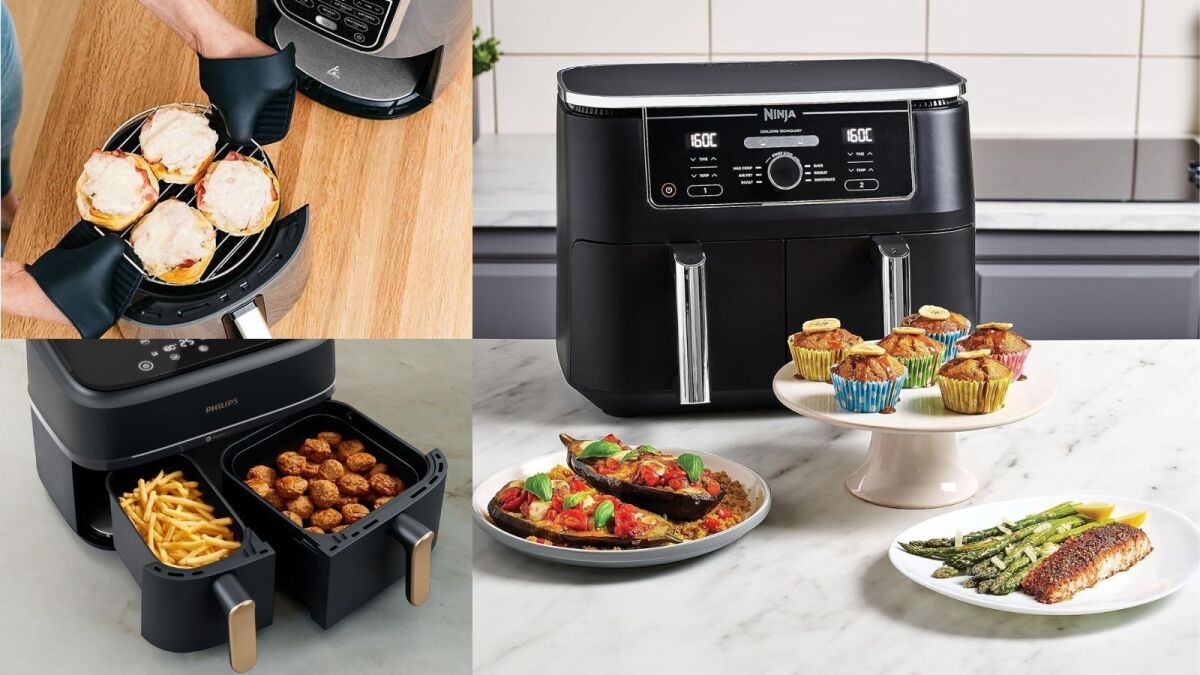
The global air fryer market has transitioned from a niche "healthy gadget" to a permanent fixture of the modern kitchen ecosystem. As of 2026, the category is shifting its focus from volume-based growth (first-time buyers) to a premiumization and replacement cycle, driven by "smart" connectivity and multifunctional performance that rivals traditional ovens.
The global air fryer market size was valued at US$ 1,103.4 Million in 2025 and is projected to reach US$ 2,343.9 Million by 2036, expanding at a CAGR of 7.8% from 2026 to 2036.
- Market Drivers: Wellness, Efficiency, and Energy Costs
The climb toward US$ 2.3 Billion is anchored in three core consumer behavioral shifts:
- The Health-Wellness Mandate: Rising global awareness of lifestyle diseases (obesity, diabetes) has made "oil reduction" a non-negotiable for many households. Modern air fryers now advertise an 80–90% reduction in fat compared to deep frying, aligning with national health initiatives like the 2025 FSSAI directive in India to reduce oil consumption.
- Energy Efficiency as a Competitive Edge: With global energy prices remaining a concern, air fryers are being marketed as eco-friendly alternatives to conventional ovens. They consume significantly less electricity and require zero "pre-heat" time, appealing to cost-conscious and environmentally aware consumers.
- The "One-Appliance" Kitchen: Consumers are moving away from single-taskers. The market is being driven by multifunctional systems that bake, roast, dehydrate, and even steam, effectively replacing several countertop appliances and maximizing kitchen real estate.
- Technological Evolution: AI-Cores and Dual-Zone Cooking
By 2036, the air fryer has evolved into an intelligent cooking assistant rather than just a convection fan.
- Smart & Connected Ecosystems: Digital air fryers now account for over 60% of revenue. Integration with 5G and Wi-Fi allows for remote monitoring, "shake reminders" via smartphones, and automatic temperature adjustments based on cloud-stored recipes.
- Advanced Airflow & Materials: Innovation is focusing on "seven-layer" quick air technology and the elimination of PFAS/PFOA in non-stick coatings. Brands are shifting toward ceramic-coated and stainless steel interiors to meet tightening food safety regulations.
- Dual-Zone & Vertical Stacking: To solve the "batch cooking" bottleneck, manufacturers have introduced vertical two-basket designs (like the Ninja DoubleStack) that double output while occupying 40% less countertop space.
- Market Segments: Basket Supremacy and Digital Leads
- Basket-Type (Market Leader): Holding a 54.6% share in 2025, the basket format remains the preferred choice for mainstream households due to its ease of cleaning and compact footprint.
- Capacity Tends: The 4-to-6 liter segment is the "sweet spot" for 2036, balancing the needs of nuclear families with energy efficiency. However, the up-to-4 liter segment remains dominant in high-density urban areas and single-person households.
- Distribution Channels: While offline retail still accounts for a major share (consumers prefer tactile verification of "build quality"), online channels are the fastest-growing segment, driven by influencers and social media "air fryer hacks."
- Regional Outlook: The APAC Engine
- North America: Held the largest revenue share in 2025 (36.8%). The market here is entering a sophisticated replacement phase, where users are upgrading their basic 2020-era models for larger, digital, and multifunctional units.
- Asia-Pacific (The Growth Engine): Projected to record the highest growth rate through 2036. India and China are the primary drivers, with India expected to see a CAGR of 9.0% due to rapid urbanization and the affinity for air-fried traditional snacks (samosas, tikkas).
- Europe: A mature market focusing heavily on energy labels and material safety, leading the charge in plastic-free and high-efficiency appliance design.
Conclusion: A Permanent Culinary Infrastructure
Reaching a valuation of US$ 2.34 Billion by 2036 signifies that the air fryer has moved beyond being a "fad." It is now considered an essential energy-saving tool. The most successful brands in 2036 are those that have successfully integrated AI-driven personalization—where the machine learns a family's taste preferences and automatically optimizes cook times for perfect results every time.

