


The Manufacturing Hub Impact: Regional Drivers for Desiccant Market 2034
The global desiccant industry is experiencing a critical evolution, transitioning from a simple packaging commodity into a high-performance material science essential for the global supply chain. As industries like pharmaceuticals, semiconductors, and electric vehicles (EVs) demand tighter environmental tolerances, the market for moisture control is expanding rapidly to ensure product stability and performance.
The global desiccant market was valued at US$ 552.6 Million in 2023 and is projected to reach US$ 1.0 Billion by 2034, expanding at a CAGR of 5.7% from 2024 to 2034.
- Market Drivers: Precision and Preservation
The push toward a US$ 1.0 Billion valuation is anchored in the heightened sensitivity of modern high-tech goods:
- Pharmaceutical Integrity: Desiccants are non-negotiable in the pharmaceutical sector, which accounts for roughly 25-30% of the market. With the rise of biologics and high-potency APIs (Active Pharmaceutical Ingredients), maintaining drug stability through strict humidity control is a regulatory mandate.
- The Semiconductor & EV Surge: Electronics and EV battery manufacturing require "clean dry rooms" and moisture-free logistics. Desiccants prevent micro-corrosion in circuits and prevent hazardous lithium-battery degradation caused by moisture infiltration.
- Logistics & E-commerce: The global expansion of e-commerce has increased the time goods spend in transit across varying climate zones. Calcium Chloride and Silica Gel desiccants are vital for protecting consumer goods, leather, and textiles from "container rain" during long-haul shipping.
- Material Science: Innovations in Adsorption
By 2034, the market is moving toward "smart" and specialized materials tailored for specific chemical environments.
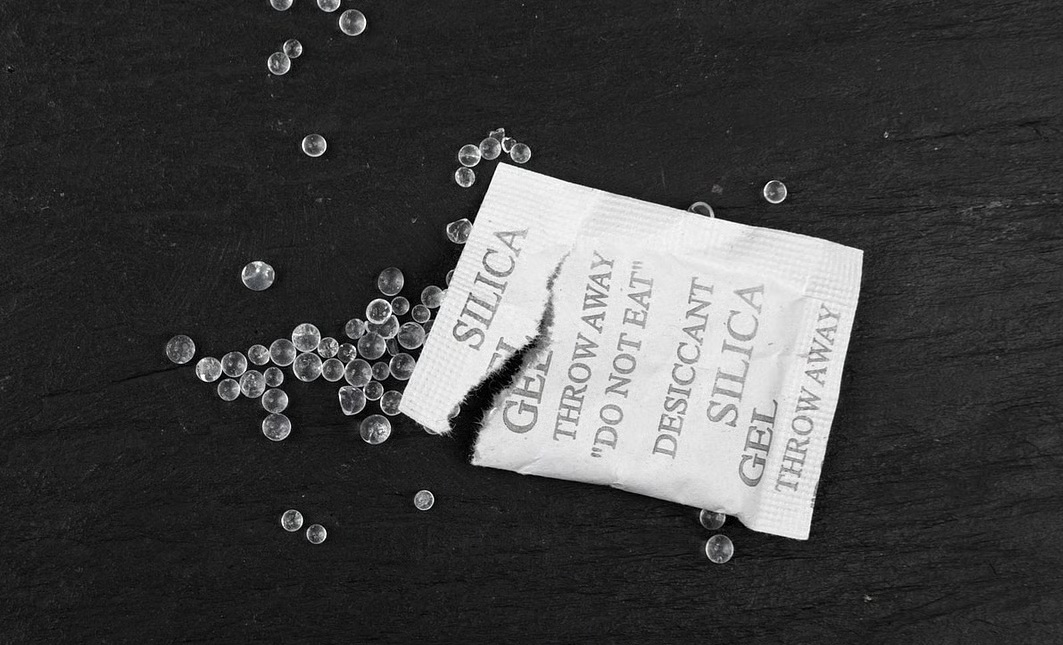
- Silica Gel (The Standard): Remains the leading segment due to its non-toxic nature and high absorption capacity (up to 40% of its weight). It is the go-to for food and consumer electronics.
- Molecular Sieves (Zeolites): These are gaining traction for industrial applications where precise moisture removal is required at low humidity levels ($RH < 10\%$). They are increasingly used in insulated glass windows and gas drying.
- Sustainable & Bio-based Options: To align with global ESG (Environmental, Social, and Governance) targets, manufacturers are developing biodegradable desiccants derived from natural clays and starches to replace non-biodegradable synthetic packets.
- Technological Evolution: Smart Indicators and Automation
The 2024–2034 period is defined by the integration of digital tracking into physical packaging.
- Smart Humidity Indicators: Advanced packets now feature color-changing sensors or NFC-integrated tags that allow logistics managers to scan a pallet and determine the internal moisture levels without opening the packaging.
- High-Capacity Nanocomposites: New desiccant composites are being engineered to offer 300% to 400% moisture uptake, allowing for smaller, lighter packaging footprints in the aerospace and defense sectors.
- Automated Insertion: High-speed pharmaceutical bottling lines are adopting automated desiccant canisters and sachet-dispensing robots to minimize human contact and maximize sterile throughput.
- Regional Outlook: APAC Manufacturing and North American Regs
- Asia-Pacific (44% Market Share): Dominates the global market due to its position as the world's manufacturing hub. The massive pharmaceutical and electronics sectors in China, India, and South Korea drive the highest volume of desiccant consumption.
- North America: The fastest-growing region in terms of high-value, specialized desiccants. Strict FDA and industrial standards drive demand for premium, medical-grade moisture control solutions.
- Europe: A leader in the adoption of eco-friendly and recyclable desiccants, influenced by the European Green Deal and circular economy directives.
Conclusion: The Invisible Guardian of Quality
Reaching a US$ 1.0 Billion valuation by 2034 underscores the desiccant's role as the "invisible guardian" of global trade. As products become more complex and supply chains more global, the ability to control the environment inside a box or container will remain a primary determinant of brand quality and consumer safety.

